

close
Choose Your Site
Global
Social Media


Views: 0 Author: Site Editor Publish Time: 2026-06-04 Origin: Site


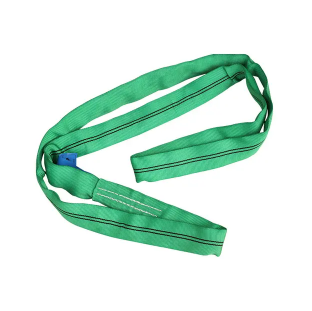
At the decision stage, selecting and standardizing rigging equipment goes far beyond simple load capacity. It means actively mitigating catastrophic failure risks. It demands strict compliance with OSHA and ASME standards. This diligence protects your personnel and your high-value assets. Endless polyester configurations provide a highly versatile, low-impact solution for heavy lifting and cargo securing. Unlike rigid metal chains, a round sling contours safely around fragile loads. It performs this task without inflicting abrasive damage to the surface.
We will guide you through the critical aspects of using these vital tools safely. You will transition from understanding basic application rules to mastering advanced operational protocols. We will cover essential calculation formulas for angular lifts. We will also outline strict lifecycle management strategies. By applying these standards, you ensure peak performance and maintain a flawless safety record on every job site.
Configuration alters capacity: Hitch types drastically change Working Load Limits (WLL). A choker hitch reduces capacity by up to 20%, while a basket hitch can double it.
Lifting vs. Securing: WLL dictates lifting; Lashing Capacity (LC) dictates cargo securing. Never conflate the two metrics.
The "Blind Touch" Test: Internal core yarn damage can be detected manually even when the exterior jacket looks intact.
Strict Temperature Ceilings: Standard polyester round slings degrade rapidly above 194°F (90°C) and below -40°F (-40°C).
Selecting the right rigging materials demands rigorous operational analysis. You must match the material strictly to the environmental conditions. Buyers often face a choice between polyester, nylon, and high-modulus polyethylene (HMPE). Each synthetic fiber offers specific operational advantages and limitations.
Polyester features a remarkably low stretch rate. It typically stretches only 3-5% under maximum load. This structural stability makes it vastly superior to nylon for low-headroom lifts. The load will not bounce or drop unexpectedly. HMPE fibers offer incredible strength and are much lighter than polyester. However, standard polyester remains the most cost-effective choice. It easily handles general, non-abrasive load operations across most industrial sectors.
Material Type | Stretch Rate | Best Application | Relative Cost |
|---|---|---|---|
Polyester | 3% - 5% | Low headroom, general non-abrasive lifting | Economical |
Nylon | 8% - 10% | Shock absorption, dynamic loads | Moderate |
HMPE | Under 1% | Heavy marine, extreme weight-to-ratio needs | Premium |
The endless loop design defines modern synthetic lifting gear. This continuous construction provides immense longevity. Operators can easily rotate the bearing points before every single lift. You never expose the exact same fibers to constant hook wear. This simple rotation distributes stress evenly. It dramatically extends the overall lifespan of the asset. Fixed eye-and-eye slings lack this rotational flexibility. They often suffer from premature wear at the dedicated connection loops.
Industrial environments continually push equipment to the breaking point. Foundries and heavy chemical plants present extreme thermal challenges. Standard polyester fibers will melt or degrade under these conditions. The rigging industry is evolving rapidly to solve this problem. Manufacturers now produce steel-cord designs. These hybrid tools blend the soft, protective jacket of a traditional round sling with extreme heat resistance. Buyers should consider these emerging trends. It helps you plan future procurement roadmaps for specialized operational zones.
Every rigging professional must understand how hitch geometry impacts capacity. You cannot rely blindly on the manufacturer tag. The physical configuration alters the true Working Load Limit (WLL) immediately. Mastering these formulas guarantees safe operational execution.
The vertical hitch serves as the baseline measurement. You attach one end directly to the crane hook. You attach the bottom end directly to the load. This direct, straight-line configuration retains exactly 100% of the rated WLL. There is no capacity loss due to bending or choking friction.
Operators frequently use a choker hitch to grip cylindrical materials securely. You wrap the body around the load and pull one end through the other. This creates a choke point. The intense friction and fiber compression reduce the WLL by roughly 20%. You must account for this loss before initiating the hoist.
Standard operating procedures (SOP) require strict angle discipline here. The choke angle must be at least 120 degrees. Shallower angles crush the internal fibers severely. This causes catastrophic internal failure.
A basket hitch cradles the load from underneath. Both ends of the loop attach to the central crane hook. This configuration effectively doubles the baseline WLL. It distributes the weight perfectly across two separate structural legs. However, you must carefully monitor the sling-to-load angle. The interior angle must measure 60 degrees or greater. If the angle drops lower, the load will likely slip laterally. This lateral movement causes total load loss.
Non-vertical lifts require precise mathematical calculation. As the angle decreases from 90 degrees, the tension on each leg increases exponentially. You must calculate the effective limit. Provide your team with the exact mathematical metric:
Effective WLL = Rated WLL × Cosine(Angle)
You measure this angle against the vertical axis. Training your personnel on this exact calculation prevents dangerous overloading incidents.
Operators frequently repurpose older gear for tie-down applications. You must enforce strict application boundaries. Lifting metrics and securing metrics serve completely different purposes. WLL governs overhead lifting safety. Lashing Capacity (LC) governs cargo securing on transport vehicles. Never conflate these two numbers. The WLL must always strictly exceed the required LC if you repurpose lifting equipment for tiedowns.
Theoretical knowledge must translate into disciplined physical habits. Rigging operations present dynamic, constantly shifting risks. Implementing advanced practices shields your crew from preventable disasters.
Standard single choker hitches possess a hidden flaw. They only compress the hoisted material from three sides. This leaves the fourth side vulnerable to sliding. We strongly recommend upgrading to a double-wrap choker hitch. You simply wrap the material twice before passing the eye through. This technique compresses the load firmly from all four sides. It dramatically increases surface friction and overall stability.
Manufacturing facilities frequently need to flip or turn heavy components. You must mandate the use of choker hitches when turning loads. The choke grips the material dynamically as it rotates. A severe risk warning applies here: Never use basket hitches for turning. A basket hitch relies purely on gravity and balance. The load will slip violently out of the cradle during rotation.
Cranes operate in fluid motion. Dynamic loads occur when acceleration or deceleration happens too rapidly. Warn your operators against sudden stops or shock loading. A rapid stop multiplies the kinetic weight of the object. This shock can instantly snap a round sling. Always outline the use of non-conductive tag lines. They control load rotation smoothly. Crew members can guide the suspended object safely from a distance.
Operators sometimes attempt to tighten a choker hitch manually during the initial hoist. They pull down hard on the eye while the system is under tension. State clearly that this action is forbidden. Pulling the eye against tension causes severe friction burns. It cuts and melts the internal load-bearing fibers. You must lower the load to slacken the tension before adjusting the choke.
Visual inspections serve as the primary defense against equipment failure. Regulatory bodies strictly govern synthetic rigging standards. Adhering to OSHA and ASME inspection protocols builds trustworthiness and guarantees compliance.
Length discrepancies often signal internal stretching or damage. You must measure the equipment correctly. Never measure by the circumference of the loop. You must pull the loop taut. Lay it completely flat on a clean surface. Measure the exact distance "tip-to-tip" from one bearing point to the other.
Sometimes the exterior protective jacket looks completely pristine. However, the internal load-bearing core might be broken. You must train users to conduct the "Blind Touch" diagnostic test.
Lay the equipment flat on a work table.
Pinch the fabric between your thumb and fingers.
Slide your hand slowly across the entire length.
Feel specifically for internal lumps or hardened spots.
Manufacturers tie the continuous inner core with one single knot. If you feel multiple knots, hard spots, or gaps, the internal core is snapped. The equipment is void and you must destroy it immediately.
OSHA mandates strict visual rejection criteria. You must remove the gear from service immediately if you spot these specific defects:
Width reduction exceeding 10% due to localized edge damage.
Visible heat damage, melting, or acid burns on the cover.
Any exposed or snagged internal core yarns.
Illegible, missing, or torn manufacturer WLL tags.
Synthetic loops frequently attach to metal shackles, hooks, or pins. You must calculate the size of this hardware carefully. Connections placed inside the eye must not exceed one-third of the total eye length. Oversized hardware forces the fibers to spread too widely. This causes severe bunching and uneven tensile stress. It guarantees premature failure.
Maximizing your return on investment requires proactive environmental management. Synthetic fibers degrade rapidly when exposed to specific elements. You must understand these thresholds to prevent asset failure.
Thermal damage destroys synthetic integrity silently. You must reiterate OSHA compliance thresholds to your crew. Standard polyester operates safely between -40°F and 194°F (-40°C to 90°C). Operating above 194°F melts the protective jacket and weakens the internal core. Extremely cold environments below -40°F make the fibers brittle and prone to shattering.
Industrial chemicals react differently to various synthetic materials. Polyester offers excellent resistance to most common acids and commercial bleaching agents. However, it possesses severe chemical vulnerabilities. It degrades rapidly in the presence of concentrated sulfuric acid. Strong alkalis also dissolve the fibers quickly. You must audit your chemical environment before authorizing polyester lifting gear.
Routine audits track the health of your rigging inventory over time. The industry relies heavily on standardized tracking mechanisms to ensure compliance.
Many facilities address the International Maritime Organization (IMO) color-coding system. This system dictates specific tag colors for tracking annual inspections visually. It allows safety managers to identify outdated equipment instantly from a distance.
A critical warning applies to annual testing. Never perform destructive proof-testing or overload testing on used synthetic gear. Overload tests stretch the material permanently. It irreversibly damages the structural integrity of the polyester fibers. You should only perform proof-testing on brand-new, unfielded equipment.
Implementing strict rigging discipline drives massive business value. Following accurate geometric calculations and inspection routines yields fewer onsite accidents. It guarantees a longer equipment lifecycle and ensures reliable OSHA compliance. Your procurement strategy should prioritize safety and material suitability above all else.
When shortlisting equipment, advise your buying team to verify all manufacturer tags meticulously. Prioritize fully traceable assets from reputable vendors. Always match your required hitch configurations to the specific sling capacities prior to executing bulk procurement orders.
Do not leave your next heavy lift to chance. Consult with certified rigging specialists today. View a certified product catalog to find the exact polyester specifications you need. Download a standardized load-calculation chart to protect your crew on every operation.
A: No. Choking two slings together drastically reduces their capacity and creates concentrated friction points. Always use standard rigging hardware to connect slings.
A: Lay the sling completely flat on the ground, pull it hand-tight, and measure the distance from pull-point to pull-point (tip-to-tip).
A: Stiffness usually indicates heat damage, chemical degradation, or severe overloading. A sling exhibiting this should be removed from service immediately.


