

close
Choose Your Site
Global
Social Media

Views: 0 Author: Site Editor Publish Time: 2026-06-30 Origin: Site


A ratchet strap is only as reliable as its tensioning mechanism. Component failure at the handle or buckle level leads directly to dangerous load shifts, safety violations, and costly operational downtime. When securing heavy freight, absolute reliability matters immensely. Selecting the right hardware requires matching the handle profile, buckle material, and load ratings to your specific operational environment. For instance, flatbed trucking demands entirely different specifications compared to marine use or enclosed trailers. Using the wrong components puts your cargo and operators at serious risk. We will provide an objective, evidence-based framework for evaluating ratchet mechanisms. You will discover how to evaluate grip designs, understand load capacity metrics, and avoid critical buying mistakes. This guide equips you to ensure safe, compliant, and highly effective procurement.
Standard handles work exceptionally well for light-duty operations. They sit entirely flush against the strap profile. This incredibly compact footprint prevents annoying snagging in extremely tight spaces. Small trailers and indoor cargo bays demand this sleek profile. Wide handles provide significantly more mechanical leverage. The extended length allows operators to generate much higher tensioning force easily. The wider bar accommodates heavily gloved hands without feeling cramped. This specific feature proves absolutely crucial during harsh winter flatbed operations. Thick insulated gloves make gripping narrow bars nearly impossible. A wide grip reduces dangerous slip risks substantially. Slipping during the final tensioning stroke often causes severe wrist injuries. It also results in sudden load drops.
Grip materials matter deeply for daily field use. Rubberized grips offer excellent ergonomic comfort. They actively cushion the operator's hand against harsh steel vibrations. This padding reduces muscular fatigue during high-volume securement tasks. However, rubber compounds degrade rapidly under intense ultraviolet exposure. Sunlight breaks down the polymers over time. The grip eventually cracks and flakes away. Bare steel or knurled aluminum grips offer maximum possible longevity. They survive brutal industrial environments effortlessly for years. They never crack under sun exposure. Unfortunately, bare metal becomes extremely slippery when wet. Heavy ice and driving rain severely diminish grip security.
Implementation reality demands careful hardware audits. You must review your typical user environment thoroughly. Comfort features always sound highly appealing initially. Yet, environmental resilience usually matters significantly more for safety. You should observe operators directly in their actual field conditions. If they work primarily in rainy coastal logistics hubs, bare steel might fail them. If they secure loads in direct desert sunlight, rubber grips will crumble fast. Select the ratchet tie down handle design based strictly on hard environmental data rather than aesthetics.
Working Load Limit (WLL) serves as your primary guiding metric. Break Strength (BS) tells a completely different story. The cargo industry standard dictates a strict one-to-three ratio. The safe WLL typically equals exactly one-third of the total Break Strength. Some aggressive vendors advertise massive Break Strength numbers prominently. They deliberately bury the actual WLL data deep in fine print. You must actively look for verified WLL ratings before buying. Relying only on Break Strength creates massive safety hazards for everyone. It leads to dangerous hardware overloading.
Material thickness directly dictates the frame rigidity. A suspiciously thin steel frame easily suffers from torque-bending. When you apply maximum tension, weak side frames warp inward. This dangerous warping misaligns the internal gear mechanism completely. Precision-machined gears keep the entire system locked securely under pressure. Misaligned gears cause catastrophic and sudden tooth-slipping. Sudden tooth-slipping releases the heavy load instantly. This remains a common point of failure in low-tier cargo control products. High-quality buckles always feature thick, heavy-duty stamped steel frames. They maintain perfect internal gear alignment even under severe operational stress.
Corrosion destroys buckle mechanics surprisingly quickly. You must understand the basic corrosion resistance framework. Zinc-plating represents the standard commercial finish globally. It offers very basic moisture protection for enclosed dry transport. Powder-coating provides vastly superior abrasion resistance. A baked-on polymer layer guards against deep scratches and dings effectively. Stainless steel reigns supreme for truly harsh operating environments. You absolutely need stainless steel for marine applications or winter road-salt exposure. Saltwater quickly corrodes standard zinc finishes. Stainless alloys prevent deep rust from freezing the gear mechanism entirely.
| Finish Type | Primary Benefit | Ideal Environment | Vulnerability |
|---|---|---|---|
| Standard Zinc-Plating | Cost-effective baseline protection | Enclosed dry vans, indoor logistics | Degrades quickly under road salt exposure |
| Powder-Coating | High abrasion and scratch resistance | Flatbed rub rails, industrial yards | Can chip upon heavy impact |
| Stainless Steel | Maximum rust prevention | Marine transport, winter highways | Higher initial procurement price |
Mandrel width strictly dictates how the polyester webbing behaves. The mandrel is the central slotted cylinder. It spools the webbing tightly during the tensioning process. You must match the buckle’s mandrel to the webbing width precisely. Using a narrow 2-inch strap inside a wider 4-inch mandrel causes wandering. The webbing slides laterally back and forth across the spool. This movement creates highly uneven tension across the individual strap fibers. It also leads to severe edge-fraying over time. Edge damage ruins the strap's structural integrity incredibly rapidly. Conversely, bunching occurs when the mandrel is slightly too narrow. Bunched webbing inevitably jams the internal gear mechanism completely.
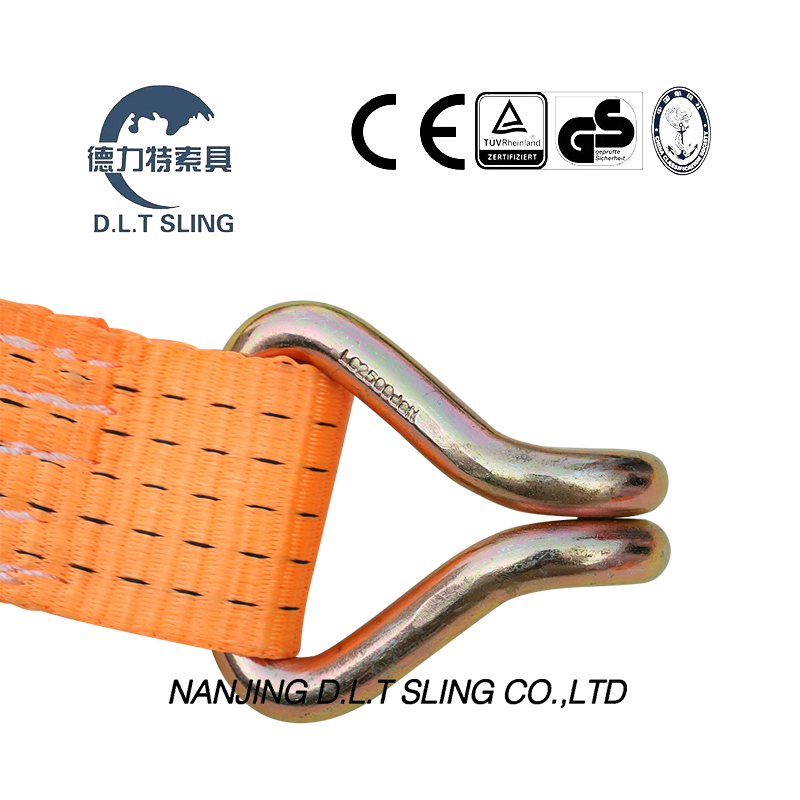
End fitting integration ensures vital system-wide stability. Your chosen hook style must match your trailer anchor points perfectly. The double J hook ratchet tie down configuration leads the transport industry. It serves as the absolute gold standard for flatbed rub rails. The parallel double wire design distributes stress evenly across anchor D-rings. This balanced distribution prevents the hook from twisting sideways under heavy highway vibration. Twisting forces often cause single hooks to pop loose unexpectedly.
You must align handle tension output with hook capacity accurately. A massive, high-leverage handle easily generates extreme mechanical force. If you pair it blindly with a low-capacity hook, disaster strikes quickly. The sheer tension overpowers the hook steel directly. The hook eventually unbends and deforms permanently. Deformation leads directly to immediate load detachment on the highway. Always match the WLL of the tensioner to the specific end fittings precisely.
We constantly see fleets make critical purchasing errors. Avoiding these pitfalls keeps your operations legally compliant and mechanically sound.
Traceability remains an absolute non-negotiable legal necessity. You must ensure the buckle features highly visible, permanent stamping. The specific WLL stamp must remain clearly legible permanently on the steel. Commercial transport regulations mandate this explicit labeling strictly. A faded, scratched, or missing tag renders the equipment illegal instantly. Law enforcement officers will fail your equipment instantly during routine roadside stops. They do not accept verbal assurances about hardware strength.
Vendor transparency signals underlying product quality very strongly. You should evaluate suppliers rigorously before ordering large batches. Ask them directly for detailed batch-level quality assurance data. Reliable vendors willingly provide formally certified testing certificates. These documents prove their hardware meets critical industry standard benchmarks. Shady suppliers always hesitate to share actual destructive test results. They prefer hiding behind intentionally vague marketing promises instead. Always demand hard engineering data for your critical cargo equipment.
Use strict shortlisting logic to guide your vital purchases. We recommend following a very specific sequential evaluation process:
This highly structured approach eliminates dangerous guesswork from procurement completely. It guarantees you receive highly functional, legally compliant hardware every single time. It protects your cargo, your drivers, and your company reputation.
The right tensioning hardware guarantees total load security on the highway. The handle and buckle dictate the functional lifespan of the entire assembly. They determine whether your valuable freight arrives safely or ends up scattered across asphalt. You must never compromise on internal gear alignment, material thickness, or vital corrosion protection.
Start by auditing your current warehouse inventory today. Look very closely for slightly bent handles, heavily rusted gears, or missing WLL tags. Pull any highly questionable hardware from active service immediately. Use the strict criteria detailed above to source reliable, heavy-duty replacements. Equip your field team with fully compliant mechanisms to ensure absolute safety on the road.
A: Technically, yes. Many manufacturers sell replacement handles and buckles separately. However, you must navigate significant risks. Mixing worn webbing with brand-new gears often causes spooling issues. The old webbing might lack the necessary stiffness. More importantly, you must match the WLL ratings perfectly. If the new handle exceeds the old webbing’s capacity, the strap may snap under tension. Always verify compatibility before assembling mixed components.
A: The primary differences lie in leverage and grip space. Standard handles feature a compact profile ideal for tight spaces. Long-wide handles extend further and offer a broader grip bar. This design provides significantly easier tensioning for heavy commercial loads. The extra width comfortably accommodates operators wearing thick winter gloves. It reduces hand fatigue and prevents dangerous slipping during the securement process.
A: Jamming usually stems from three common causes. Over-spooling stands as the most frequent culprit. Wrapping too much excess webbing around the mandrel binds the gears tightly. Severe gear corrosion also freezes the moving parts together. Finally, over-tightening the strap can permanently warp the steel frame. A bent frame misaligns the internal components, making the release pawl impossible to trigger safely.
A: It depends entirely on your operational environment. You must perform a careful hardware evaluation. Stainless steel proves absolutely essential for marine transport or winter highway routes. Road salt and ocean spray destroy standard zinc-plating rapidly. In these harsh conditions, stainless steel prevents catastrophic gear failure. However, if you transport dry goods strictly inside enclosed vans, the extra investment becomes unnecessary overkill.

