

close
Choose Your Site
Global
Social Media


Views: 0 Author: Site Editor Publish Time: 2025-12-22 Origin: Site


Regular inspection of industrial webbing slings is crucial for ensuring the safety, longevity, and reliability of lifting equipment. As an operator or manager, performing daily checks on your lifting slings can prevent accidents, avoid costly downtime, and enhance the overall efficiency of your operations. In this guide, we provide a simple, actionable checklist to help you inspect industrial webbing slings and other lifting equipment, ensuring they remain in top condition.
Industrial webbing slings are essential for many lifting operations, particularly in construction, warehousing, and heavy-duty machinery handling. These slings play a critical role in ensuring that loads are lifted safely, securely, and efficiently. However, like all lifting equipment, webbing slings can suffer from wear and tear over time, which can compromise their strength and safety.
To maintain a safe working environment, regulatory bodies like OSHA (Occupational Safety and Health Administration) and ASME (American Society of Mechanical Engineers) require that lifting slings be inspected before each use. According to OSHA, it's essential to perform visual and tactile inspections to detect any issues that could lead to sling failure. Even small signs of damage, like cuts or frayed edges, can significantly weaken a sling’s load capacity, increasing the risk of failure during lifting operations.
Failing to regularly inspect your industrial lifting slings can lead to accidents, injuries, and damage to goods. Minor issues such as fraying, worn stitching, or mild abrasion may seem insignificant at first, but they can quickly escalate into serious safety hazards. Proper inspection is necessary to catch these problems early and prevent them from affecting the safety of your lifting operations.
Every lifting operation begins with a thorough inspection of the equipment. The following steps outline the critical elements to check before using industrial webbing slings.
The first thing you should check is the webbing itself. Look for any visible cuts, snags, or abrasions on the surface. These imperfections can significantly weaken the fabric, reducing the strength of the sling. Additionally, check for frayed areas or brittle spots that might result from long-term use or exposure to harsh conditions. Discoloration caused by heat or chemical exposure can also be a sign that the sling is damaged.
Next, check the stitching and seams of the sling, especially at the load-bearing areas. Loose, frayed, or broken stitching can compromise the integrity of the sling. Loops and eyes should also be inspected, ensuring they are not damaged, bent, or weakened. Pay particular attention to flat, twisted, and reversed eyes, ensuring that they are still in good condition and capable of securely attaching to lifting hooks or other hardware.
Each webbing sling should have a label indicating important details, such as its Working Load Limit (WLL), the manufacturer's name, and the batch number. Ensure that this information is clearly legible and matches the specifications of the sling you're using. A worn or damaged label could lead to the wrong load being applied, potentially causing accidents.
In addition to the webbing and stitching, inspect the fittings, hooks, shackles, and other attachments used in conjunction with the sling. Check for bent or cracked fittings, signs of corrosion, or excessive wear. Damaged or faulty fittings can cause the sling to fail during lifting, posing significant safety risks. Always ensure that the fittings are properly rated for the load and are in good working condition.
Not every sling is suitable for every lifting operation. It's important to understand when a sling should be removed from service to prevent accidents. Here are some common rejection criteria for industrial webbing slings.
Cuts, tears, or burns: Any visible cuts, tears, or burns on the sling should lead to immediate removal from service.
Chemical or heat damage: Slings that have been exposed to chemicals or high temperatures may become brittle, which compromises their strength and safety.
Discoloration: While minor discoloration may not indicate a significant issue, extensive discoloration due to UV or chemical exposure can weaken the material.
Brittle or stiff areas: Webbing slings that have become brittle or stiff due to exposure to extreme conditions should be discarded, as they are prone to breaking under load.
Broken or loose stitching: Stitching that is coming undone or has visible breaks should be checked carefully, as this can lead to the failure of the sling.
Deformed fittings: Any deformity, crack, or corrosion in the fittings or hardware should disqualify the sling from use.
Never attempt to repair industrial lifting slings by tying knots or using makeshift fixes. If a sling has been modified or repaired in any non-standard way, it should be removed from service. Always follow the manufacturer’s guidelines for maintenance and repair.
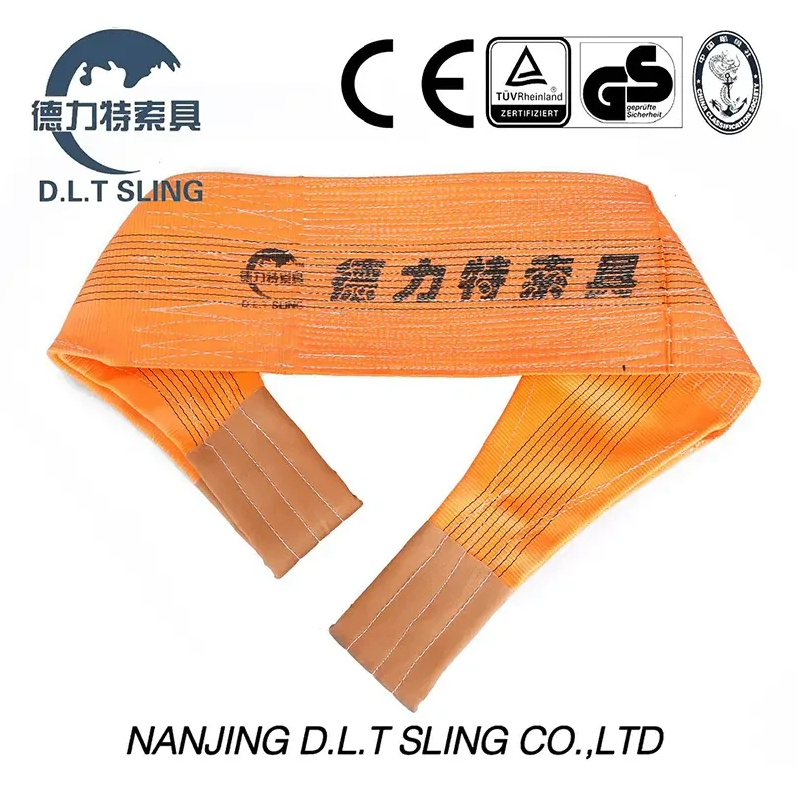
In addition to daily checks, periodic inspections of industrial webbing slings and related lifting equipment are essential to ensuring the equipment’s long-term safety and reliability.
In addition to daily checks, it’s recommended to conduct periodic inspections at least once a year or more frequently, depending on the frequency of use and the environment in which the equipment operates. These inspections should focus on more detailed assessments, such as checking the internal fibers, stitching, and fittings. Some signs of wear may not be visible during daily inspections, so periodic checks allow you to catch any hidden damage before it becomes a safety hazard.
Maintaining detailed records of all inspections is essential for ensuring compliance with safety regulations and for tracking the condition of your equipment over time. Keep a log that includes the inspection date, the name of the inspector, the sling ID or batch number, any issues found, and how those issues were addressed. This helps to ensure that all equipment is up to standard and safe for use.
Storing industrial webbing slings properly is just as important as inspecting them. To prolong their lifespan, store slings in a cool, dry place, away from direct sunlight, chemicals, and extreme temperatures. Avoid storing them in damp environments or near sharp objects that could cause unnecessary wear. Proper storage ensures that the slings remain in good condition and ready for use when needed.
Beyond regular inspections and proper maintenance, there are additional safety practices you can follow to ensure the safe use of industrial webbing slings.
When using webbing slings, always choose the appropriate hitch type for the load being lifted. The most common hitch types are:
Vertical Hitch: Ideal for lifting loads directly from a single point.
Choker Hitch: Best for securing loads tightly with a single attachment point.
Basket Hitch: Provides increased stability for heavy or irregularly shaped loads.
Ensure that the sling is attached securely and that the load is balanced to prevent accidents during lifting.
When lifting loads with sharp edges, it's essential to use edge protection or padding to prevent the sling from being damaged. Slings that come into contact with sharp corners or edges are at risk of cutting or fraying, which can significantly reduce their load capacity and safety.
Never modify or repair webbing slings in non-standard ways. Using knots or makeshift repairs can severely compromise the strength of the sling and lead to accidents. Always ensure that slings are in their original condition and meet the manufacturer’s specifications.
Regular inspection and maintenance of industrial webbing slings are essential for ensuring safety and extending the lifespan of your lifting equipment. By following a daily checklist and performing periodic inspections, operators and managers can prevent accidents and ensure that their equipment remains in top condition. Webbing slings, when used correctly, provide a safe and reliable solution for many industrial lifting tasks.
At D.L.T Sling, we provide high-quality industrial lifting slings and lifting straps for machinery that are designed for durability, flexibility, and safety. Our products meet the highest standards, ensuring that your lifting operations are efficient and risk-free. For more information or to place an order, please contact us today.
Q1: How often should I inspect industrial webbing slings?
You should inspect webbing slings before every use, as well as periodically for wear and tear. For frequent use, a thorough inspection should be done at least once a year.
Q2: Can I continue using a sling with minor fraying?
No, even minor fraying or visible damage should disqualify the sling from use, as it can weaken the sling and pose a safety hazard.
Q3: How do I store webbing slings properly?
Store webbing slings in a cool, dry place, away from direct sunlight, chemicals, and moisture. Ensure they are kept free from sharp objects that could cause damage.
Q4: What should I do if I find a damaged fitting on a lifting sling?
If you find any damaged fittings, such as bent or corroded hooks, they should be replaced immediately. Do not use the sling until the fittings are repaired or replaced.


