

close
Choose Your Site
Global
Social Media


Views: 0 Author: Site Editor Publish Time: 2025-12-10 Origin: Site


Construction lifting nets play a crucial role in safely moving materials, equipment, and machinery on construction sites. These nets, when used with appropriate lifting slings, contribute to an organized and secure operation, reducing the risk of accidents and improving overall efficiency. In this guide, we'll walk you through the safe and proper installation of Industrial Lifting nets for construction, ensuring that workers, materials, and equipment are handled safely during lifting operations.
Construction lifting nets are specialized mesh systems that are designed to assist in lifting large or bulky loads. These nets are typically made of synthetic webbing or metal mesh and are used to encase or secure items that are being lifted, making them more stable during transport. When combined with industrial lifting slings or lifting straps for machinery, lifting nets ensure that the load is lifted safely and securely.
Lifting nets are used in a variety of situations, especially in construction and material handling. Some common applications include:
Lifting construction materials such as bricks, tiles, and steel beams
Moving heavy equipment that cannot be easily strapped with traditional slings
Lifting bulk materials like sand, gravel, or aggregate
Transporting large items that need to be secured but cannot be tied down with ropes or chains
Unlike traditional lifting slings, which are designed to lift an item from one or more points, lifting nets provide a broader surface area for lifting. This makes them ideal for situations where the load is irregularly shaped or requires extra support to prevent tipping or shifting. Lifting nets are also more effective when the load must be lifted from multiple points, reducing the risk of the load swinging or becoming unstable.
Before you begin the installation process, it's essential to ensure that both the lifting nets for construction and the industrial webbing slings are in good condition. Conducting a thorough inspection before each use is critical to the safety of the lifting operation.
Start by checking the lifting net and the accompanying webbing slings for any visible signs of damage or wear. Ensure that all the eye loops, stitching, webbing integrity, and fittings are intact. Pay particular attention to any cuts, abrasions, or tears in the net or sling, as these could weaken their strength and lead to failure during lifting.
Verify that the lifting net and webbing slings are rated for the load you're lifting. It's essential that the net's load-bearing capacity is sufficient for the combined weight of the load and the sling. Overloading the net or sling could lead to dangerous accidents, so always ensure that the working load limit (WLL) of the components aligns with the actual load being lifted.
Before installation, assess the environment where the lifting operation will take place. Check for any sharp edges, hot surfaces, or potential chemical hazards that could damage the lifting equipment. In these conditions, it's important to use appropriate edge protection and ensure that the lifting components are resistant to the specific risks in the environment.
Now that you have inspected and prepared your lifting equipment, it’s time to begin the installation. Here’s a step-by-step guide to help you safely install lifting nets with the correct industrial lifting slings.
Carefully position the lifting net around the load, ensuring it’s securely positioned and balanced. If you are lifting bulky or irregularly shaped items, make sure that the net fully encapsulates the load to prevent it from shifting during the lift.
Once the net is in place, attach the webbing slings to the designated lifting points on the net. Be sure to use the correct eye type (flat, twisted, or reversed) to ensure a secure fit. Avoid using knots or twisting the slings, as these can weaken the integrity of the lifting equipment and make the lift unstable.
Choose the appropriate hitch type based on the load and the configuration of the net. For example, a basket hitch is ideal for lifting loads that are evenly balanced, while a choker hitch is better for securing loads with a single point of attachment. A vertical hitch may be necessary for lifting long items or materials that require direct lifting from the load’s center.
Before raising the load, double-check that it is balanced and secure. Make sure the lifting slings are positioned evenly, and the net is not lopsided. Avoid sudden jerks or lifting the load too quickly, as this could cause shock loading, leading to potential failure of the equipment.
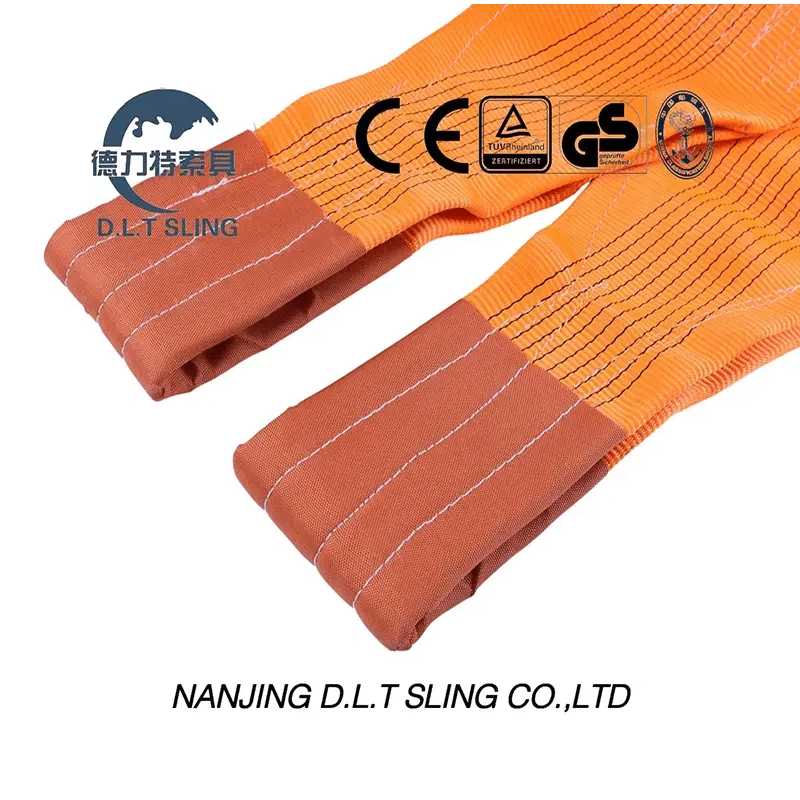
During the lifting operation, it’s crucial to maintain safe practices to ensure that the load remains secure and that personnel are not at risk.
It’s essential that no personnel stand beneath the suspended load or between the sling legs and load/hook during the lift. Always ensure that workers are a safe distance away from the load to avoid any accidents in the event of a failure.
Dragging slings over rough or abrasive surfaces can cause unnecessary wear and tear, compromising the strength of the equipment. Additionally, sharp edges can cut into the webbing of the sling or net, weakening them. Use edge protection, such as padded covers or protective sleeves, if necessary, to prevent this type of damage.
When lifting, always proceed slowly and steadily. Avoid sudden starts and stops that could lead to shock loading or cause the load to shift. A smooth and controlled lift reduces the risk of the load becoming unstable and ensures the safety of everyone involved.
Once the lifting operation is complete, follow proper after-lift procedures to maintain the safety and longevity of your lifting equipment.
When lowering the load, do so carefully and gradually to avoid jerking the net or sling. Ensure that the load is fully lowered before disconnecting the sling or net.
After each use, inspect the lifting sling and net for any damage. Look for cuts, tears, heat or melting damage, frays, or worn stitching. If any damage is found, remove the sling or net from service immediately and replace it with a new one.
Once the lifting operation is complete, store the sling and lifting net properly. Ensure that they are kept dry, clean, and away from direct sunlight, chemicals, or sharp objects. Avoid storing lifting equipment in areas where it could be exposed to extreme temperatures or humidity.
Polyester webbing slings are an excellent choice when used in conjunction with lifting nets for construction due to their numerous advantages.
One of the key advantages of polyester webbing slings is their low elongation under load. This characteristic helps prevent shock loading and ensures that the load remains stable during lifting operations.
Polyester webbing slings are lightweight and flexible, making them easy to combine with lifting nets and other components like fittings and hooks. This makes them an ideal choice for lifting tasks that require versatility and ease of use.
Polyester webbing slings come with various eye types (flat, twisted, reversed), allowing them to be adapted to a variety of lifting tasks. This versatility ensures that the sling can be used in different lifting configurations, making it a reliable choice for many construction applications.
Proper installation and maintenance of lifting nets for construction are crucial to ensuring the safety of both workers and materials. By following the correct installation procedures and using industrial webbing slings in combination with lifting nets, you can minimize the risk of accidents and ensure a smooth lifting operation. Regular inspections and safe lifting practices are essential to prolonging the life of your equipment and ensuring that it remains reliable.
At D.L.T Sling, we manufacture high-quality industrial lifting slings and lifting nets designed to meet the demands of construction and industrial lifting. Our products are tested for durability and strength, ensuring they provide safe, efficient, and reliable lifting solutions for a wide range of applications. For more information or to request a quote, please contact us today.
Q1: What is the primary use of a construction lifting net?
A construction lifting net is used to safely lift and transport bulky or irregularly shaped materials and equipment, ensuring they are stable and secure during the lift.
Q2: How do I choose the right sling for my lifting net?
Choose a sling that is compatible with the load’s weight and size, and ensure it has the correct rated capacity to handle the combined weight of the net and the load.
Q3: Can I use polyester webbing slings for lifting heavy equipment?
Yes, polyester webbing slings are ideal for lifting heavy equipment, especially when paired with lifting nets. They provide low elongation and flexibility, which helps maintain stability during the lift.
Q4: How often should lifting nets and slings be inspected?
Lifting nets and slings should be inspected before each use and periodically for wear and tear. Any signs of damage, such as cuts or fraying, should result in immediate removal from service to ensure safety.


