

close
Choose Your Site
Global
Social Media


Views: 0 Author: Site Editor Publish Time: 2026-03-10 Origin: Site


A round sling is one of the most commonly used soft lifting slings in modern material handling. Thanks to its flexible structure and wide load-contact surface, a round sling is especially suitable for lifting heavy, fragile, and irregularly shaped loads.
This guide explains the correct and practical way to use a round sling, focusing on real lifting operations and on-site safety.
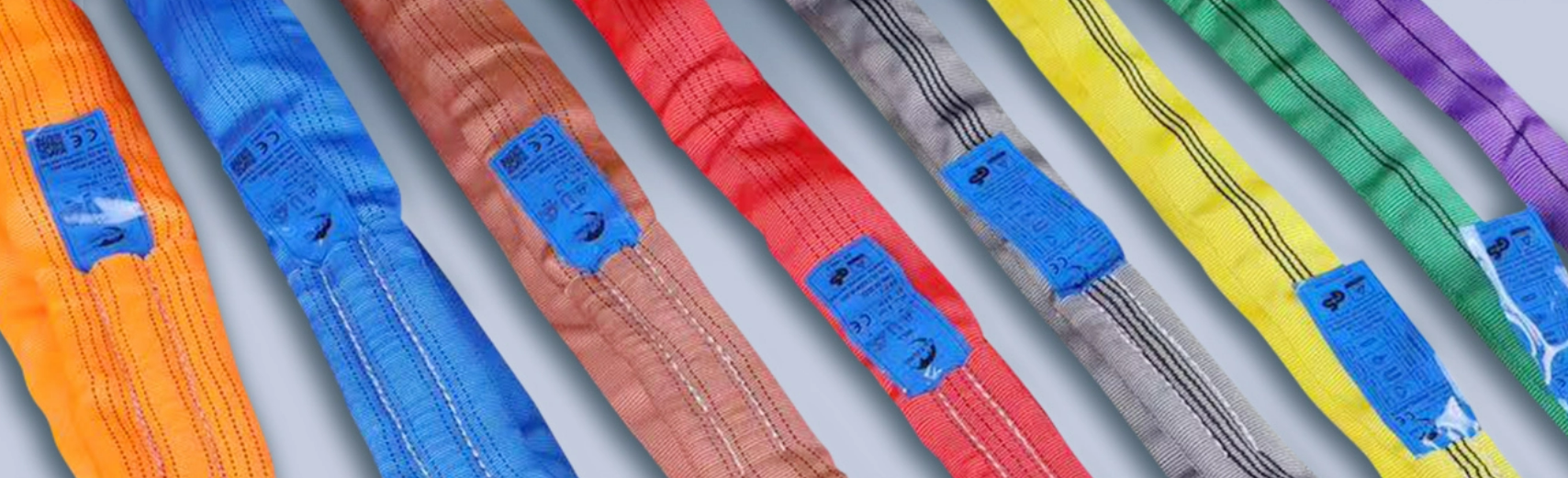
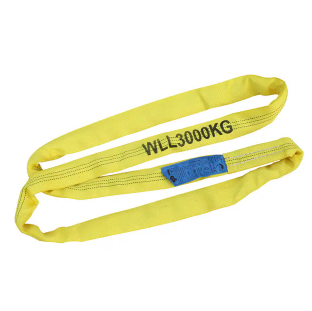
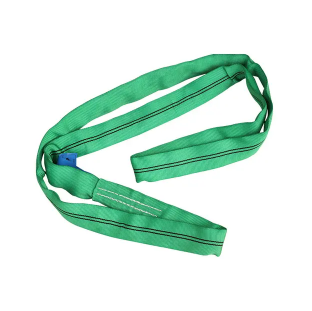
A round sling is an endless lifting sling made from high-strength polyester yarn. The load-bearing yarn core is enclosed inside a protective sleeve, which shields the internal fibers and keeps them correctly aligned during lifting.
A round sling is designed specifically for lifting operations and is constructed with:
• a continuous loop yarn core
• a protective outer sleeve
• a soft and flexible load-contact surface
The sleeve itself does not carry the main load. Its primary function is to protect the internal core.
The main purpose of a round sling is to safely lift and position loads, including:
• lifting and relocating heavy components
• positioning equipment during installation
• turning or rotating loads when required
• assisting assembly and maintenance work
Round slings are not intended for towing, pulling, or load securing.
Round slings are particularly suitable when the load surface must be protected because:
• the soft surface reduces marking and scratching
• the wide contact area lowers surface pressure
• the flexible body adapts to complex shapes
• the load is cushioned during initial tensioning
Round slings are widely used in:
• machinery manufacturing and installation
• mold and tooling handling
• steel fabrication workshops
• logistics yards and warehouses
• plant maintenance and shutdown projects
A round sling carries the load through its internal yarn core. When tension is applied, the fibers inside the sleeve adjust naturally to the load shape.
Because the sling is an endless loop:
• the load is shared through the full length of the yarn core
• there is no fixed lifting point inside the sling
• stress is distributed evenly around the loop
This structure helps reduce localized overloading.
The internal core consists of parallel yarn bundles. Under load:
• the fibers align with the direction of force
• the yarns spread slightly inside the sleeve
• the load is shared across many fibers
This reduces stress concentration and improves stability.
The outer sleeve plays an important protective role:
• reduces abrasion during lifting
• protects against dirt and light contamination
• helps maintain fiber alignment
• improves handling and service life
Compared with wire rope slings and chain slings, round slings:
• provide a wider bearing surface
• create less localized pressure
• significantly reduce surface damage risk
Before using any round sling, its rated capacity must be clearly understood.
WLL (Working Load Limit) is the maximum load that the round sling is permitted to carry under specified and correct lifting conditions.
It represents the real operating limit for lifting.
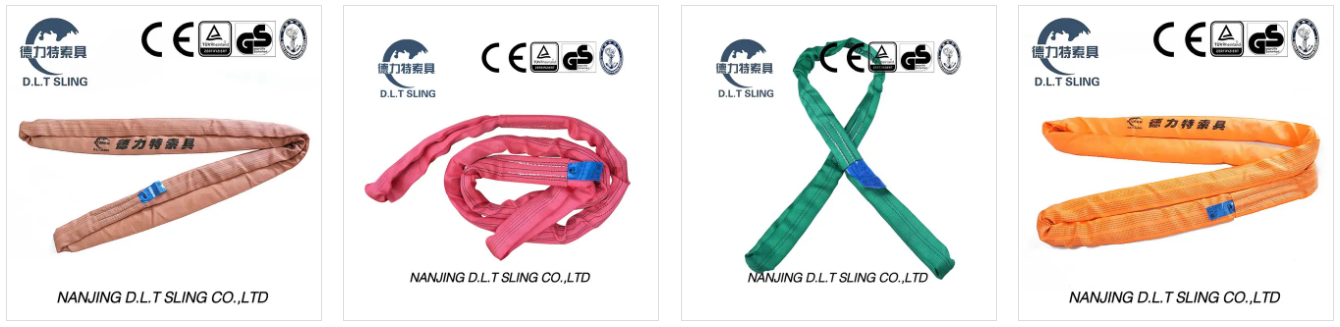
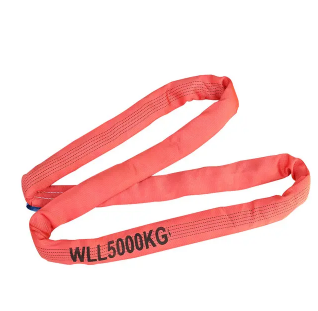
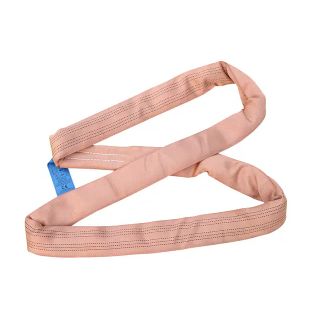
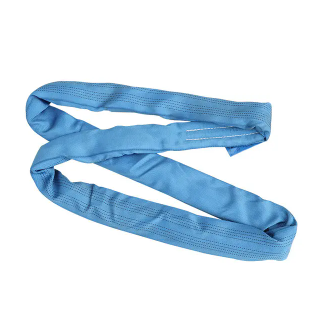
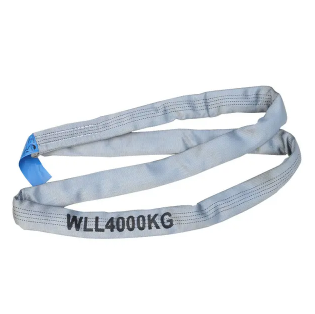
Many round slings use standardized colors to indicate capacity ranges. This allows:
• quick visual identification on site
• easier selection during lifting preparation
The color system must always be used together with the sling label.
It is important to understand that:
• breaking strength is a laboratory test value
• WLL already includes a safety factor
• lifting operations must always follow the WLL
The usable capacity changes depending on the hitch method, such as:
• vertical hitch
• choker hitch
• basket hitch
Different configurations apply different load factors to the sling.
Selecting the correct round sling is a critical part of safe lifting.
When selecting a sling, consider:
• confirmed load weight
• number of slings used
• how the load is shared between slings
The selected WLL must match the actual lifting configuration.
Load geometry strongly influences sling choice, including:
• required contact width
• potential sliding areas
• presence of edges or corners
Large or uneven loads often require longer or multiple slings.
The planned lifting method affects sling performance, such as:
• hitch type
• use of spreader beams
• connection hardware arrangement
These factors must be considered during selection.
Sling length influences:
• lifting angle
• hook height
• load balance and stability
Incorrect sling length may create excessive sling angles and unstable lifting conditions.
Inspection must be carried out before every lifting operation.
Always confirm that the label is present and readable, including:
• WLL
• sling type and length
• manufacturer information
• applicable standard reference
A round sling without a readable label must not be used.
Typical visible damage includes:
• cuts caused by sharp edges
• heavy surface abrasion
• welding spatter or heat marks
Severe sleeve damage may indicate internal fiber damage.
Possible indicators of internal damage include:
• soft spots
• uneven thickness
• local bulging areas
Any suspected core damage requires the sling to be removed from service.
A round sling should be rejected when:
• the core yarn is visible
• the label is missing or unreadable
• the sleeve is severely damaged
• chemical or heat damage is present
Proper preparation greatly improves safety and lifting control.
Before rigging:
• confirm the actual load weight
• identify the center of gravity
• plan sling placement to avoid rotation
Ensure that:
• the contact areas are stable
• the sling will not slide during tensioning
• the load will not deform under contact pressure
Protection should be prepared for:
• sharp corners
• rough or unfinished edges
• painted or coated surfaces
The lifting team should:
• define a clear lifting route
• prepare a stable landing zone
• establish communication between operators
• keep personnel outside the lifting area
Correct use of a round sling starts with proper positioning and controlled loading.
Place the round sling on a stable and clean contact area of the load. Make sure the sling lies flat and is not twisted.
It is important that:
• the sling sits in the planned load-bearing zone
• the contact area is wide and stable
• the sling is not trapped under sharp edges
Select the hitch method according to the load shape and lifting objective. The most common choices are:
• vertical hitch
• choker hitch
• basket hitch
Each hitch type affects both load control and allowable capacity.
The sling should be connected using suitable hooks or shackles that match the sling size and load rating.
Make sure that:
• the sling is seated correctly in the hook
• the hook safety latch is not bearing the load
• the sling is not twisted at the connection point
Lift slowly until the sling becomes taut. At this stage:
• check that the load is balanced
• confirm the sling is correctly positioned
• observe whether any sliding or rotation occurs
Adjust the sling position if necessary before continuing.
During the lift, maintain smooth and steady movement. Avoid sudden starts or stops.
When placing the load down, ensure the sling is not crushed, pinched or trapped.
Understanding hitch methods is essential for safe use.
The sling is attached directly to a single lifting point on the load.
This method provides direct lifting but requires stable lifting points.
The sling passes around the load and through its own body.
This helps control the load but reduces the effective working capacity.
The sling supports the load from underneath with two legs.
This method is commonly used for large or long loads and offers good stability.
Different hitch methods create different load paths inside the sling, which means:
• capacity may be reduced in choker hitches
• load distribution changes in basket hitches
• balance control varies with load shape
Although round slings are flexible, the internal yarn core must be protected from damage.
Sharp edges and corners can cut the sleeve and damage the core very quickly.
Edge protection should always be used when the sling contacts hard or sharp surfaces.
Rough steel, welded seams and unfinished edges can:
• abrade the sleeve
• expose the internal fibers
• significantly reduce sling strength
Protective devices such as pads and corner protectors help distribute pressure and prevent cutting.
A round sling must never be twisted or tied in a knot.
Twisting and knotting cause uneven internal stress and a serious reduction in load capacity.
Round slings are especially suitable for complex and sensitive loads.
The sling should be placed to support the widest possible area of the load and to prevent rolling or tipping.
To improve stability:
• place the sling closer to the center of gravity
• adjust sling positions symmetrically
• apply initial tension slowly
Padding or soft protection layers should be used for painted, coated or finished surfaces.
Long, wide or flexible loads often require more than one sling to control bending and rotation.
Many incidents result from simple operational errors.
Never lift a load that exceeds the rated WLL for the chosen lifting configuration.
An unsuitable hitch may reduce capacity or create unstable load behavior.
A sling without a readable identification label or with visible damage must not be used.
Incorrect hook size or poor seating can lead to local damage and unstable loading.
This is one of the most common causes of sling failure.
Safe lifting depends on both equipment and operating behavior.
No person should stand or pass under a suspended load.
Smooth lifting prevents sudden force spikes and improves load control.
Round slings should be handled carefully and not dragged across rough ground.
All lifting operations should follow applicable site procedures and regulatory standards.
Proper care extends service life and reliability.
Remove dirt, dust and residues that may damage the fibers over time.
Round slings should be stored in:
• dry and well-ventilated areas
• shaded locations away from direct sunlight
• areas free from chemicals and heat sources
Regular inspection records help identify early signs of damage.
Any sling that shows serious wear or structural damage should be removed and replaced.
No. Twisting creates uneven internal loading and reduces safe capacity.
This should only be done when specifically allowed by a lifting plan and suitable connectors are used.
Yes, but they must be protected from long-term UV exposure and contamination and inspected more frequently.
There is no fixed service life. Continued use depends on condition, inspection results and operating environment.
If you need reliable and professionally manufactured round sling solutions for real lifting applications, NANJING D. L. T SLING Co., Ltd. offers a complete range of polyester round slings produced in accordance with international standards such as EN 1492-2. With more than 20 years of experience in lifting and webbing products, strict quality control procedures and strong customization capability, the company supports customers in machinery installation, construction and industrial handling projects with safe, stable and application-matched round sling solutions.


