

close
Choose Your Site
Global
Social Media


A cargo net is a flexible load-handling solution used to contain, secure, or lift multiple items as a single unit. In logistics, construction, and transport operations, a cargo net helps operators move irregular, loose, or bundled goods safely and efficiently without using rigid containers.
In this article, we explain what a cargo net is, how it is used in real operations, how it works, and how it differs from lighter products such as Cargo Mesh Netting.

A cargo net is a load-handling net made from webbing or rope, designed to wrap around and contain goods so they can be lifted or transferred safely by a crane, forklift, hoist, or helicopter.
Unlike rigid pallets or cages, a cargo net adapts to the shape of the load. It is especially useful when multiple bags, cartons, or irregular packages must be moved together.
A cargo net is a flexible net structure that surrounds and supports cargo during lifting or transportation.
It is commonly used when:
• the cargo has irregular shapes
• multiple small packages need to be lifted at once
• fast loading and unloading is required
A typical cargo net consists of:
• a net body made from webbing or rope
• reinforced edge webbing
• multiple lifting points at the corners or edges
• metal rings, hooks, or connection loops
This structure allows the load to be lifted evenly from several points.
Cargo nets are widely used because they are:
• flexible and easy to deploy
• suitable for many different load shapes
• reusable and economical
• efficient for handling grouped cargo
They significantly reduce manual handling and loading time in busy operations.
Cargo nets are mainly used for lifting, transferring, and temporarily containing goods in various industries.
In warehouses and distribution centers, cargo nets are used to lift or move multiple cartons, sacks, or parcels at the same time, improving handling efficiency.
On construction sites, cargo nets are commonly used to transfer materials such as bagged cement, insulation materials, or packaged tools between different working levels.
In ports, cargo nets are used to load and unload bagged cargo and boxed goods quickly. The net is spread out, cargo is placed inside, and the lifting points are connected to a crane hook.
When cargo is transported by helicopter, cargo nets are used for under-slung loads. The net secures the load underneath the aircraft and keeps it balanced during lifting and flight.
Cargo Mesh Netting is more commonly used to:
• cover cargo on trucks
• restrain loose items
• prevent falling objects during transport
It is not normally intended for heavy lifting operations.
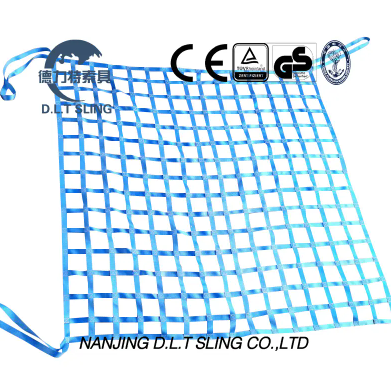
Different cargo nets are designed for different handling tasks.
These are designed specifically for lifting loads.
They normally have reinforced webbing and clearly defined lifting points.
These nets are used mainly to restrain and stabilize cargo during road or sea transportation, preventing shifting and falling.
These nets are designed to keep loads stable during aerial lifting and transport. They focus strongly on balanced load distribution.
This type is lighter and used mainly for covering and restraining rather than lifting.
For unusual cargo shapes, sizes, or lifting configurations, customized cargo nets are often produced to match specific handling requirements.
A cargo net works by wrapping around the load and transferring the lifting force evenly through multiple connection points.
The net is first spread on the ground or platform. Cargo is placed in the center area. When the lifting points are connected and tension is applied, the net closes around the cargo and holds it together.
The net structure spreads the weight across:
• multiple webbing or rope segments
• several lifting points
• reinforced edges
This reduces concentrated stress on any single part of the load.
The number and position of lifting points determine how balanced the load will be. Properly arranged lifting points help keep the load level and reduce swinging during lifting.

The material used in a cargo net plays a direct role in how the net performs during lifting and handling operations. Different applications require different strength levels, durability, and flexibility.
Most industrial cargo nets are made from synthetic fibers, mainly polyester. In some light-duty or protective applications, other synthetic fibers and rope-based structures may also be used.
These materials are chosen because they provide:
• stable strength under load
• good resistance to abrasion
• low sensitivity to moisture
Polyester is widely used because it offers a balanced combination of strength, flexibility and durability. It maintains stable performance during repeated lifting operations and performs well in outdoor and industrial environments.
The fiber type, yarn structure and webbing construction determine how well the cargo net resists wear, deformation and long-term fatigue. Heavier webbing and higher-quality fibers allow the net to handle repeated lifting cycles more reliably.
Cargo nets designed for lifting normally use heavier and reinforced webbing.
Cargo Mesh Netting is usually produced from lighter mesh materials and is focused on coverage and restraint rather than load bearing.
A cargo net is made up of several functional components that work together to support and stabilize the load.
The net body forms the main load-bearing structure. It wraps around the cargo and transfers the load through its interconnected webbing or rope network.
The edge areas are usually reinforced to prevent tearing and deformation when the net is tightened and lifted.
These components connect the cargo net to cranes, hoists or lifting devices. They also determine how the pulling force is introduced into the net.
Tightening elements help gather the net around the cargo and keep the load compact during lifting and movement.
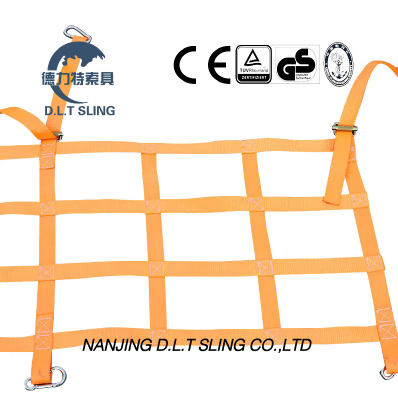
Cargo nets are not the only solution for handling goods. However, they offer unique advantages in specific situations.
Lifting slings are usually attached to defined lifting points on a single load.
Cargo nets surround the load and are better suited for multiple items or irregular shapes.
Pallet systems require standardized pallets and stable stacking.
Cargo nets can be used even when pallets are not available or practical.
Soft containers are designed to hold specific products.
Cargo nets are more flexible and can be used for a wide range of cargo types.
A cargo net is often the better choice when:
• many small packages must be lifted together
• the load shape is irregular
• fast loading and unloading are required
A cargo net is safe only when it is used in the way it is designed to work. Safety does not come from strength alone, but from proper load distribution, correct rigging and suitable operating practices.
A cargo net spreads the load across many webbing or rope segments. This reduces stress concentration and helps keep the cargo stable during lifting. When the load is placed evenly in the center of the net, the lifting force is shared by all supporting parts.
The lifting points determine how the force enters the net. When all lifting points are connected correctly and evenly, the net closes symmetrically around the cargo and remains balanced.
Sharp edges, corners or protruding parts can damage the webbing during lifting. If the cargo has irregular shapes, additional protection should be used to prevent cutting and abrasion.
Correct positioning of the load and proper tightening of the net help prevent internal movement. This reduces swinging and improves overall lifting stability.

Understanding load ratings is essential when selecting and using a cargo net.
WLL refers to the maximum working load that the cargo net is designed to handle under normal and correct operating conditions.
Cargo nets are designed with a safety factor between their working load and ultimate strength. This provides a margin for normal variations in handling and loading.
Lifting cargo nets are rated for load handling.
Cargo Mesh Netting is usually rated for restraint or coverage and not for lifting loads.
The selected cargo net must be suitable for:
• total load weight
• lifting method
• number of lifting points
• working environment
Selecting the correct cargo net depends on the application and the cargo itself.
Bagged goods, cartons and bundled items require different net sizes and structures than irregular or bulky loads.
The net must fully cover the load area and meet the required working load limit.
Lifting operations require load-rated cargo nets.
Cargo Mesh Netting should be selected only for restraint or covering purposes.
Custom cargo nets are recommended when:
• standard sizes do not match the cargo
• special lifting geometry is required
• unusual load shapes are involved
Correct use is essential for safe and efficient lifting.
The cargo should be arranged neatly and placed on a stable surface. Loose items should be consolidated as much as possible.
The net should be fully spread and centered before loading. This ensures that all lifting points will carry load evenly.
All lifting points must be connected to the lifting hook or lifting device according to the specified configuration.
Lifting should begin slowly to allow the net to close evenly around the cargo. Operators should monitor balance and stability during the initial lift.

Incorrect use is a major cause of incidents.
Exceeding the working load limit can cause permanent damage or sudden failure.
Using Cargo Mesh Netting instead of a lifting cargo net is a common mistake in handling operations.
Missing lifting points or uneven connection can cause load imbalance.
Nets with damaged webbing, stitching or fittings should not be used.
Regular inspection helps prevent unexpected failures.
Look for cuts, abrasion, broken fibers or deformation.
Loose threads and damaged reinforced edges reduce strength and stability.
Metal components should be free from cracks, deformation and excessive wear.
Cargo nets should be cleaned after use and stored in dry, shaded and well-ventilated areas.
Cargo nets are widely used across many industries.
They use cargo nets to lift and move grouped packages efficiently.
They use cargo nets to transport materials between working levels.
They rely on cargo nets for fast loading and unloading of bagged and boxed goods.
They use cargo nets for under-slung cargo operations.
Yes, if the cargo net is specifically designed and rated for lifting and the working load limit is respected.
Cargo nets are flexible, but very different load sizes may require different net dimensions.
Service life depends on usage frequency, environment and maintenance. Regular inspection is the key factor.
If you are looking for reliable, load-rated cargo net solutions for real lifting and handling applications, NANJING D. L. T SLING Co., Ltd. offers a full range of polyester cargo nets and Cargo Mesh Netting designed for ports, construction sites, logistics operations and aerial transport projects. With over 20 years of experience in webbing and lifting products, strict quality control systems and flexible customization capability, the company helps customers select and manufacture cargo net solutions that match their actual load types, handling methods and working environments—ensuring safer lifting, higher efficiency and consistent product performance.


