

close
Choose Your Site
Global
Social Media


Views: 0 Author: Site Editor Publish Time: 2025-12-15 Origin: Site


When it comes to industrial lifting, the choice of equipment can make all the difference in terms of safety, efficiency, and durability. Selecting the right lifting equipment is critical to ensuring smooth operations and preventing costly accidents. Heavy-duty lifting equipment, such as industrial lifting slings and lifting straps for machinery, needs to meet specific criteria to ensure the task at hand is carried out safely and efficiently. This guide will break down the essential features that every buyer and operator should consider when selecting lifting equipment.
One of the most crucial factors when selecting any lifting equipment is understanding its load capacity. This refers to the maximum load that the equipment can safely handle without failure. For heavy-duty lifting equipment, the load capacity is typically defined by two factors: the Working Load Limit (WLL) and the design factor.
WLL refers to the maximum load that a piece of lifting equipment is rated to lift safely under standard conditions. It is essential to ensure that the WLL of the equipment matches or exceeds the weight of the load you are lifting.
The design factor refers to the safety margin included in the equipment’s design. A higher design factor provides more safety against unexpected stresses or wear.
Overloading lifting equipment is one of the leading causes of accidents in industrial lifting operations. Exceeding the WLL can lead to equipment failure, damaging goods, and posing safety risks to workers. It’s important to always check the specifications and ensure that the equipment used can handle the weight of the load.
For more demanding lifting tasks, you may need multi-layer industrial webbing slings or multi-leg slings. These slings have different ratings based on the number of layers or legs involved. For example, a duplex webbing sling will have a different load capacity compared to a simplex sling. Always ensure you assess each leg or layer’s rating when using these slings to guarantee safety.
Another critical feature to consider is the material of the lifting equipment. Different materials have varying properties that make them suitable for specific tasks. Polyester webbing slings, for instance, offer certain advantages over metal chains or wire ropes, especially in environments where flexibility, safety, and ease of use are paramount.
Polyester Webbing: Known for its lightness, flexibility, and ease of handling, polyester webbing slings are excellent for lifting delicate loads that may be damaged by heavy-duty equipment like chains or wire ropes. The material has low elongation, which helps maintain stability during the lift, and is resistant to most environmental factors like UV exposure and moderate temperatures.
Metal Chains and Wire Ropes: These materials are stronger and more durable, making them suitable for extremely heavy-duty applications where high tensile strength is necessary. However, they tend to be much stiffer than webbing slings and can cause damage to sensitive loads. They are also more prone to rust and corrosion over time, which can reduce their lifespan.
Polyester webbing is highly favored for many industrial lifting tasks due to its:
Low elongation, which helps in maintaining the stability of the load
Light weight and easy handling, which make it ideal for workers
Reduced risk of damaging sensitive loads when compared to wire ropes or metal chains
Flexibility that allows it to be used in a variety of lifting configurations
However, it’s important to note that polyester webbing slings are more susceptible to high temperatures, sharp edges, and chemical corrosion, so they may not be suitable for all lifting conditions.
For environments where slings will be exposed to extremely high temperatures or abrasive surfaces, a metal mesh sling, wire rope, or chain sling may be more appropriate. These materials are more resistant to heat and wear but are typically less flexible and harder to handle than polyester webbing.
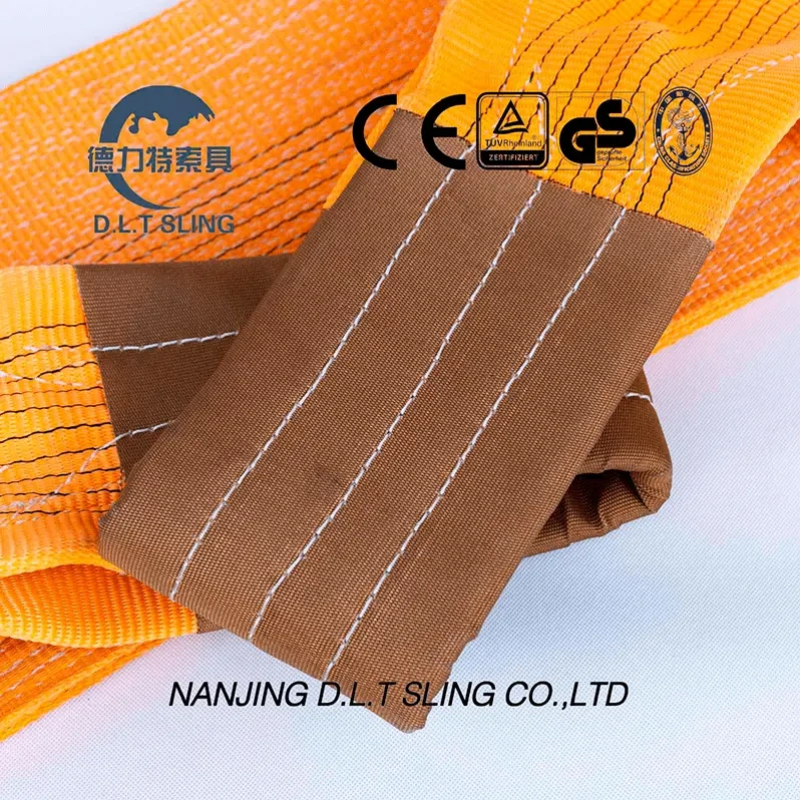
The configuration of the sling plays a significant role in its versatility and effectiveness during lifting operations. For example, industrial webbing slings come in various designs that can be tailored to meet the specific requirements of a lifting task.
Eye types: Webbing slings typically feature different eye types, including flat, twisted, and reversed eyes. These eyes make it easier to attach the sling to the lifting hook or other lifting hardware. Each eye type offers different advantages, depending on the type of load being lifted and the lifting configuration.
Layer configurations: Webbing slings are available in multiple layers (e.g., simplex, duplex, triplex, quadraplex). The more layers a sling has, the higher its lifting capacity. Duplex and triplex slings are often used for more heavy-duty lifting tasks because they provide increased load-bearing capacity and durability.
The type of hitch used—vertical, choker, or basket—affects the load distribution and the overall lifting process. Here's how each hitch works:
Vertical Hitch: This type is used when lifting a load from a single point. It is the most straightforward method and is best for evenly distributed loads.
Choker Hitch: A choker hitch wraps around the load, tightening as the load is lifted. It is often used for lifting irregularly shaped items or when the load needs to be secured tightly.
Basket Hitch: This hitch type uses two attachment points and provides greater load stability. It’s suitable for lifting large and heavy items that require balance and stability during the lift.
Each of these configurations allows you to adapt your lifting strategy to the nature of the load and the requirements of the task.
Heavy-duty lifting equipment must withstand the rigors of frequent use in harsh conditions. To ensure the equipment lasts and continues to perform at a high level, proper maintenance and inspection are critical.
Lifting equipment, including industrial lifting slings and lifting straps for machinery, should undergo regular inspections. This includes both daily checks before each use and more thorough periodic inspections as recommended by safety standards like OSHA or ASME.
Common issues to look for during inspections include:
Wear and tear on the sling's fabric or hardware
Cuts, abrasions, or fraying that could compromise the integrity of the sling
Burns or heat damage, especially for synthetic slings exposed to high temperatures
Broken or damaged fittings, such as hooks or shackles
It’s important to never attempt to repair a damaged sling with makeshift fixes like knots or stitching. If a sling shows signs of significant damage, it should be removed from service immediately. Continuing to use damaged lifting equipment is a significant safety risk.
One of the main reasons industrial webbing slings are so popular is their versatility. They can be used in a wide range of industrial lifting applications, from transporting equipment in manufacturing plants to lifting construction materials on a job site.
Webbing slings are perfect for lifting a variety of equipment and materials, including:
Machinery: Lifting straps for machinery are particularly well-suited for the flexible and secure handling of industrial machines.
Construction materials: When lifting construction materials like bricks, beams, and pipes, webbing slings prevent damage to delicate surfaces and ensure the load is balanced.
These slings are also great for lifting large, irregularly shaped, or delicate items where other forms of lifting may be less effective.
When selecting heavy-duty lifting equipment, it’s essential to consider the load capacity, material properties, sling configuration, and maintenance requirements. Polyester webbing slings offer a combination of safety, flexibility, and cost-effectiveness that makes them a go-to choice for many industrial lifting applications. They excel in handling lighter to medium loads in a variety of settings, offering a safe and reliable solution for lifting machinery, construction materials, and more.
At D.L.T Sling, we provide top-quality industrial lifting slings, including eye-eye webbing slings, designed to meet the toughest lifting challenges. Whether you are lifting heavy machinery or handling construction materials, our products offer durability, flexibility, and safety. For more information or to place an order, please contact us today.
Q1: What is the difference between polyester webbing slings and chain slings?
Polyester webbing slings are lighter, more flexible, and better for delicate loads, while chain slings are stronger and better suited for extremely heavy loads and harsh environments.
Q2: How do I know which sling is suitable for my lifting task?
You should consider the weight, shape, and environmental factors of the load, as well as the lifting configuration. Polyester webbing slings are ideal for general lifting tasks, while chain or wire rope slings are better for heavier, more rugged applications.
Q3: Can I use webbing slings for lifting machinery?
Yes, lifting straps for machinery are commonly made from webbing slings, which provide the flexibility and strength needed to lift industrial machines securely.
Q4: How often should I inspect my lifting slings?
Lifting slings should be inspected daily before use and periodically for wear and tear. Any damaged or worn slings should be removed from service immediately to prevent accidents.


