

close
Choose Your Site
Global
Social Media


A round sling is a soft and highly flexible lifting sling designed for handling heavy, delicate and irregularly shaped loads in industrial lifting operations. Because of its lightweight structure and load-friendly surface, the round sling has become one of the most widely used lifting tools in modern manufacturing, construction and equipment installation.
In this article, you will clearly understand what a round sling is, how it is constructed, how it works during lifting, and why it is so different from traditional rigid lifting devices.
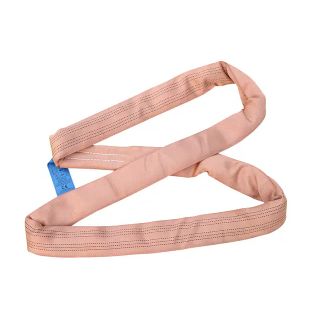
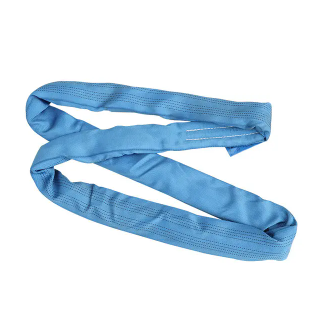
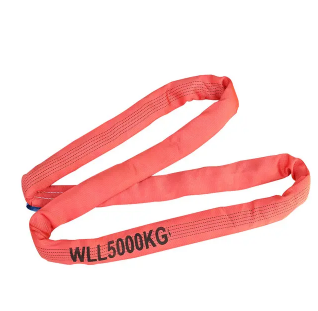
A round sling is an endless lifting sling made from high-strength synthetic fibers, most commonly polyester. Unlike flat webbing slings, a round sling does not have stitched ends. Instead, it forms a continuous closed loop.
The load-bearing fibers are fully enclosed inside a protective sleeve. During lifting, the internal yarn core carries the entire load, while the outer sleeve protects the fibers and keeps them properly aligned.
A round sling is a soft lifting sling designed for overhead lifting operations. It is mainly used together with cranes, hoists and lifting frames to lift, position and move loads safely.
In simple terms, a round sling is:
• an endless loop lifting sling
• built with a fiber load-bearing core
• protected by a flexible outer sleeve
Round slings belong to the category of soft slings because both the load-bearing material and the external surface are flexible. Unlike wire rope slings or chain slings, a round sling does not have hard metal contact surfaces.
This soft structure is one of the main reasons why round slings are widely used for lifting finished products, coated parts and precision equipment.
Although both are textile slings, their structures are different. Flat webbing slings rely on stitched webbing layers, while a round sling relies on a continuous internal fiber core protected by a sleeve.
In practice, a round sling offers better shape adaptability and more uniform load distribution, especially when lifting round, curved or irregular loads.
The performance of a round sling is determined primarily by its internal structure. While the sling looks simple from the outside, its internal design is carefully engineered.
The core of a round sling consists of many parallel polyester yarns. These yarns are the only elements that carry the lifting force.
When the sling is loaded, the yarn bundles share the tension together and distribute the load evenly along the loop.
The outer sleeve is normally made from polyester or nylon fabric. It does not carry the main load. Its purpose is to protect the internal fibers from:
• abrasion
• dirt and contamination
• minor surface damage
The sleeve also improves handling and helps operators position the sling more easily on the load.
During lifting, the sleeve keeps the internal yarns aligned and prevents them from becoming twisted or displaced. This stabilizing function helps maintain consistent load transfer inside the sling.
One important characteristic of a round sling is that the yarn core is free to move inside the sleeve. When the sling contacts the load, the fibers naturally spread out and form a wider bearing surface.
This is a key reason why round slings are able to reduce local surface pressure and improve load protection.
A round sling works by transferring lifting force through its internal yarn core while adapting its shape to the load surface.
When the crane hook applies tension to the sling, the load is transferred directly into the polyester yarn core. Each yarn strand carries a small portion of the total load, and together they form a strong and balanced lifting structure.
Because the sling is endless, the tension is not concentrated at one stitched area. The force flows continuously around the loop, which helps reduce stress concentration and improves fatigue resistance.
Unlike rigid lifting tools, a round sling bends and conforms to the load surface. Whether the load is cylindrical, rectangular or irregular, the sling naturally follows the contour of the contact area.
This improves grip and stability during lifting.
When the fibers spread under load, the contact area becomes wider. This reduces pressure on any single point of the load surface and helps prevent dents, scratches and coating damage.
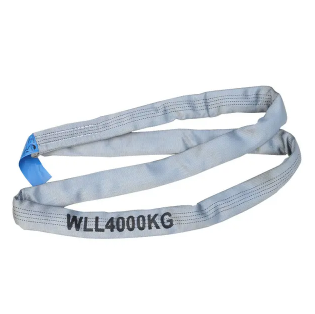
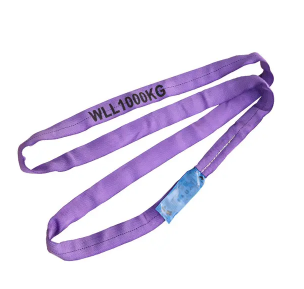
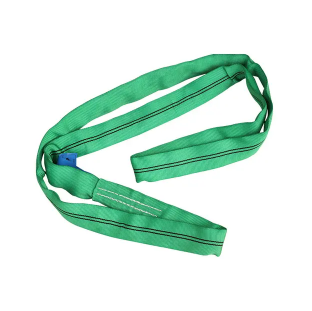
One of the main reasons round slings are widely accepted in lifting operations is their balanced combination of performance and handling convenience.
A round sling offers:
• very low self-weight, making manual handling easier
• high strength relative to its size
• excellent flexibility in all directions
• stable lifting behavior due to low stretch
• a load-friendly contact surface
Compared with many traditional slings, a round sling allows operators to work faster, safer and with better protection of the lifted product.
A round sling is mainly used for lifting and handling loads that must be moved safely without damaging their surfaces. Because it can adapt to many shapes and provides wide contact with the load, it is especially suitable for general industrial lifting where both safety and product protection are important.
In production workshops, round slings are widely used for moving machine parts, frames, fabricated components and assemblies between workstations. Their flexibility makes them easy to position around awkward shapes without complex rigging.
During equipment installation and relocation, round slings are often selected to lift and position machines accurately. The soft contact surface helps protect painted surfaces and machined reference areas during alignment work.
On construction sites, round slings are used for lifting prefabricated components, steel members and structural parts where controlled handling and surface protection are required.
In logistics yards and warehouses, round slings are commonly used to handle packaged equipment, crates and large cartons when forklift access is limited or when overhead lifting is required.
Round slings are particularly suitable for loads such as finished equipment, coated structures and delicate assemblies, where rigid slings could easily cause scratches or surface marks.
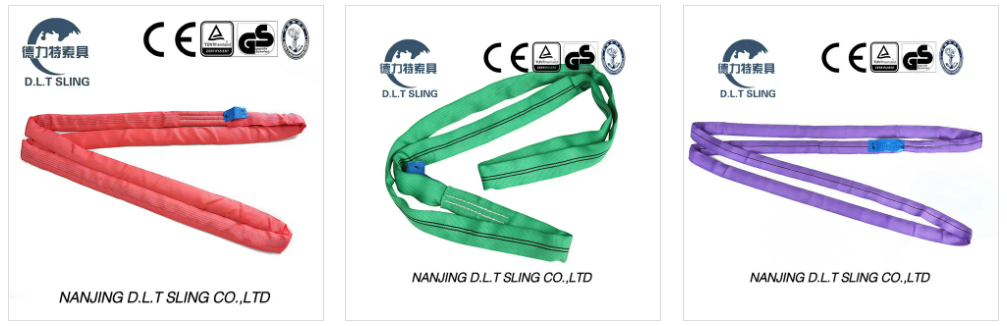
One of the most important advantages of a round sling is its ability to protect the load while maintaining stable lifting performance.
Because the internal yarn core can spread inside the sleeve, the sling forms a wider contact area with the load. This significantly reduces surface pressure compared with narrow or rigid lifting tools.
A round sling naturally bends and wraps around curved and irregular surfaces. This makes it easier to achieve balanced support even when the load shape is complex.
The soft textile surface prevents direct metal-to-metal contact, which helps avoid damage to painted, polished or coated surfaces.
By adapting to the shape of the load, the sling helps maintain stable positioning and reduces unexpected movement during initial lifting.
Although all round slings share the same basic structure, different designs are used to meet different lifting demands.
These are the most commonly used round slings and are suitable for most general lifting applications in manufacturing, construction and logistics.
Heavy-duty round slings use higher load-bearing cores and are designed for lifting larger and heavier components under controlled conditions.
For environments with rough surfaces or higher abrasion risk, reinforced sleeves are used to improve resistance to wear and extend service life.
Custom round slings can be produced with special lengths, capacities or sleeve designs to match specific load sizes, lifting configurations and site conditions.
Correct understanding of load ratings is essential for safe use of a round sling.
WLL, or Working Load Limit, is the maximum load that the sling is allowed to carry under specified lifting conditions. It represents the safe working capacity in real operations.
The design of a round sling includes a safety factor between its working capacity and its ultimate breaking strength. This margin helps ensure reliable performance during normal lifting activities.
Breaking strength refers to the load at which the sling fails under test conditions. It is not intended to be used as a reference for daily lifting. All lifting operations must be planned and executed based on WLL.
The actual usable capacity of a round sling depends on how it is rigged. Different hitch methods and sling angles change the way force is applied inside the sling and therefore change the allowable load.
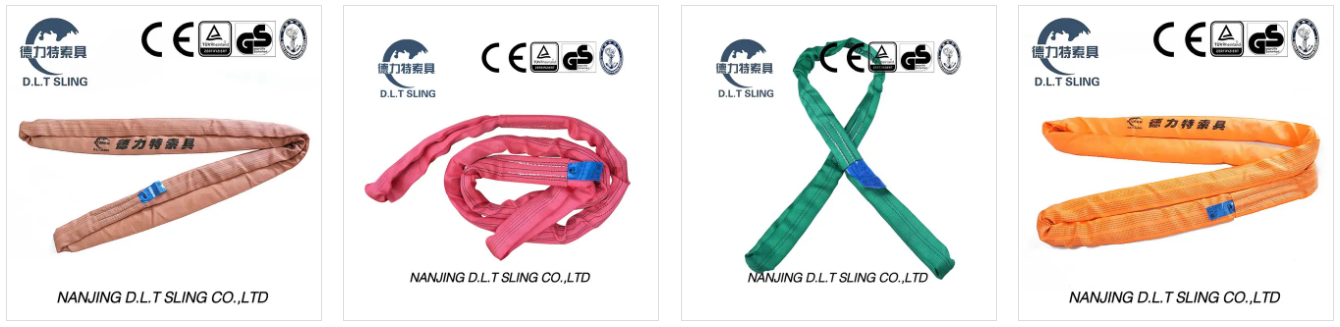
Round slings are normally supplied with both color coding and identification labels to support correct selection and traceability.
Color coding allows operators to quickly recognize approximate capacity ranges when preparing lifting work. It improves efficiency and reduces the risk of selecting an unsuitable sling.
The label normally shows key technical information such as:
• WLL
• sling length
• manufacturer or supplier information
• applicable standard
Traceability allows users to confirm compliance with relevant standards and to manage inspection and replacement records properly.
If the identification label is missing or unreadable, the sling’s capacity cannot be confirmed. Such slings should always be removed from service.
Round slings are often selected because they provide a different balance of protection and flexibility compared with other lifting tools.
Both are textile slings, but a round sling uses an internal fiber core protected by a sleeve, while a flat webbing sling uses layered webbing. Round slings generally adapt more easily to curved and irregular surfaces.
Wire rope slings offer high resistance to cutting and high temperatures, but they are rigid and may easily damage sensitive load surfaces. Round slings provide much better surface protection.
Chain slings are suitable for harsh environments and high temperatures, but they are heavy and offer no cushioning for the load. Round slings are lighter and much easier to handle.
A round sling is often the better solution when the load has delicate surfaces, irregular geometry or when fast and flexible rigging is required.
Most round slings are manufactured using high-tenacity polyester yarn as the load-bearing core, with a protective outer sleeve made from polyester or, in some designs, nylon fabric.
Polyester is widely selected because it offers stable strength, low stretch and good resistance to moisture. It performs reliably in normal industrial environments and maintains predictable behavior during lifting.
The sleeve protects the internal yarn core from abrasion, light surface damage and contamination. It also helps the sling keep a consistent shape when being positioned on the load.
Polyester performs well in wet conditions and does not absorb water easily. However, like all textile slings, round slings are not intended for high-temperature environments or severe surface abrasion without protection.
Round slings should be kept away from sharp edges, hot surfaces and aggressive chemicals. Exposure to these conditions can significantly shorten their service life.
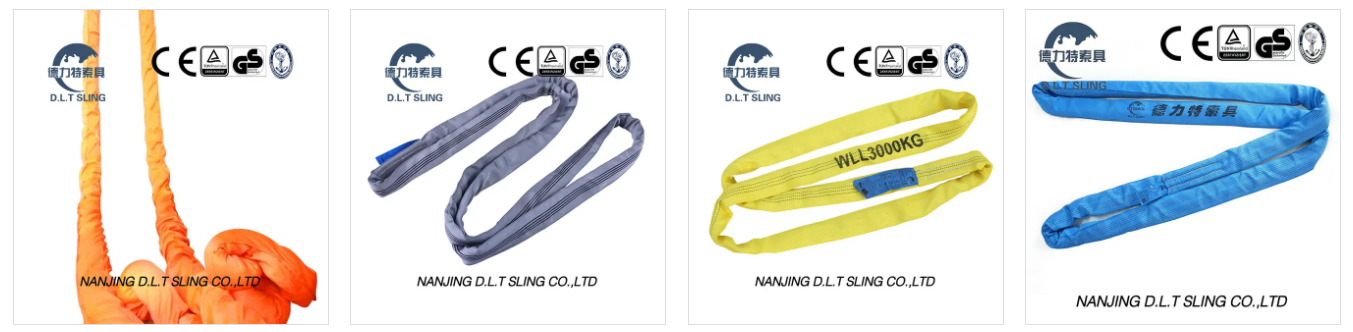
Safe use of a round sling depends on correct selection, proper rigging and good lifting practice.
The endless loop structure allows the load to be distributed along the entire yarn core. This reduces stress concentration and helps maintain stable lifting performance.
Correct placement of the sling ensures that the load is supported evenly and reduces the risk of sliding or unexpected rotation during lifting.
When a round sling passes over sharp or rough surfaces, protective pads or corner protectors should be used to prevent cutting and severe abrasion.
The hitch method, sling angle and connection hardware directly affect how the load is transferred into the sling and must be considered during planning.
Although round slings are versatile, they are not suitable for every lifting situation.
Without proper protection, sharp corners and rough steel edges can quickly damage the sleeve and internal fibers.
Round slings are not designed for hot work areas, such as near furnaces or freshly welded components.
Certain chemicals, oils and solvents may weaken textile fibers and must be avoided.
For extreme temperatures, severe abrasion, or highly aggressive environments, chain slings or wire rope slings are usually more appropriate.
Choosing the correct round sling is one of the most important steps in safe lifting.
The sling must be selected according to the actual load weight and the intended lifting configuration.
Large, long or irregular loads may require longer slings or multiple slings to achieve proper support and balance.
The planned hitch type and sling angle must be considered, as they directly influence the usable capacity.
Surface condition, temperature, exposure to chemicals and available lifting space should all be considered when choosing the sling type and sleeve design.
Routine inspection and basic care play a major role in preventing lifting incidents.
The sleeve should be checked for cuts, heavy abrasion, burns or torn fabric.
Soft spots, uneven thickness or local bulging may indicate internal yarn damage.
The identification label must be readable so that the capacity and product information can be confirmed.
Round slings should be stored in clean, dry and shaded areas and should not be dragged across rough ground or sharp surfaces.
Round slings are widely used across many industrial sectors.
They are used for handling machine parts, frames and assemblies during production.
They are applied in lifting structural components and prefabricated elements on site.
They are used for lifting crates, packaged equipment and large items during handling operations.
They are commonly used when positioning or relocating machinery inside factories and plants.
Both products are designed to meet specific lifting requirements. Strength depends on the rated capacity and design, not simply on the sling type.
No. Twisting changes internal load distribution and reduces safe working capacity.
Yes, but they should be protected from long-term sunlight exposure and inspected more frequently.
There is no fixed service life. Continued use depends on condition, environment and inspection results.
If you are looking for reliable and application-ready round sling products for real lifting operations, NANJING D. L. T SLING Co., Ltd. provides a complete range of polyester round slings manufactured in accordance with international standards such as EN 1492-2. With more than 20 years of experience in webbing and lifting products, strict quality control procedures and flexible customization capability, the company supports customers in manufacturing, construction and equipment installation projects with stable quality, clear load ratings and professionally matched round sling solutions.


