

close
Choose Your Site
Global
Social Media

Views: 0 Author: Site Editor Publish Time: 2026-07-25 Origin: Site


Inadequate load securing carries severe operational and legal risks for modern fleets. You face substantial DOT fines, damaged freight, and catastrophic liability claims if debris escapes during transit. Fleet operators must prioritize containment safety over cutting corners. It is time to shift away from standard tarps. Standard solid covers catch crosswinds and tear under stress. Flimsy bungee cords simply fail to handle dynamic road conditions. They stretch dangerously during sudden stops. Instead, you need the specialized structural containment provided by heavy-duty cargo mesh netting. This equipment secures irregular loads while allowing turbulent air to flow freely. We designed this guide to help logistics managers and fleet operators navigate complex procurement decisions. We provide an evidence-based framework to evaluate, specify, and procure the exact netting for your operations. You will learn to match materials to payloads, calculate safety limits, and integrate correct tie-down hardware to keep your fleet fully compliant.
Standard solid tarps often create major headaches for logistics operators. They suffer from severe wind drag at highway speeds. This parachuting effect destroys your fuel efficiency. It also puts massive stress on vehicle anchor points. Solid covers tear easily when pulled over sharp-edged loads like scrap metal or timber. On the other end of the spectrum, lightweight bungee nets lack true structural integrity. They might hold down a few light boxes. However, they fail dangerously under shifting heavy mass.
Effective load control demands a highly engineered approach. Your success criteria must prioritize aerodynamic flow-through. Wind must pass through the barrier without creating drag. You also need visual load inspection capabilities. Drivers must verify load stability at weigh stations without removing the entire cover. A proper mesh net provides guaranteed debris containment. It achieves all these goals simultaneously.
Compliance forms the ultimate foundation of road safety. The Federal Motor Carrier Safety Administration (FMCSA) enforces strict regulations regarding cargo securement. Local DOT inspectors routinely penalize commercial vehicles for preventable spillage. Using certified cargo mesh netting demonstrates active compliance. It proves you utilize engineered solutions rather than makeshift tie-downs. This proactive strategy prevents costly out-of-service violations. It keeps your trucks moving and your drivers safe.
Not all mesh fabrics perform identically under stress. You must match the material reality to your daily operations. Choosing the wrong fiber leads to rapid degradation. It also increases the risk of on-road mechanical failures.
Polyester mesh delivers exceptional low-stretch properties. It boasts extremely high UV and water resistance. We highly recommend polyester for flatbeds. It excels at securing rigid loads requiring static tension. The material maintains its exact dimensional shape beautifully over thousands of highway miles. It resists stretching even during sudden braking events.
Nylon mesh offers a much higher stretch capacity. This elasticity proves ideal for dome-shaped payloads. Think of landscaping debris or large mounds of bagged mulch. The fabric expands to hug irregular contours. However, nylon absorbs environmental moisture. It may lose a small percentage of its tensile strength when soaking wet. You must factor your regional climate into this choice.
Polypropylene and polyethylene provide highly cost-effective alternatives. These plastics weigh very little. The major downside involves their rapid UV degradation. They dry out and become brittle under constant sun exposure. Best use cases involve short-haul runs or strictly temporary applications.
Structural design plays an equally important role. You must differentiate between flat webbing nets and fine-weave extruded mesh. Flat webbing nets utilize intersecting seatbelt-style material. They offer massive strength for securing heavy machinery. Fine-weave mesh uses tightly knit synthetic threads. This tight weave specializes in loose gravel and fine debris containment.
| Material Category | Stretch Capacity | UV & Moisture Resistance | Primary Fleet Application |
|---|---|---|---|
| Polyester Webbing | Very Low | Excellent | Flatbeds, heavy machinery, rigid freight |
| Nylon Mesh | High | Moderate (absorbs water) | Landscaping, settling loads, irregular shapes |
| Polypropylene | Low | Poor (degrades in direct sun) | Short-haul debris, temporary coverage |
Procuring fleet equipment requires strict attention to engineering metrics. You cannot rely on guesswork. Your purchasing decisions must reflect documented safety ratings.
Never buy containment gear based on break strength alone. Break strength simply indicates the absolute maximum force required to destroy the net. Industry safety standards dictate using a Working Load Limit (WLL). We typically apply a 1:3 or 1:4 safety factor. If a net features a 12,000-pound break strength, its WLL sits around 3,000 to 4,000 pounds. You must size your equipment based strictly on the WLL. This buffer accounts for dynamic forces like hard cornering or evasive maneuvers.
You must also match the mesh aperture to your payload. Aperture refers to the physical size of the square openings. Use smaller apertures for loose bulk material. We recommend a 1/4-inch hole size for sand, gravel, or fine wood chips. Conversely, use a 2-inch or larger aperture for bulky boxes. Larger holes drastically reduce wind resistance and overall weight while still blocking large debris.
The edges of your net take the most physical abuse. You must evaluate the edge reinforcement methods carefully. Look for these specific construction details before buying:
These structural features prevent tension tear-outs. When drivers ratchet down the system tightly, cheap hems rip instantly. Reinforced construction ensures the load forces distribute evenly across the entire barrier.
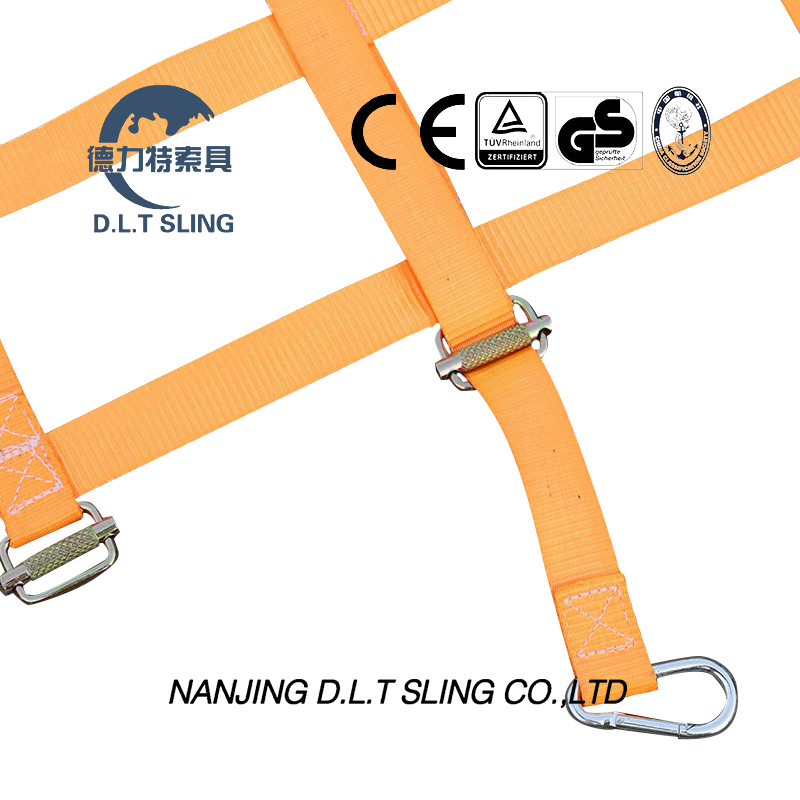
The safest cargo barrier remains completely ineffective without proper implementation. Your containment system acts as a unified mechanical chain. It is only as secure as its weakest anchor point. You must evaluate the vehicle's existing D-rings, stake pockets, and anchor rails. Corroded or under-rated truck anchors will fail long before the net itself breaks.
Securement requires specialized hardware built for high tension. A heavy-duty flatbed net needs serious lockdown power across large pallets. We strongly recommend integrating a transport winch strap to handle massive vertical tension. Winch systems allow drivers to lock down heavy freight firmly against the deck. The winch mechanism generates the mechanical advantage necessary to flatten rigid nets over bulky machinery. This prevents any vertical bouncing during transit.
For perimeter control, you need even, localized tension. You do not want to snap the brass grommets out of the hem. Integrating a ratchet lashing belt along the edges provides exact control. Ratchets allow minute micro-adjustments. You can pull the net tight against irregular vehicle contours without applying destructive force. This perimeter lockdown seals the edges and prevents small debris from leaking out the sides.
Fleet managers routinely see two frequent mistakes during rollout. First, untrained drivers might over-tension rigid polyester nets. Cranking the hardware too far rips the fabric straight out of the hem. Second, drivers often under-tension high-stretch nylon nets. Nylon stretches further as the load settles. Under-tensioning leaves slack, allowing the load to shift dangerously. Training your team on proper hardware usage prevents both dangerous scenarios.
You must decide whether standard sizing fits your fleet or if you need bespoke solutions. Off-the-shelf nets work perfectly for highly uniform operations. They fit standard pickup beds like 5.5-foot, 6.5-foot, or 8-foot layouts flawlessly. They also suit uniform pallet dimensions. Standard buying saves time, reduces upfront unit costs, and allows for rapid replacement.
However, customized transport beds or specialized payloads demand custom-made nets. Standard nets often leave dangerous overhangs. Overhangs create snag hazards near the wheels. Conversely, nets too small create tension gaps. Gaps let dangerous debris escape onto the highway. Use this targeted procurement checklist when ordering custom setups:
Choosing the right supplier mitigates massive operational risk. Look for manufacturers who openly publish certified WLL testing data. Ask for clear warranty terms regarding UV degradation. A reputable vendor stands behind their material specifications with empirical testing. They should eagerly provide documentation proving their products meet or exceed FMCSA guidelines.
Proper load containment prevents massive fines, protects valuable cargo, and ultimately saves lives on the highway. We strongly recommend prioritizing certified WLL ratings over basic break strength. Choose UV-resistant materials like heavy-duty polyester for maximum long-term reliability. By aligning your material choice with your specific payload, you optimize both safety and return on investment.
Take action immediately to improve your fleet safety. Start by auditing your current vehicle anchor points and replacing any rusted hardware. Measure your typical load heights to understand your actual containment volume needs. Finally, request material samples or certified spec sheets from your suppliers before executing a bulk purchase. Equipping your fleet correctly today eliminates catastrophic liabilities tomorrow.
A: Break strength is the absolute maximum weight a net can hold before failing completely. Working Load Limit (WLL) is the legally approved, safe weight capacity for daily use. Industry standards apply a safety ratio—usually 1:3 or 1:4. If a net has a break strength of 12,000 lbs, its WLL is 3,000 lbs. Always base your securement planning strictly on the WLL.
A: Measure the inside length and width of the containment area from anchor point to anchor point. Next, estimate the maximum peak height or "bulge" of your typical loads. Bulky cargo requires extra netting fabric to drape over the top. Add this drape length to your baseline measurements to prevent buying a net too small for loaded conditions.
A: No. Standard bungee cords remain extremely dangerous for heavy load securement. They lack a certified Working Load Limit and degrade quickly under UV exposure. Bungees stretch unpredictably during hard braking or impacts, allowing heavy cargo to shift. Always use rated hardware to ensure your netting performs structurally.
A: Lifespan depends heavily on material choice and UV exposure. Heavy-duty polyester mesh can last 3 to 5 years under daily sun and harsh weather due to its high UV resistance. Polypropylene nets degrade much faster and may only last 1 to 2 years. Storing your nets indoors when not in use significantly extends their operational life.

