

close
Choose Your Site
Global
Social Media

Views: 0 Author: Site Editor Publish Time: 2026-09-02 Origin: Site


Sourcing wholesale cargo nets overseas offers significant margin advantages. However, navigating this market introduces severe compliance risks. It also creates ongoing quality consistency challenges. A failed cargo net results in catastrophic load damage. Whether used in aviation, heavy lifting, or trailer transport, failures trigger massive regulatory fines. They expose your business to severe safety liabilities. Procurement managers need absolute certainty before placing bulk orders. You cannot afford to guess regarding supplier legitimacy. This guide provides global distributors a rigorous, evidence-based evaluation framework. You will learn how to properly shortlist and verify a legitimate cargo net manufacturer. We cover crucial verification tactics and stringent quality control assessments. You will also learn how to identify hidden supply chain red flags. Read on to secure your supply chain and protect your bottom line.
Verify manufacturing capability: Distinguish true factories from trading companies by auditing their raw material processing and in-house weaving machinery.
Demand verifiable compliance: Ensure the manufacturer holds active, verifiable certifications relevant to your sector (e.g., FAA/EASA for aviation, EN/ASME standards for lifting).
Assess the QA/QC loop: Reliable manufacturers document their Working Load Limit (WLL), Safety Factor (SF), and UV resistance testing for every batch.
Start with a structured sample: Never place a bulk order without testing a prototype for dimensional tolerance, mesh size consistency, and webbing durability.
The B2B landscape features many different supplier types. You must understand the structural differences between trading companies and direct factories. Traders typically offer broad product catalogs. They source items from multiple smaller workshops. They charge higher markups. They exercise much lower quality control over the final product. True factories own specialized machinery. They manage the entire weaving and stitching process internally. They take direct accountability for production flaws. Working directly with factories ensures better communication. It also provides faster resolution for technical issues.
You must deploy strict verification tactics during your initial search. Finding a reliable china cargo net manufacturer requires active investigation. Do not rely solely on polished website photos. Take proactive steps to confirm their operational reality.
Request live video audits of the facility. Inspect the production floor carefully. Focus specifically on weaving and stitching stations.
Check ISO 9001 certification scopes closely. The certificate must explicitly cover the "manufacturing of cargo nets." Reject certificates covering just "sales" or "export."
Evaluate their specific customization capabilities. Ask them to modify mesh sizes. Request different webbing widths and hardware attachments. Genuine manufacturers handle these requests easily.
Always verify the registered factory address using third-party business directories.
Ask for an equipment list detailing their weaving looms and sewing machines.
Request references from previous clients in your specific industry.
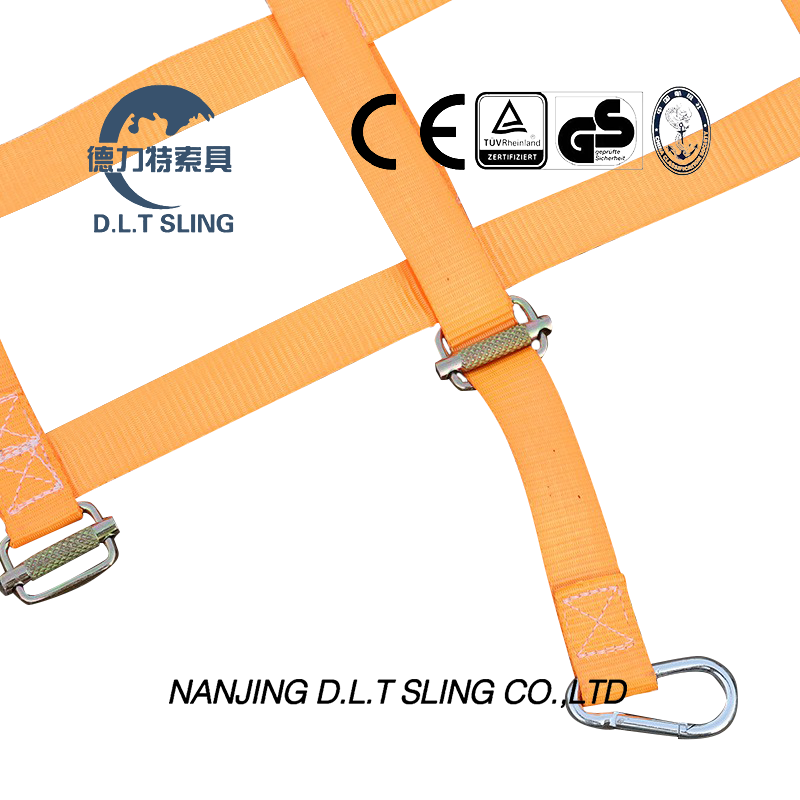
Selecting the right material dictates product lifespan. We often compare Nylon and Polyester. Manufacturers must understand UV degradation extensively. They should know how moisture resistance impacts overall performance. Polyester absorbs very little moisture. It resists UV damage highly effectively. This makes it ideal for outdoor applications. Nylon offers higher elongation properties. It stretches safely under tension. This allows it to absorb shock better during transport. Choose materials based strictly on your operational environment.
Material Type | UV Resistance | Moisture Absorption | Elongation Properties | Ideal Application |
|---|---|---|---|---|
Polyester | High | Low | Low (Minimal stretch) | Outdoor transport, static loads |
Nylon | Moderate | High | High (Good stretch) | Shock absorption, dynamic loads |
Polypropylene | Low | Zero | Moderate | Light-duty, cost-sensitive uses |
Load and safety specifications matter immensely. You must define clear expectations for the Working Load Limit (WLL). You also need standard Safety Factors for every product line. When evaluating lifting netting wholesale options, specify heavy-duty testing requirements. Standard tie-down nets require different testing protocols than heavy lifting nets. Lifting applications typically demand a 5:1 or 6:1 safety ratio. Never compromise on these safety margins.
Industry-specific certifications ensure regulatory compliance. Aviation and ULD nets operate under strict guidelines. These must meet FAA, EASA, or IATA standards. Road transport and trailer nets require different approvals. These must align with local DOT regulations. They may also need regional equivalent safety approvals. Request these documents early in your discussions.
Quality assurance separates average suppliers from elite partners. You must evaluate incoming material inspection protocols first. Ask how the factory verifies raw yarn tensile strength. They must do this before any weaving begins. Reject suppliers failing to test incoming raw materials.
In-Process Quality Control (IPQC) prevents catastrophic structural defects. Look for documented, rigorous assembly procedures. Floor workers must check stitch density regularly. They should measure mesh size uniformity across the entire net. They must verify edge reinforcement during assembly. A missing bartack stitch causes immediate failure under load. Good factories halt production immediately upon spotting defects.
Final testing protocols prove actual product safety. A credible china cargo net supplier possesses in-house tensile testing machines. They will gladly provide destructive test reports for batch samples. They document the exact breaking strength of every production run. They link these test reports to your specific invoice number.
Capacity and lead times determine your supply chain resilience. Evaluate their maximum monthly output capacity. Identify potential seasonal production bottlenecks early. Chinese New Year closures heavily impact production schedules. Request their historical on-time delivery rates. Ensure they can scale production quickly during peak demand seasons.
Accepting verbal quality assurances without written testing reports.
Ignoring the importance of UV testing for outdoor-use products.
Failing to audit the factory's calibration records for their testing machines.
Procurement holds several hidden traps. Bait-and-switch materials pose the absolute highest risk. Factories might use high-grade polyester for initial samples. They sometimes substitute recycled, lower-tenacity yarn for the wholesale run. This drastically reduces the net's breaking strength. You must conduct random batch testing to prevent this fraud.
Falsified certifications happen frequently in overseas procurement. You must spot expired or photoshopped documents quickly. Reject irrelevant safety certificates immediately. For example, a supplier might provide a general CE mark. This mark means nothing if the product requires a specific load-bearing certification. You should contact the issuing certification body directly. Verify the certificate number on their official database.
Opaque supply chains weaken the final product entirely. A strong net fails instantly if the attached hardware snaps. Suppliers often lack clarity on their hardware sourcing. Ask exactly where they buy hooks, ratchets, and cam buckles. Require traceability for all metal components. Drop-forged hardware performs much better than cheap stamped metal. Weak hardware compromises the entire load control system.
A vague Request for Quote (RFQ) yields inaccurate pricing. You must structure the RFQ precisely and professionally. Include exact material specifications. State the required WLL and mesh dimensions clearly. Define the environmental conditions for end-use. Specify your target Minimum Order Quantity (MOQ). Provide mechanical drawings if you require custom attachment points.
The sampling phase confirms actual production capability. Follow these specific steps carefully.
Order a pre-production sample (PPS) first.
Do not approve mass production based on photos alone.
Conduct independent third-party testing on this sample.
Use labs like SGS or TUV for unbiased results.
Test specifically for tensile strength and severe weather resistance.
Never skip trial orders under any circumstances. Start your partnership with a pilot run. Order 10-20% of your total annual volume initially. Evaluate this first batch thoroughly. Check for dimensional tolerance and packaging quality. Only commit to a full-scale wholesale contract after verifying the trial run completely.
Choosing the right manufacturing partner fundamentally reduces business risk. It goes far beyond simple unit cost reduction. Procurement leaders must prioritize operational transparency daily. Demand proven technical expertise from your factory contacts. Insist on verifiable QA processes over accepting the lowest bid.
Follow these action-oriented next steps:
Audit potential suppliers using the strict criteria discussed above.
Order independent lab tests for all pre-production samples.
Establish strict material traceability for both webbing and hardware.
Document your quality expectations inside the final purchase contract.
Submit your technical specifications for a professional consultation today. Request a product sample. Schedule a facility audit to secure your procurement process.
A: Standard MOQ usually ranges from 100 to 500 units. This depends heavily on product specifications. Standard sizes require lower MOQs. Custom dimensions or unique webbing colors increase the MOQ. Factories need higher volumes to justify resetting their weaving looms for custom orders.
A: Total lead time typically spans 45 to 60 days. Raw material sourcing takes roughly 10 days. The production phase requires 15 to 25 days. Ocean freight adds another 20 to 30 days depending on your destination port. Always factor in customs clearance time.
A: Yes, reputable factories offer extensive customization. They can design custom shapes to fit specific vehicles. They engineer unique attachment points for pickup trucks, RVs, or aircraft pallets. You must provide accurate dimensional drawings. Specify the exact hardware needed for your vehicle's anchor points.
A: You must demand independent third-party lab testing. Request a batch-specific Certificate of Analysis (COA) or Certificate of Conformance (COC). Do not rely solely on internal factory data. Send random production samples to certified testing facilities. They will perform destructive tensile tests to verify the exact breaking strength.

