

close
Choose Your Site
Global
Social Media

Views: 0 Author: Site Editor Publish Time: 2026-07-26 Origin: Site


Improper load securement carries incredibly high stakes. A single loose item easily leads to strict DOT fines. It also causes severely damaged goods and creates catastrophic highway safety hazards. We often see operators assume any tie-down will do the job. However, choosing the wrong tool for your specific load creates a dangerous illusion of security. Both cargo mesh netting and cargo straps belong in a professional securement toolkit. Yet, they serve entirely different physical purposes. You must match your securement method to the load's behavior during transit. We designed this objective, technical evaluation to help you make the right choice. Whether you manage a commercial fleet, run a contracting business, or hit off-road trails, you will learn how to select the perfect solution. You will discover exactly when to use nets, when to rely on straps, and how to combine them safely.
We must identify the core business problem first. Securement failures rarely happen because of defective materials. They happen when a tool does not match the load's physical behavior during transit. You must define what you are hauling before you buy equipment. If you choose blindly, you risk significant cargo damage.
Assess your typical load profile using three main criteria. These questions will guide your equipment choices:
Understanding these factors points you toward the right gear. It also introduces the critical role of reliable cargo control products. You need high-quality tools to meet legal Working Load Limit (WLL) standards. Department of Transportation (DOT) guidelines strictly regulate these weight limits. High-quality securement devices ensure you stay legally compliant. They also protect your expensive freight from catastrophic shifts.
Best Practices for Load Profiling: Always calculate the total weight of your cargo before selecting your tie-downs. You should ensure the combined WLL of your securement devices equals at least half the total weight of the load. This simple rule keeps you safely within operational margins.
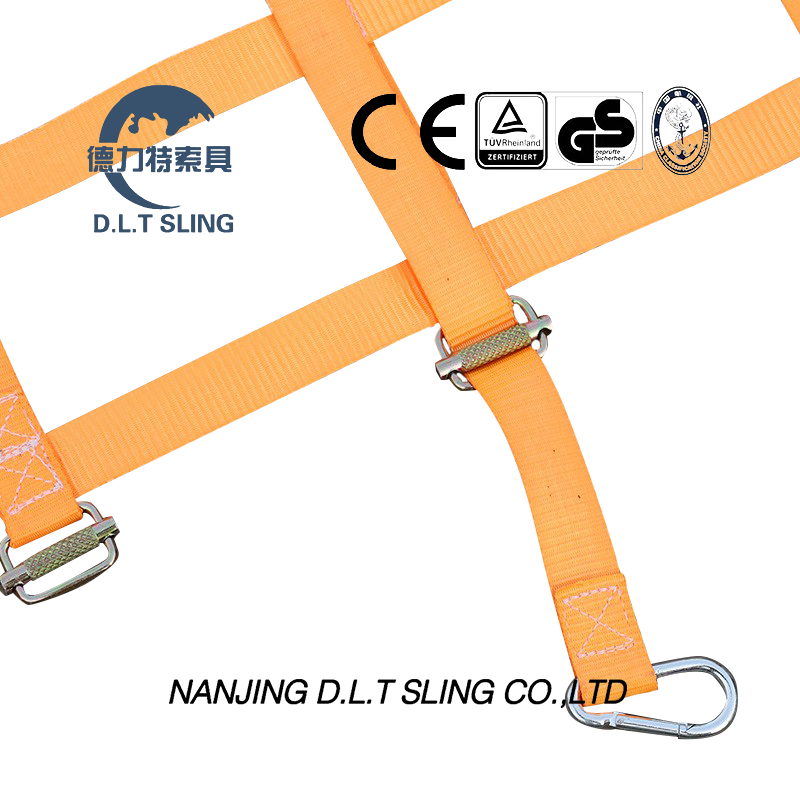
Let us look closely at cargo mesh netting. We need to define the physical mechanics behind it. A mesh net uses geometric distribution to secure items. It covers a vast surface area rather than relying on isolated pinch points. This continuous coverage acts like a heavy blanket. It presses down evenly across uneven surfaces, which prevents smaller items from slipping away.
You must evaluate material realities carefully. Not all nets offer the same protection. Bungee or elastic nets stretch easily. They contour well over awkward shapes like camping gear or yard debris. However, they lack certified structural strength. Heavy-duty webbing nets act entirely differently. Manufacturers build them using industrial polyester webbing. These heavy-duty variants carry substantial Working Load Limits. They provide serious restraint capabilities for commercial haulers.
Best Use Cases:
Common Mistakes and Implementation Risks:
You will face specific risks if you implement nets poorly. Mesh easily snags on sharp edges. A torn net rapidly loses its structural integrity. Furthermore, operators often overestimate elastic variants. Bungee nets offer excellent visual containment. They look secure to the untrained eye. However, they provide zero structural tie-down strength for heavy items. Do not use elastic netting to hold down a generator or a pallet of bricks. The dynamic forces of a sudden stop will easily snap the bungee cords.
Sometimes you need raw, unyielding power. We must define the mechanics of cargo straps. Ratchet straps and cam buckle straps create localized, rigid tension. They pin heavy items directly to your structural anchor points. A high-quality strap transfers the load's weight straight to the vehicle frame. Ratchet variants allow you to crank down significant force. Cam buckles allow quick, moderate tensioning for mid-weight items.
Best Use Cases:
Expertise and Safety Warning:
You must clearly distinguish between cargo straps and tow straps. We see this common error constantly on the road. People use a towing strap for load securement. This mistake creates extreme danger. Engineers design towing straps to stretch up to twenty percent. They absorb the sudden shock of vehicle recovery. If you use one to secure a pallet, it will stretch during transit. Your load will slide loose on the highway. Cargo tie-down straps are static. They feature zero stretch. Manufacturers design them to hold firm under constant road vibration.
Implementation Risks:
Cargo straps carry unique implementation risks. High tension easily crushes fragile items. Thin cardboard boxes will collapse under a heavily ratcheted strap. Additionally, straps fail to contain loose debris between the tie-down lines. Small items can easily slip out. Finally, you risk loosening if the load settles. If your cargo compresses during transit, the rigid strap loses tension. You must pull over and retighten them frequently during long trips.
We need to compare these tools directly. This decision matrix breaks down their core performance metrics. You can use these parameters to guide your purchasing decisions.
| Evaluation Metric | Cargo Mesh Netting | Cargo Straps |
|---|---|---|
| Setup & Deployment Speed | Very fast for multi-item loads. Toss it over and clip the edges. | Slower for multiple items. Very fast for a single, large item. |
| Load Retention & Containment | Exceptional surface-area coverage. Prevents small items from escaping. | Excellent absolute immobility for large blocks. Fails at loose debris. |
| Compliance & WLL | Varies wildly. Webbing provides WLL, but bungee materials do not. | Provides straightforward, high-capacity WLL calculations. DOT compliant. |
| Cost & Scalability | Requires higher upfront investment for custom heavy-duty webbing. | Generally cheaper per unit. Easily replaceable if damaged or worn. |
Setup speed matters greatly to fleet operations. Nets offer faster deployment when you have twenty small boxes. You simply throw the net over the pile and hook the perimeter. Straps require individual tensioning for every single line. This process consumes valuable labor time. However, a single heavy strap quickly secures one massive crate much faster than adjusting a large net.
Containment philosophy differs greatly between the two. Nets win easily on surface-area containment. They prevent items from catching wind and flying away. Straps win on absolute immobility. They prevent a heavy concrete block from shifting forward during emergency braking.
Compliance remains non-negotiable for commercial transport. Straps offer straightforward, high-capacity WLL calculations. You can easily prove DOT compliance to an inspector on the side of the road. Netting WLL varies significantly by material. Standard bungee netting fails commercial inspections immediately. Webbed nets pass only if they carry proper manufacturer tags detailing their limits.
Consider your cost and scalability. Straps are generally cheaper per unit. You can replace them easily if they fray over time. Heavy-duty custom netting requires a higher upfront financial investment. Yet, a custom net reduces long-term labor time if you haul specific, repetitive loads daily.
Choosing just one tool often presents a false dilemma. We look at real-world fleet and off-road implementation to find the best solutions. The safest configurations frequently integrate both systems. You leverage the specific strengths of each tool while canceling out their respective weaknesses.
Let us outline a best practice architecture. This method ensures maximum security for complex, mixed-item hauls.
This hybrid approach provides immense peace of mind. You get the unyielding anchor strength of static webbing. You also get the blanket containment of a wide net. Off-road enthusiasts frequently use this setup. They bolt down their heavy recovery gear with straps, then net their sleeping bags and loose firewood to prevent trail scatter.
You should take specific next-step actions for shortlisting your gear. Audit your most common load types first. Write down exactly what you haul weekly. Next, measure your bed or trailer dimensions accurately. You need exact length and width numbers. Finally, identify your factory anchor points before purchasing any equipment. Knowing your D-ring locations ensures you buy the correct hook styles and strap lengths.
Your ultimate securement choice depends entirely on load uniformity and weight. Use static straps for heavy, rigid, and monolithic loads. Rely on a cargo mesh netting for loose, uneven, or scattered cargo that requires broad containment. Verify the Working Load Limit of any product you use before hitting the road. The certified rating matters far more than the format itself. Never risk your safety or your freight on unrated, cheap materials. You must treat load securement as a critical safety function, not an afterthought. Take time today to browse specific, rated securement tools. Match them exactly to the dimensions and weight profiles of your daily hauls.
A: No, unless it is a specialized, heavy-duty webbing net with a certified WLL exceeding the equipment's weight. Standard elastic nets are for containment, not load-bearing securement.
A: Tow straps are designed with give/stretch to safely absorb the shock of vehicle recovery. Tie-down straps are static (no stretch) to keep loads firmly in place.
A: Measure the distance between your primary anchor points (D-rings or bed rails) and account for the maximum height of your typical load to ensure adequate stretch or coverage without over-tensioning.
A: Generally, no. Commercial transport requires load securement with verifiable Working Load Limits. Bungee nets lack standardized WLL ratings and should only be used for light containment on personal vehicles.

