

close
Choose Your Site
Global
Social Media

Views: 0 Author: Site Editor Publish Time: 2026-08-01 Origin: Site


Rigging failures carry severe operational and financial consequences on any job site. Synthetic sling degradation is often progressive, hiding beneath the surface, and easily overlooked without a systematic approach. Site supervisors and safety managers frequently struggle with inconsistent inspection practices across their crews. This inconsistency leads to two major problems: premature equipment retirement that wastes budget, or undetected core damage that introduces catastrophic safety risks during a lift. You cannot afford to guess whether a piece of lifting gear is safe to use.
Implementing a standardized, compliance-driven framework for evaluating a Round Sling solves this problem. By detailing exact removal criteria, establishing rigorous inspection methodologies, and setting clear procurement thresholds for replacement, operations can ensure absolute safety while optimizing equipment lifespans. We need to move away from subjective visual checks and adopt a rigorous, tactile inspection standard that leaves zero room for doubt.
Tag Verification is Non-Negotiable: A missing or illegible identification tag mandates immediate removal from service, regardless of the physical condition of the round sling.
Tactile and Visual Synergy: Effective inspection requires running hands along the entire length of the sling using high-dexterity safety gloves to detect internal lumps, broken core yarns, or embedded abrasive particulates.
Zero-Tolerance for Core Exposure: Any breach in the outer jacket that exposes or damages the load-bearing core yarns dictates immediate retirement.
Proactive Procurement: Establishing clear "repair vs. replace" thresholds minimizes operational downtime and ensures compliance with OSHA, ASME B30.9, and international standards.
Defining the baseline for compliance and risk mitigation is necessary for safe lifting operations globally. Rigging equipment must adhere to strict guidelines to ensure structural integrity under load. You cannot rely on a quick glance before hooking up a load; the standards demand a structured approach to verifying equipment condition.
North American legal requirements governing synthetic round slings are outlined in ASME B30.9 and OSHA 1910.184. These standards dictate the manufacturing tolerances, safety factors, and mandatory inspection intervals required to maintain a safe working environment. Compliance ensures that equipment meets the minimum safety thresholds for industrial lifting. OSHA specifically mandates that slings must be inspected each day before being used, and that any defective sling must be immediately removed from service. ASME B30.9 goes further into the specifics of synthetic materials, outlining the exact physical damage thresholds that require retirement.
For multinational operations, European (EN 1492-2) and Australian (AS 4497) standards provide parallel frameworks. These regulations align closely with North American standards, focusing on material specifications, color-coding for weight capacities, and rigorous testing protocols to ensure global consistency in rigging safety. If you operate across borders, understanding these harmonized standards ensures your lifting plans remain compliant regardless of the jurisdiction.
To maintain compliance and safety, inspections are broken down into three distinct categories. Each serves a specific purpose in the lifecycle of the rigging gear.
Inspection Type | Frequency | Responsible Party | Primary Objective |
|---|---|---|---|
Initial Inspection | Prior to first use | Receiving Inspector / Competent Person | Verify specifications match the purchase order and application. Ensure no shipping damage. |
Frequent (Pre-Use) | Daily or shift-by-shift | Rigger / Crane Operator | Identify immediate hazards, fresh cuts, chemical exposure, or sudden abrasion. |
Periodic (Documented) | At least annually (more if severe service) | Designated Competent Person | Formal, documented tracking of degradation over time. Aids in predictive maintenance. |
Every new, altered, or repaired Round Lifting Sling requires an initial inspection prior to its first use. This step verifies that the specifications match the purchase order and are suitable for the intended application. It ensures no manufacturing defects or shipping damages compromise the equipment before it enters service. Daily or shift-by-shift visual and tactile checks are required by the rigger or operator before every lift. Formal, documented inspections must be conducted by a designated competent person. These occur at least annually, or more frequently based on the severity of service, environmental exposure, and frequency of use.
A repeatable, standardized workflow is essential for evaluating equipment in the field accurately. You cannot just look at a sling lying on the ground; you must physically handle it, manipulate it, and inspect every inch of its surface and internal structure.
Verifying the Identification Tag & Material Composition: Check for the presence, legibility, and completeness of information on the tag. This includes the manufacturer, material, and rated capacities for different hitches (vertical, choker, basket). Identify the synthetic fiber type, such as Polyester, Nylon, or HMPE. Knowing the material helps operators understand specific environmental and chemical vulnerabilities. If the tag is missing or you cannot read the capacity, the inspection stops here, and the gear is retired.
Tactile Examination of the Sling Body: Squeeze and run hands along the entire length of the sling. Use thin, high-dexterity polyurethane or nitrile-coated gloves to protect hands from embedded glass, metal shards, or burrs while retaining tactile sensitivity. Feel for unusual lumps, hard spots indicating heat fusion or friction damage, localized thinning, or brittle areas that suggest internal core yarn damage. The core yarns are the load-bearing element; if they are bunched up or broken, you will feel a distinct change in the diameter and flexibility of the sling.
Visual Inspection of the Outer Cover (Jacket): Scan the protective jacket for cuts, tears, snags, punctures, or excessive abrasive wear. Examine the surface for embedded foreign particulates like sand, grit, or metal filings. These particles can migrate through the jacket and degrade the internal load-bearing yarns over time. Pay special attention to areas that frequently contact load edges or crane hooks.
Assessing Stitching, Seams, and Joint Areas: Examine the structural integrity of the cover's stitching. Look for broken, worn, or pulled threads that could compromise the jacket's ability to protect the core yarns. The seam is often a weak point where abrasion can quickly open up the jacket, exposing the critical internal fibers.
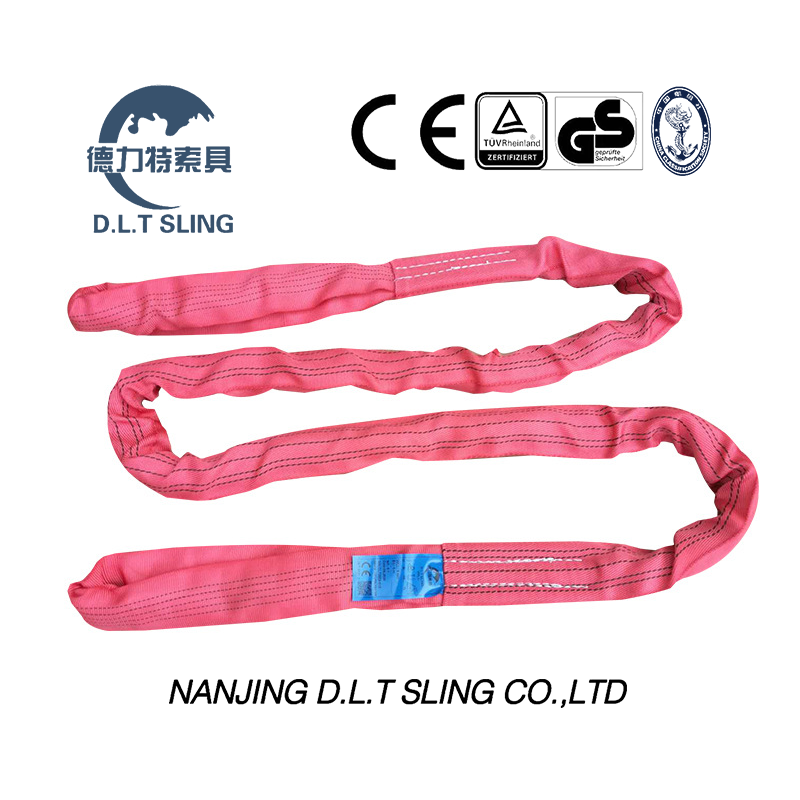
Mapping specific physical defects to their impact on load-bearing capacity is crucial for safety. Knowing exactly when to pull gear from service prevents dropped loads and fatal accidents on site.
Analyze material-specific chemical limits. Polyester is vulnerable to alkalis and ethers, while Nylon degrades when exposed to acids or heavy bleaching agents. Look for signs of chemical burns, melting, charring, or weld spatter. Even a small drop of molten slag from a nearby welding operation can melt through the jacket and fuse the core yarns, instantly destroying the capacity of the sling. Prolonged ultraviolet light exposure causes bleaching, color fading, and stiffening, which also weakens the synthetic fibers. If a sling feels stiff and brittle like dried cardboard, UV degradation has likely compromised its strength.
If the inner load-bearing core yarns are visible, cut, or damaged, the sling fails inspection immediately. There is no gray area here. For double-walled jackets, a minor breach in the outer protective layer demands retirement if the inner wall is compromised. If only the outer wall is scuffed, it requires close field monitoring, but any visibility of the core yarns means the gear goes straight to the trash bin. Do not attempt to tape or patch a torn jacket.
Knots drastically reduce the Working Load Limit of a round sling by creating severe stress points. A knot can reduce the capacity by up to 50%. Permanently deformed slings must be destroyed immediately to prevent accidental use. If a sling has been shock-loaded or stretched beyond its elastic limit, it will often appear thinner and stiffer in certain sections. This deformation indicates that the internal yarns have yielded and can no longer safely support their rated load.
Inspect attached master links, hooks, or shackles for pitting, corrosion, cracks, or deformation. Hardware exhibiting wear exceeding 10% to 15% of the original dimension must be removed from service. Check the bearing points where the synthetic material meets the steel hardware; this is a prime location for severe abrasion and cutting.
Defect Type | Visual/Tactile Indicator | Required Action |
|---|---|---|
Missing/Illegible Tag | Cannot read WLL or manufacturer info | Immediate Retirement |
Core Yarn Exposure | Jacket torn, inner yarns visible | Immediate Retirement |
Heat Damage / Weld Spatter | Melted spots, hard brittle areas, charring | Immediate Retirement |
Chemical Degradation | Discoloration, stiffening, localized weakening | Immediate Retirement |
Minor Outer Jacket Scuffing | Surface abrasion, inner wall intact (double-wall) | Monitor closely, clear for use if core is protected |
Inspection focus areas vary based on the specific sling configuration. You must tailor your inspection technique to the geometry of the gear you are handling.
Endless configurations offer the advantage of rotating wear points. Because the loop is continuous, the rigger can shift the contact points with the crane hook and the load for every lift, distributing wear evenly. Inspect for uniform wear across the entire continuous loop. Where applicable, slide the cover back to check overlap areas and ensure the internal yarns remain intact and untangled. Pay attention to any areas that look bunched up, as this can indicate that the internal core yarns have shifted or snapped.
Focus on the critical stress points at the formed eyes of an Eye-Eye Round Sling. Inspect the eye protection pads, choke points, and the transition areas where the body meets the eye for concentrated abrasion. The structural design limits wear point rotation, requiring closer inspection of the designated load-bearing zones. Because the eyes always bear the friction of the hook or shackle, these areas will degrade much faster than the main body. Look for fraying at the crotch of the eye and ensure any protective sleeving is still securely stitched in place.
Human and operational errors can compromise inspection integrity. Even with the best standards in place, field execution often falls short due to bad habits or lack of training.
Using thick leather rigger gloves masks internal core damage and lumps. You simply cannot feel a broken core yarn through heavy cowhide. Conversely, using bare hands exposes the inspector to puncture wounds from embedded debris like steel shavings or glass. High-dexterity safety gloves provide the necessary balance of protection and sensitivity. Mandate the use of polyurethane-dipped gloves during the pre-shift inspection phase.
Assuming a minor cover snag is merely cosmetic without a professional assessment of the underlying core yarns is dangerous. Any jacket damage warrants a thorough tactile and visual check of the internal structure. Riggers often dismiss a small tear if the sling still looks relatively new, but if that tear allowed grit or chemicals to penetrate, the core could be severely compromised.
Fine grit and dust trapped inside the jacket act as internal sandpaper. This debris destroys core yarns during load cycles without leaving obvious outer visual cues, making tactile inspection vital. If a sling feels crunchy or excessively stiff, it is likely packed with dirt and grit that is slowly cutting the load-bearing fibers from the inside out.
Leaving slings on wet shop floors, exposed to direct sunlight, or near heat sources accelerates degradation. Proper storage extends equipment life and simplifies the inspection process. Gear thrown into the back of a pickup truck bed with tools, chains, and spilled chemicals will fail inspection rapidly. Implement dedicated rigging lockers or wall racks to keep synthetic gear off the ground and out of the weather.
Deciding when to replace rigging equipment involves evaluating safety and capital allocation. You need a clear policy to prevent supervisors from hoarding damaged gear or wasting time trying to fix the unfixable.
While some manufacturers can repair outer jackets or replace missing tags, load-bearing core yarns can never be repaired. Once the core is compromised, the equipment is unrecoverable. Do not attempt field repairs. Stitching a torn jacket on site is a severe violation of safety standards and transfers massive liability to the person performing the unauthorized repair.
Compare the logistical costs, shipping, and third-party recertification fees of repairing a jacket versus the cost and immediate availability of procuring new equipment. Often, replacement is more efficient and guarantees safety. The downtime spent waiting for a factory repair usually outweighs the cost of simply pulling a fresh, certified sling from the tool crib.
When selecting a replacement supplier, look for traceability, batch proof-testing, availability of heavy-duty synthetic jackets, and clear certification tracking to ensure reliable performance. You want a supplier that provides durable tags, robust jacket materials, and full documentation for your compliance records.
Rigorous, tactile, and visual inspections are the only defense against catastrophic failure. When equipment meets any removal criteria, immediate replacement from a certified, reputable rigging manufacturer is the most compliant and life-saving choice.
Audit your current rigging inventory immediately to identify and destroy non-compliant equipment.
Establish a strict pre-use tactile inspection protocol for all operators, mandating high-dexterity gloves.
Designate a clean, dry, and UV-protected storage area for all synthetic lifting gear to prevent environmental degradation.
Implement a zero-tolerance policy for missing tags and exposed core yarns across all job sites.
A: Documented inspections by a competent person must occur at least annually. High-frequency use or severe environmental conditions require more frequent documented checks to ensure ongoing safety and compliance.
A: No. A missing or illegible identification tag mandates immediate removal from service, regardless of the physical condition. Without the tag, you cannot verify the working load limit or material.
A: Never. Knots create severe stress points that drastically reduce the Working Load Limit and require immediate destruction of the equipment. Knots compromise the structural integrity of the core yarns.
A: Run your hands along the entire length of the sling while wearing thin, high-dexterity gloves to feel for unusual lumps, hard spots, or broken yarns that indicate internal core damage.
A: No. Load-bearing core yarns can never be repaired. If they are damaged, cut, or fused, the equipment must be retired and destroyed immediately to prevent catastrophic failure.
A: If the tear exposes the internal load-bearing core yarns, the sling must be retired immediately. If it is a double-walled jacket and the inner wall is completely intact, it may be monitored, but replacement is highly recommended.

