

close
Choose Your Site
Global
Social Media

Views: 0 Author: Site Editor Publish Time: 2026-08-02 Origin: Site


Industrial material handling operates in a high-stakes environment. Improper rigging frequently leads to load drops, severe equipment damage, and catastrophic workplace injuries. Procurement and safety managers face the constant challenge of selecting the correct rigging hardware for specific load profiles. They must also ensure operators fully understand the technical limitations of synthetic materials. Misunderstanding hitch capacities or sling angles leads to immediate compliance failures and severe safety hazards on the job site. This guide provides a comprehensive technical framework for evaluating, inspecting, and correctly deploying synthetic strap slings. By following these operational blueprints, riggers and safety managers can ensure strict compliance with OSHA regulations and ASME B30.9 standards. You will learn how to match material properties to environmental conditions, calculate dynamic load limits based on hitch configurations, and execute safe overhead lifts from start to finish.
Working Load Limits (WLL) are dynamic: A sling’s rated capacity changes drastically depending on the hitch type (vertical, choker, or basket) and the angle of the lift.
Material dictates application: Synthetic webbing is ideal for fragile or finished loads but requires strict environmental and edge-protection protocols compared to wire rope or chain.
Inspection is non-negotiable: Daily visual inspections for cuts, UV degradation, and missing tags are required by law to mitigate implementation risks.
Edge protection prevents failure: The majority of synthetic sling failures occur due to inadequate cut protection at the load's corners, not overloading.
Selecting the wrong sling material or capacity baseline guarantees operational failure. Buyers must match the sling's physical properties to the load's weight, surface temperature, and potential chemical exposure. A mismatch here compromises the entire lifting operation before the load even leaves the ground. Riggers must understand the exact specifications of their equipment to prevent catastrophic material failure during a lift.
Search results often blur the lines between heavy-duty industrial rigging equipment and small fabric wrist straps used for gym workouts and deadlifts. This guide focuses exclusively on heavy-duty overhead industrial rigging applications. We are detailing the use of synthetic flat lifting straps and web slings engineered for construction, manufacturing, and heavy material handling. These are highly engineered tools designed to move thousands of pounds, not athletic accessories meant for personal fitness.
Synthetic rigging generally falls into two categories: woven flat straps and continuous loop round slings. A flat strap consists of woven nylon or polyester webbing. Round slings feature a continuous loop of load-bearing yarn encased in a protective tubular jacket. Flat straps distribute pressure over a wider surface area, significantly reducing the risk of crushing damage to fragile or finished loads like machined steel shafts or painted structural beams.
Environmental factors dictate material selection. Nylon offers a stretch factor of up to 10%, which helps absorb shock loading but can be problematic in low-headroom lifts where vertical clearance is tight. Polyester provides low stretch, typically around 3%, offering better load control for precision placement. Furthermore, nylon resists alkalis but degrades rapidly in acids. Polyester resists acids but suffers severe damage from strong alkalis. You must audit your facility's chemical environment before purchasing synthetic rigging.
Feature | Woven Flat Strap | Continuous Round Sling |
|---|---|---|
Construction | Woven nylon or polyester webbing | Load-bearing core yarns inside a tubular jacket |
Surface Area | Wide distribution, protects fragile loads | Concentrated load point, conforms well to shapes |
Stretch Factor | Polyester (~3%), Nylon (~10%) | Typically low stretch (Polyester core) |
Wear Inspection | Surface wear directly indicates capacity loss | Jacket protects core; core damage is harder to see |
Chemical Resistance | Varies heavily by material (Nylon vs. Polyester) | Jacket and core materials dictate resistance |
Manufacturer identification tags are a strict legal requirement for all overhead lifting equipment. These tags display critical data, including the manufacturer's name, material type, and the baseline Working Load Limit for vertical, choker, and basket hitches. For example, reading the tag on a heavy-duty 6 Ton Webbing Sling instantly tells the rigger its maximum safe capacity in a straight vertical pull. The tag will also show the reduced capacity for a choker hitch and the increased capacity for a basket hitch.
Never guess a sling's capacity based on its color or physical size. Using slings with illegible, torn, or missing tags introduces severe risk to the operation. Any synthetic rigging hardware lacking a readable tag must face immediate removal from service. You must physically destroy the sling by cutting it into unusable pieces to prevent accidental use by another crew member.
Operators must choose the correct hitch configuration to properly secure the load and maintain the center of gravity. The chosen hitch directly alters the dynamic capacity of the rigging hardware. A 10,000-pound rated sling does not always hold 10,000 pounds; it depends entirely on how you attach it to the load.
The vertical hitch forms a straight line from the crane hook directly to the load attachment point. This configuration utilizes 100% of the base Working Load Limit of the lifting sling. While it maximizes capacity, a single vertical hitch provides zero load control against rotation. It should only be used on loads with a single, balanced lifting point or in conjunction with a spreader beam. If the load begins to spin, the rigger has no mechanical leverage to stop it.
A choker hitch involves passing one eye of the sling through the other eye, or through a designated fitting, to grip the load tightly. As tension applies, the sling cinches down, providing excellent control for loose bundles like lumber or steel pipes. However, this creates severe stress at the choke point where the webbing bites into itself. Riggers must account for a mathematical reduction in the WLL, typically a 20% reduction from the vertical capacity. Furthermore, the angle of choke must exceed 120 degrees to maintain this standard choker capacity. Tighter angles require further capacity reductions based on manufacturer charts.
A basket hitch cradles the load by placing both eyes of the sling onto the crane hook. When rigged at a 90-degree angle to the load, this configuration effectively doubles the vertical WLL because two legs of the sling support the weight. Despite the capacity increase, basket hitches have strict limitations. They cannot be used on loads that are difficult to balance, asymmetrical, or prone to sliding out of the cradle during elevation. If the load shifts, one leg of the basket hitch will take the entire weight, instantly overloading the system.
Hitch Type | Capacity Multiplier (Approximate) | Best Application | Primary Limitation |
|---|---|---|---|
Vertical | 1.0x (100% of base WLL) | Single lifting points, spreader beams | No rotational control |
Choker | 0.8x (80% of base WLL) | Loose bundles, cylindrical loads | Reduces overall capacity, stresses webbing |
Basket (90 degrees) | 2.0x (200% of base WLL) | Balanced, symmetrical loads | Load can slide out if unbalanced |
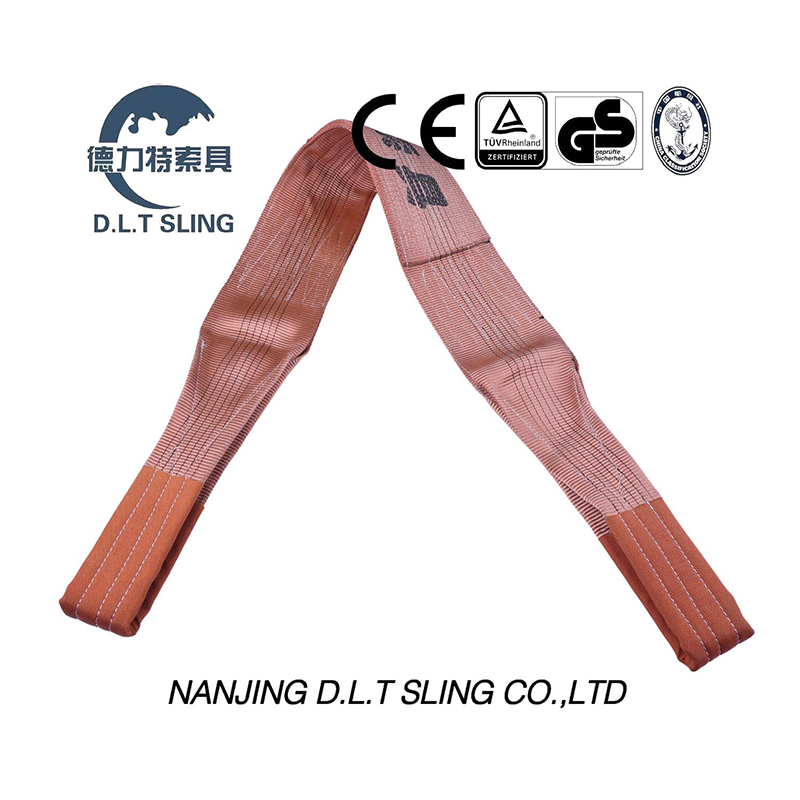
Translating technical safety guidelines into field-level actions requires a systematic approach. This operational blueprint guides riggers through executing a safe lift from start to finish. Skipping steps in this process leads directly to rigging failures.
Always verify the exact weight of the load before selecting your hardware. Check shipping manifests, engineered drawings, or use an inline load cell. Compare this weight against the dynamic WLL of the chosen hitch configuration. Once the math clears, conduct a rigorous hands-on tactile and visual inspection of the hardware. Run your bare hands along the webbing to feel for hidden cuts, embedded debris, or stiff areas indicating chemical damage. Look closely at the load-bearing stitching for any broken threads.
Place the sling precisely under the load's center of gravity to ensure horizontal stability. Ensure the Flat Lifting Strap lies perfectly flat against the load surface. Eliminate any twists, folds, or bunches. Twisted webbing causes uneven tension distribution, leading to localized material failure. You must apply engineered edge protection to any surface contact points that present sharp angles, rough textures, or abrasive edges. Cardboard or old rags do not qualify as edge protection; use rated synthetic sleeves or magnetic corner protectors.
Seat the sling's eyes properly in the base bowl of the crane hook. Never place synthetic eyes on the hook latch or near the tip of the hook, as this causes point-loading and hardware failure. If your lift requires multiple slings, ensure the eyes do not overlap, pinch, or bunch inside the hook. Utilize a master link, collector ring, or an appropriately sized shackle to organize multiple sling eyes safely. The hardware must be rated for overhead lifting and match or exceed the capacity of the slings.
Slowly raise the hoist to take up slack in the rigging system. Watch the hardware closely. Verify that the webbing remains flat and that all edge protectors stay firmly in their designated positions. Perform a mandatory trial lift by elevating the load just 2 to 3 inches off the ground. Pause the operation to verify stability, balance, and the correct center of gravity before committing to the full lift. If the load tilts or shifts, lower it immediately and adjust the rigging.
Procurement and rigging planners must account for the multiplier effect of sling angles on hardware tension. Ignoring these calculations leads to immediate hardware overload. A sling rigged at a severe angle experiences significantly more stress than a sling rigged vertically.
The trigonometry of rigging dictates that as the angle between the sling and the horizontal plane decreases, the tension on the sling increases exponentially. A sling does not just carry the vertical weight of the load; it also absorbs horizontal crushing forces. For example, lifting a load at a 30-degree horizontal angle doubles the tension on the strap compared to a straight 90-degree vertical lift. Riggers must consult tension multiplier charts to ensure their hardware can handle the angled stress. Never rig a sling at an angle less than 30 degrees to the horizontal plane.
Horizontal Sling Angle | Tension Multiplier (Load Angle Factor) | Effect on 1,000 lb Load per Leg |
|---|---|---|
90 Degrees | 1.000 | 1,000 lbs tension |
60 Degrees | 1.155 | 1,155 lbs tension |
45 Degrees | 1.414 | 1,414 lbs tension |
30 Degrees | 2.000 | 2,000 lbs tension |
Determining the Center of Gravity (CoG) before attaching slings is critical for load stability. The crane hook must be positioned directly above the CoG. Lifting a load with an offset CoG introduces severe operational risks. The load will immediately shift or swing upon leaving the ground, causing unequal sling loading, potential shock loading, and a high probability of dropping the material. If the load is asymmetrical, you must adjust the sling lengths using adjustable hardware to ensure the crane hook remains perfectly plumb over the heavy end.
Synthetic materials are highly susceptible to mechanical and environmental damage. Strict inspection protocols are the only defense against sudden failure. You cannot rely on visual checks from a distance; you must physically handle the rigging.
The regulatory framework governing synthetic web slings requires strict adherence to inspection schedules. OSHA and ASME B30.9 mandate three levels of inspection. Initial inspections occur when receiving new hardware to verify it matches the purchase order and has no manufacturing defects. Frequent inspections require a visual and tactile check by the operator before each shift or lift. Periodic inspections demand a documented, thorough examination by a qualified professional at least annually, depending on service severity. Heavy use environments require monthly or quarterly documented inspections.
Knowing when to destroy a sling saves lives. Remove hardware from service immediately if you identify any of the following rejection criteria. Do not attempt to repair synthetic webbing.
Acid or caustic burns on the webbing, indicated by discoloration or stiff, brittle sections.
Evidence of melting, charring, or weld spatter anywhere on the strap.
Holes, tears, cuts, or snags that penetrate the surface of the material.
Broken or worn stitching in load-bearing splices or at the eye connections.
Excessive abrasive wear exposing the inner core yarns or causing a significant reduction in webbing thickness.
Missing or completely illegible manufacturer identification tags.
Knots tied anywhere in the webbing to shorten the sling.
Verify the exact load weight and calculate dynamic tension based on your specific hitch and horizontal sling angle before initiating any lift.
Implement mandatory pre-shift tactile and visual inspections for all synthetic rigging hardware, checking for cuts, burns, and broken stitching.
Install engineered synthetic or magnetic edge protection on all load corners to prevent catastrophic webbing cuts under tension.
Destroy and discard any synthetic straps showing signs of chemical burns, melting, or missing identification tags immediately to prevent accidental use.
A: Standard nylon and polyester slings should not be used in environments where temperatures exceed 194°F (90°C). For higher temperatures, specialized materials or wire rope must be utilized to prevent melting and catastrophic failure.
A: A choker hitch reduces capacity because the webbing is forced to bend sharply back on itself and compress against the load. This creates a high-stress friction point that weakens the material's overall lifting strength, typically reducing capacity by 20%.
A: There is no strict expiration date based on time alone. Replacement depends entirely on the condition of the hardware. If a sling fails the daily visual inspection or the annual periodic inspection according to ASME B30.9 criteria, it must be replaced immediately.
A: Nylon stretches up to 10% under load, making it good for absorbing shock but poor for tight headroom. Polyester stretches only about 3%, offering better load control. Additionally, nylon resists alkalis, while polyester resists acids.
A: No. Tying a knot in any synthetic rigging hardware is strictly prohibited by OSHA and ASME standards. Knots drastically reduce the structural integrity of the webbing, often cutting the working load limit by more than 50%.

