

close
Choose Your Site
Global
Social Media

Views: 0 Author: Site Editor Publish Time: 2026-08-22 Origin: Site


Improperly tensioned loads result in catastrophic cargo damage, regulatory fines, and severe liability risks. The operational reality of cargo securement demands absolute precision on the flatbed. While the mechanical concept is simple, the execution gap in threading, tensioning, and releasing straps under load often leads to equipment failure, jammed mechanisms, and compromised safety on the highway.
Operators frequently struggle with spooling mistakes and jammed releases when securing heavy freight. This guide serves as a technical resource for mastering the operation of a tie down system. You will learn exact mechanical protocols for securing loads safely and efficiently. We also evaluate the necessary specifications, including Working Load Limits and compliance standards, required for professional-grade cargo control.
Proper Threading Prevents Failure: Aligning the axle slot (mandrel) and pulling slack through before ratcheting is critical to prevent webbing jams and mechanical failure.
Compliance is Non-Negotiable: Professional operations require verifiable standards; utilizing an EN 12195-2 Ratchet Strap ensures regulatory compliance and predictable tension retention.
Capacity Must Match Application: Heavy industrial loads require specific hardware, such as a 5000 daN Ratchet Tie Down, to safely manage dynamic forces during transit.
Strategic Placement Mitigates Risk: Operating the ratchet mechanism on the passenger side of the vehicle protects the operator from active traffic during roadside adjustments.
Understanding the hardware prevents operational errors on the job site. The handle provides the leverage necessary to apply tension across the load. The release catch, or latch, disengages the locking mechanism for adjustments or removal. The mandrel is the rotating axle slot where the webbing threads through.
These components work together through a heavy-duty gear and pawl mechanism. As you pump the handle, the pawl engages the gear teeth. This allows for incremental tensioning while preventing the spool from reversing under load. A standard Ratchet Tie Down relies on the integrity of these steel components to maintain force during transit.
When inspecting the mechanism, look closely at the gear teeth. Worn or rounded teeth indicate the unit has reached the end of its service life. The pawl spring must also maintain strong tension. If the spring feels loose or fails to snap the pawl firmly into the gear teeth, the mechanism can slip under dynamic highway loads.
The strap itself relies on high-strength polyester webbing. Polyester offers low stretch characteristics and high UV resistance. This ensures the strap maintains tension even during long hauls under direct sunlight. Nylon is rarely used for this application because it stretches too much when wet, which would allow the cargo to shift.
End fittings dictate anchor point compatibility. You must match the end fitting to the specific anchor design of your transport vehicle to ensure a secure connection.
End Fitting Type | Best Application | Common Anchor Point | Limitations |
|---|---|---|---|
Wire J-Hook | General flatbed freight | Standard trailer side rails | Can slip if tension is lost |
Flat Hook | Heavy machinery, lumber | Rub rails and stake pockets | Requires wider anchor surface |
D-Ring / Delta Ring | Specialized equipment | Recessed floor anchors | Requires matching hook hardware |
Chain Extension | Abrasive environments | Heavy equipment tie-down points | Heavier and harder to store |
The stitching pattern where the webbing meets the end fitting is another critical inspection point. Manufacturers use specific thread patterns to distribute the load evenly across the width of the strap. Any broken threads in this area significantly reduce the overall capacity of the assembly.
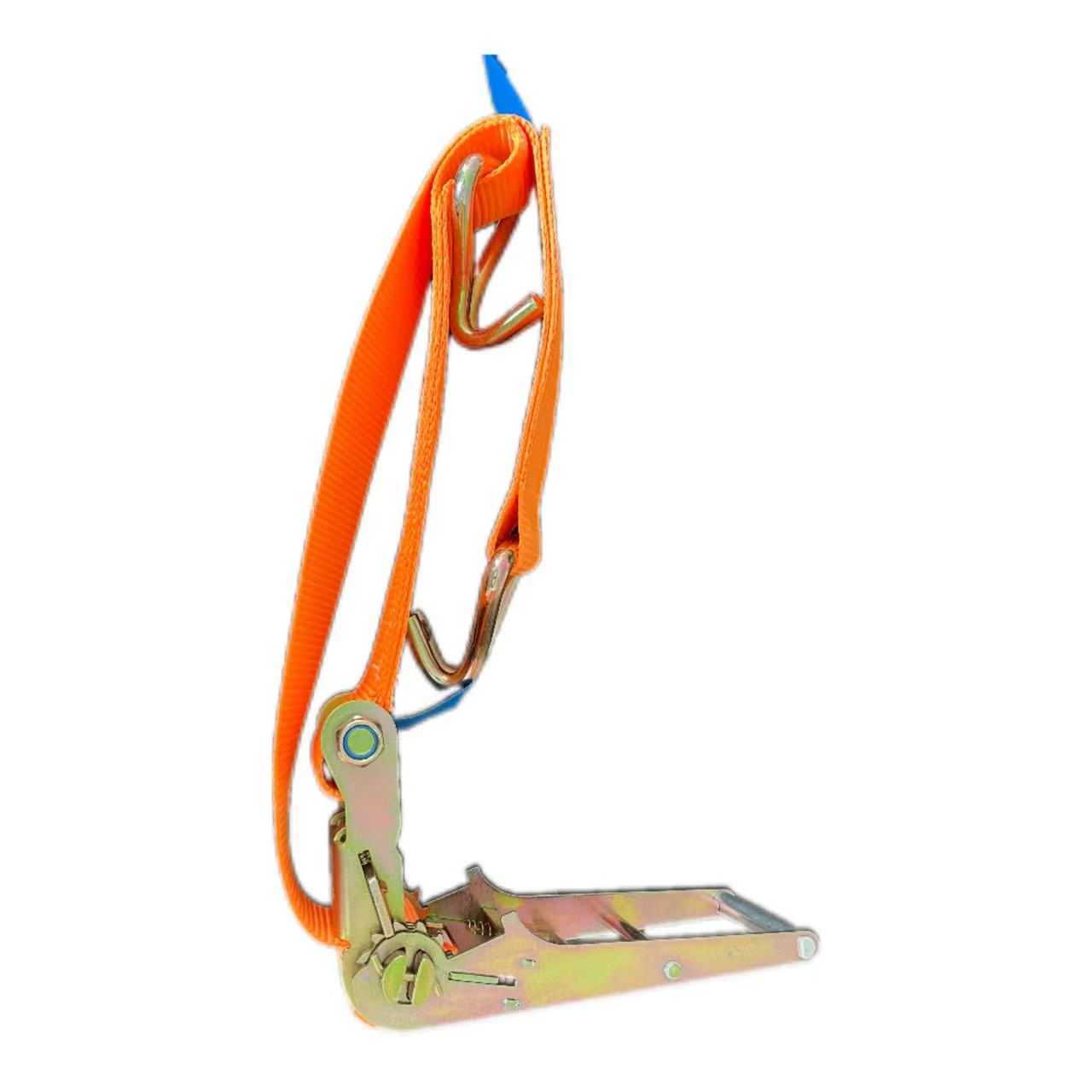
Never use compromised equipment. Inspect the webbing for fraying, cuts, or severe UV degradation. Check the metal hardware for rust, cracks, or deformation. Discard any strap that fails this visual inspection immediately. A broken strap at highway speeds is a massive liability.
Always follow the passenger side rule. Position the ratchet mechanism on the non-traffic side of the trailer. This protects you from active highway traffic during safe mid-trip adjustments. Lay the webbing flat over the cargo without twists. Twists concentrate stress and reduce the maximum breaking strength of the strap.
Secure the hooks to designated anchor points. Maintain constant, light manual tension on the strap. This keeps the hooks from slipping out of the anchor points before you begin the tensioning process. If you are working alone, you can use a small piece of tape or a specialized magnetic hook holder to keep the far end in place while you walk to the ratchet side.
Inspect webbing for cuts exceeding 10% of the width.
Verify the ratchet handle operates smoothly without binding.
Position the ratchet on the passenger side of the trailer.
Lay the strap flat across the load, ensuring no twists.
Secure the anchor hooks and maintain light manual tension.
Check the orientation of the mandrel. The axle slot must face upward for easy threading. If the slot is inaccessible, pull the release trigger. Pump the handle slightly to rotate the spool to the correct receiving position.
Open the lever fully to expose the aligned axle slot. Pass the loose end of the webbing through the bottom of the slot. Pull it straight up and fold it back over itself. This creates the initial friction lock required to start tensioning.
Pull 90 to 95 percent of the slack out manually before ratcheting. This prevents the common spooling mistake. Over-wrapping the mandrel jams the mechanism and compromises the holding power of the strap. You only want enough webbing on the spool to lock it in place.
Begin the pumping motion with the handle. This engages the gears and starts wrapping the webbing around the mandrel. Apply steady force to build tension across the cargo. Watch the load carefully as you tighten to ensure it does not shift out of position.
Achieve exactly 2 to 4 wraps of webbing around the mandrel. This is the critical success criteria for tension. Fewer than two wraps may slip under load. More than four wraps will jam the spool and make release nearly impossible. The webbing should feel tight like a guitar string when properly tensioned.
Close the handle completely once you reach the desired tension. The handle must lay flat to engage the safety lock fully. An open handle can vibrate loose during transit, causing the strap to release unexpectedly.
Manage the excess strap using the loop-through coil method. Wrap the excess strap into a tight, compact coil. Pull a small loop of the remaining webbing directly through the center of the coil. Loop it back over itself or tie it off close to the ratchet. This prevents wind-whip and unraveling at highway speeds, which can destroy the webbing in a matter of miles.
Releasing a strap under high tension requires caution and proper technique. Pull and hold the release latch securely. Open the handle a full 180 degrees until it locks completely flat. This disengages the pawl from the gear teeth entirely.
Anticipate sudden load shifts as the tension releases. Step back slightly and safely pull the strap free from the mandrel. Always keep your hands clear of the gear mechanism during this process to avoid pinch injuries. If the load has shifted during transit, releasing the strap might cause the cargo to fall, so always assess the load stability before disengaging the lock.
A ratchet may refuse to release due to over-spooling or excessive tension. Never force the handle with a cheater bar, as this destroys the hardware and bends the frame. Instead, apply penetrating oil to the gear teeth and pawl to loosen any rust or debris.
Safely apply controlled leverage while pulling the release latch. Relieve pressure on the pawl by pushing the handle slightly forward before pulling it back to the 180-degree flat position. Proper maintenance prevents most jamming issues.
Jam Cause | Identification | Field Solution |
|---|---|---|
Over-spooled Webbing | Webbing bulges past the mandrel frame | Use a flathead screwdriver to pry webbing while pulling release |
Rusted Pawl | Release latch won't squeeze | Apply penetrating oil, tap gently with a rubber mallet |
Bent Frame | Handle won't open to 180 degrees | Cut the strap safely, discard the entire unit |
Ice Accumulation | Mechanism frozen solid | Apply de-icer spray or warm water, work handle back and forth |
The Working Load Limit (WLL) determines safe operational capacity. WLL is typically one-third of the total breaking strength. Breaking strength is the point of absolute failure under laboratory conditions. You should never operate anywhere near the breaking strength.
Purchasing decisions must always be based on WLL. Low-tier manufacturers often market inflated breaking strengths to mislead buyers. Professional operators calculate their securement needs strictly using the WLL rating to ensure compliance with transportation regulations.
For example, if you are securing a 10,000-pound piece of machinery, you need straps with a combined WLL that exceeds 5,000 pounds (as per standard regulations requiring securement equal to 50% of the cargo weight). Using the breaking strength for this calculation is illegal and highly dangerous.
The term daN stands for decaNewtons. One decaNewton roughly equals one kilogram of force. Therefore, a 5000 daN Ratchet Tie Down provides a robust 5-tonne lashing capacity.
Heavy industrial loads require this specific hardware. Use a 5000 daN strap for securing heavy machinery, steel coils, and dense commercial freight. Standard 2500 daN straps are insufficient for managing the massive dynamic forces these loads generate during transit. When a truck brakes hard, the forward force exerted by a steel coil can easily snap lighter straps.
Upgrading to heavier hardware also increases the lifespan of your equipment. Running a 5000 daN strap on a medium-weight load means the strap is operating well below its maximum capacity, reducing wear and tear on the webbing and the gear mechanism.
The EN 12195-2 standard governs synthetic web lashings in Europe and is globally recognized for safety. Specifying an EN 12195-2 Ratchet Strap protects transport fleets from severe liability risks and ensures consistent manufacturing quality.
This standard ensures complete traceability via a mandatory blue label. It guarantees the tested tension force (STF) and confirms the webbing and hardware meet strict performance criteria. Operating without compliant straps invites regulatory fines and safety failures.
Inspectors look specifically for this blue tag during roadside checks. If the tag is missing, faded, or illegible, the strap is legally considered to have a WLL of zero and you will be placed out of service until it is replaced.
Sharp or abrasive cargo destroys polyester webbing rapidly. Brick, steel edges, and rough crating act like knives under high tension. You must use edge protectors to shield the strap from direct contact with the cargo.
Evaluate the cost trade-off carefully. Replacing cheap straps frequently costs more over time. Investing in durable edge protection and premium webbing ensures long-term reliability and prevents catastrophic load failure. Plastic corner protectors or heavy-duty cordura sleeves are inexpensive insurance for your cargo control equipment.
Vibration is another silent killer of webbing. Even if an edge isn't razor-sharp, the constant micro-friction of a strap vibrating against a concrete block for 500 miles will saw right through the polyester fibers. Always pad contact points.
Moisture, road salt, and UV exposure degrade both the mechanism and the polyester. Rust seizes the gear teeth, while UV rays break down the webbing fibers, making them brittle. Proper care extends equipment lifespan significantly.
Dry your straps completely before storing them. Lubricate the pawl and gears regularly with a light machine oil or dry graphite spray. Store all cargo control equipment in ventilated, weather-resistant boxes to prevent mold and corrosion.
Never throw wet straps into a sealed toolbox. The trapped moisture will cause the metal components to rust within days, and the webbing will develop mildew that weakens the fibers. Hang them in a dry shop environment if possible before rolling them up for storage.
Audit your current cargo weight requirements and upgrade to 5000 daN hardware for heavy freight applications.
Inspect your current inventory immediately and discard any straps with missing compliance tags or frayed webbing.
Implement a strict maintenance schedule that includes lubricating gear mechanisms and drying webbing before storage.
Source certified replacements from reputable rigging suppliers to maintain a safe, compliant fleet.
A: You should achieve exactly 2 to 4 wraps of webbing around the mandrel. This provides optimal locking friction without jamming the spool. Fewer wraps may slip, while more will cause the mechanism to bind.
A: Ratchets typically jam due to over-spooling the webbing, a lack of lubrication, or excessive tension. You must also ensure you are opening the handle a full 180 degrees until it locks flat to disengage the pawl completely.
A: The abbreviation daN stands for decaNewtons, a metric unit of force. A rating of 5000 daN equates to a 5-tonne lashing capacity, making it suitable for securing heavy machinery and dense industrial freight.
A: No. DOT and EN 12195-2 regulations require readable manufacturer and WLL tags on all tie downs. If the tag is missing or illegible, the strap is considered out of service and cannot be used legally.
A: Use the loop-through coiling method. Roll the excess strap tightly, then pull a small loop of the remaining webbing through the center of the coil. Tie it off near the ratchet to prevent wind degradation.
A: Pull the release latch and pump the handle slightly. This allows you to rotate the mandrel manually until the axle slot faces upward, providing a clear path to thread the webbing.
A: Absolutely not. Ratchet tie downs are engineered strictly for cargo securement, not overhead lifting. Lifting equipment requires entirely different safety factors and construction standards to prevent fatal accidents.

