

close
Choose Your Site
Global
Social Media


Views: 0 Author: Site Editor Publish Time: 2026-07-22 Origin: Site


Cargo securement demands hardware built to withstand intense tension, brutal environmental stress, and relentless daily use. Operators constantly rely on the handle. It serves as their primary point of physical interaction. It also provides essential mechanical leverage. When pressure mounts on the highway, failing components are simply not an option.
Unfortunately, handle material directly limits the lifespan of your equipment. It restricts maximum tension capabilities. It also determines the environmental resilience of the entire assembly. Selecting the wrong material inevitably leads to seized mechanisms. Poor choices cause dangerous load shifts. You also face severe regulatory risks. These include failed DOT or FMCSA inspections.
This guide delivers an evidence-based framework for evaluating various metals. We explore how steel, stainless steel, and aluminum perform across different environments. You will learn to match specific hardware to your daily operations. We will help you ensure strict regulatory compliance. Read on to reduce your replacement cycles while securing your cargo effectively.
The handle functions as the central operating lever for your strap system. Users pull this component to crank the internal gear mechanism. The rigidity of the metal matters immensely. It directly dictates the mechanical advantage applied to the webbing. Stiff materials prevent bending during high-tension scenarios. Warped metal wastes your physical effort. Deformed frames also compromise the locking pawl. This creates a severe safety hazard during transit.
Load ratings rely heavily on structural integrity. Many operators assume the webbing dictates the overall Working Load Limit (WLL). This assumption is dangerously incomplete. The manufacturer tests the entire assembly. A compromised, bent, or seized ratchet tie down handle instantly reduces the system's effective WLL. You must evaluate every component. The weakest link determines your maximum safe load.
Regulatory compliance adds another layer of scrutiny. Inspectors from the DOT and FMCSA actively examine metal hardware. They target commercial flatbed trailers and heavy hauling rigs. They look for visible rust, pitting, and deformation. A severely rusted handle indicates internal mechanism wear. Inspectors routinely issue out-of-service violations for degraded metal. Keeping your hardware pristine keeps your trucks on the road.
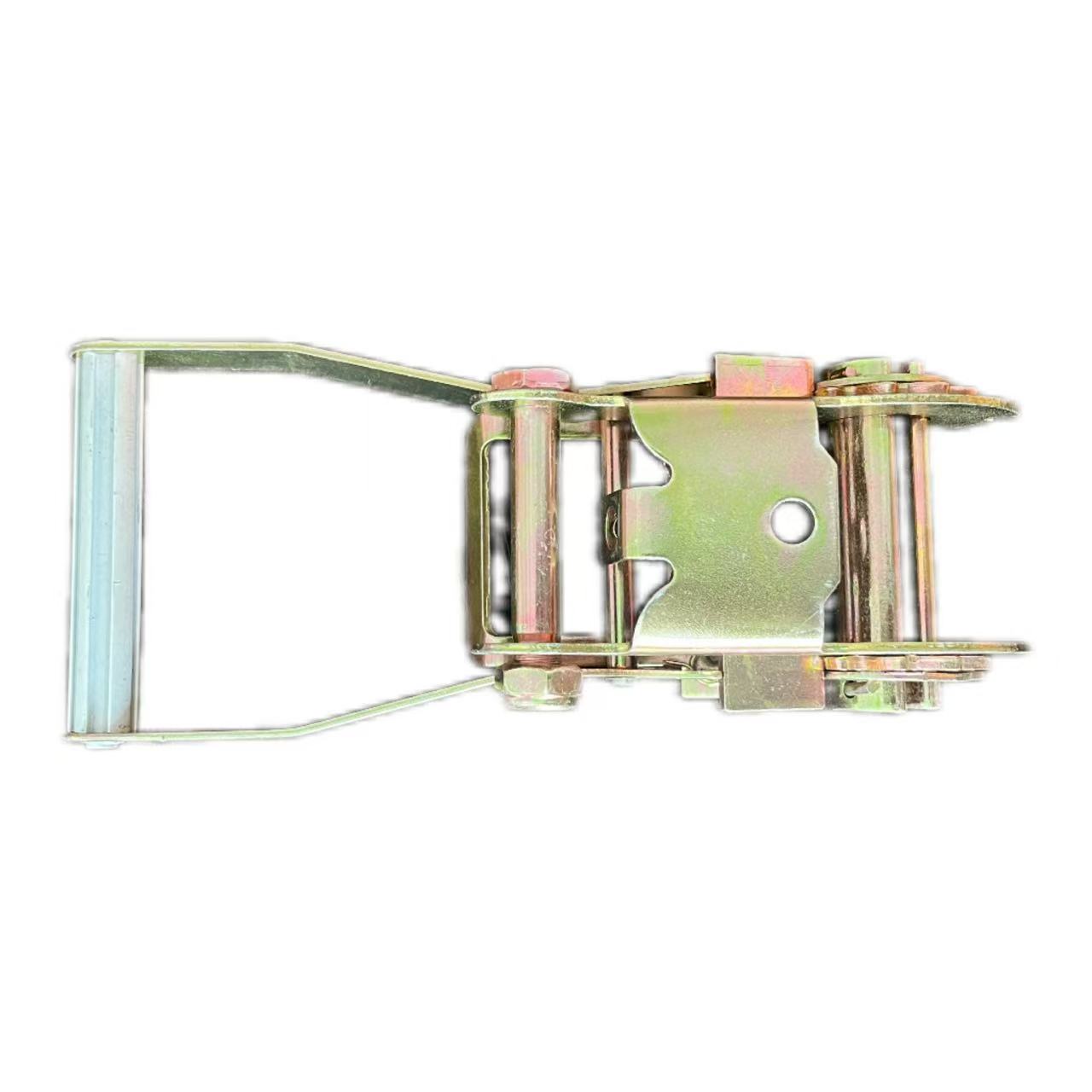
Carbon steel provides the highest yield strength available. Manufacturers rely on it for massive load securement. It serves as the industry standard for 10,000+ lbs break strength requirements. High-carbon alloys resist bending under extreme human force. They lock firmly into place. This rigidity guarantees maximum tension for heavy loads.
However, carbon steel possesses notable drawbacks. The material adds significant weight to your ratchet tie down assembly. Furthermore, it remains highly susceptible to rust. Road debris often scratches the protective coating. Once exposed, raw steel oxidizes rapidly. You must monitor these parts closely.
We recommend carbon steel for heavy industrial hauling. It excels on flatbed trailers carrying machinery. It also performs well in enclosed dry transport. Inside a dry van, environmental exposure remains minimal. Here, the raw strength of steel shines brightest.
Aluminum offers a completely different strength profile. It features a lower tensile strength compared to high-carbon steel. Manufacturers generally utilize it for 1-inch to 2-inch straps. It dominates the consumer and mid-duty commercial markets. It provides enough force for standard pallets and lightweight vehicles.
The advantages of an aluminum handle buckle are immediate. It offers significant weight reduction. This saves energy during long shifts. Aluminum is also naturally rust-resistant. It automatically forms a protective oxide layer upon exposure to air. This makes it highly ergonomic for frequent, lower-tension applications.
You must watch out for specific drawbacks. Aluminum can warp under extreme over-tensioning. It lacks the rigid memory of steel. It also suffers from pitting in highly alkaline environments. We consider it best for powersports transport and internal van securement. It reduces equipment fatigue beautifully.
Stainless steel delivers a unique balance of properties. It maintains high strength levels. It is slightly softer than high-carbon steel. Yet, it remains highly durable under tension. It handles repetitive stress exceptionally well. You rarely see bending in premium stainless hardware.
This metal provides intrinsic resistance to oxidation. It easily withstands brutal saltwater corrosion. It does not rely on a fragile surface coating. The chromium content protects the steel continuously. Even deep scratches will not cause rapid rusting. It offers superior longevity in wet conditions.
Be aware of the procurement costs. Stainless steel demands the highest upfront budget. It can also suffer from galling. Galling acts as cold welding inside moving parts. You must maintain it properly. It is perfect for marine transport, coastal applications, and chemical logistics.
Material Performance Matrix
| Material Type | Tensile Strength | Corrosion Resistance | Primary Application |
|---|---|---|---|
| Carbon Steel | Extremely High | Low (Coating Dependent) | Heavy Flatbed Hauling |
| Aluminum | Moderate | High (Oxide Layer) | Mid-Duty / Dry Van |
| Stainless Steel | High | Exceptional | Marine / Chemical Transport |
Standard steel relies entirely on surface treatments. Manufacturers typically apply zinc-plated and chromate finishes. The mechanism is fascinating. The zinc acts as a sacrificial anode. It actively protects the underlying steel. The zinc oxidizes first. It draws corrosive elements away from the core metal.
These finishes face severe practical limitations. Chains and hooks inevitably scratch the handle. Road gravel chips the protective layer. Once compromised, rust propagates very quickly. Salt spray testing reveals sobering data. Typical degradation occurs within 100 to 200 hours of continuous exposure. You must inspect plated hardware frequently.
Powder coating creates a tough physical barrier against moisture. Manufacturers bake this plastic-like layer onto the metal. Rubberized grips serve a similar purpose. They cover the handle to block rain. Grips also improve user handling dramatically. They prevent hands from slipping in wet or freezing conditions.
However, these physical barriers carry hidden risks. Moisture frequently becomes trapped beneath compromised rubber. Chipped powder coat allows water to seep underneath. This accelerates hidden corrosion. The metal rusts away while looking completely fine on the surface. Operators often discover the failure only when the handle suddenly snaps.
We must acknowledge a transparent reality in logistics. Winter road salts aggressively attack metal. Marine environments break down alloys relentlessly. Environmental debris will eventually degrade any moving metallic part. Complete immunity does not exist in commercial hauling.
Corrosion resistance is ultimately about delaying failure. It is never about absolute prevention. Operators buy premium materials to buy time. High-quality finishes extend the safe operational window. You trade upfront budget for longer intervals between replacements. Regular cleaning remains mandatory for all materials.
Corrosion Delay Estimates by Finish
| Finish Type | Protection Mechanism | Vulnerability | Estimated Lifespan (Harsh Conditions) |
|---|---|---|---|
| Standard Zinc Plating | Sacrificial Anode | Scratches easily, exposes steel | 6 - 12 Months |
| Heavy Powder Coat | Physical Barrier | Hidden trapped moisture | 1 - 2 Years |
| 316 Stainless Steel | Intrinsic Alloy (Chromium) | Galling, occasional tea-staining | 3 - 5+ Years |
Choosing the right hardware requires a systematic approach. Guesswork leads to broken equipment and safety violations. We built this framework to standardize your procurement process. Follow these steps to align your metal choices with operational realities.
Even the strongest metals require consistent maintenance. Neglect ruins expensive hardware rapidly. Drivers must integrate handle checks into their daily routines. Proper upkeep prevents catastrophic failures on the highway. We recommend establishing strict guidelines for your fleet.
The right handle material requires a strategic balancing act. You must weigh necessary break strength against environmental realities. Procurement teams must also respect budget constraints. There is no universal solution for every truck on the road. Your specific cargo and climate dictate the best choice.
We strongly recommend avoiding extreme specifications. Do not over-specify by buying marine-grade stainless for basic dry-van use. Conversely, never under-specify by using standard aluminum for securing heavy machinery. Match the metal strictly to the mission. Precision in procurement prevents both wasted money and dangerous highway failures.
Take immediate action on your hardware strategy today. Advise your procurement teams to audit current tie-down failure rates. Instruct owner-operators to log where and how their hardware breaks. Use this environmental data to specify materials accurately in your next vendor order. Smart upgrades protect your cargo and your drivers.
A: Yes, it absolutely does. The manufacturer calculates WLL based on the weakest component in the assembly. A weaker handle material restricts the overall rating. Even if your webbing holds 10,000 lbs, a handle rated for 3,000 lbs brings the entire system's WLL down to match the metal.
A: The lifespan varies heavily by use. Expect 1 to 3 years in standard, dry conditions. However, the metal can degrade in a few months if exposed to winter road salts. You must clean the hardware regularly to achieve the maximum lifespan.
A: Generally, no. Aluminum is typically reserved for standard-duty applications. Flatbed hauling requires massive tension and durability. You need DOT-compliant steel hardware rated for high WLL. Aluminum risks warping under the extreme force required for heavy machinery.
A: No. Stainless steel is highly corrosion-resistant, but not invincible. It can still develop surface rust or "tea staining" in extreme saline environments. You must perform occasional freshwater rinsing. Proper maintenance ensures the chromium oxide layer continues protecting the core steel.

