

close
Choose Your Site
Global
Social Media


Overhead lifting operations demand absolute reliability. Balancing extreme tensile strength with delicate load protection is a daily requirement on the job site. Specifying the wrong rigging equipment introduces severe operational risks. These hazards range from catastrophic rigging failure and OSHA compliance violations to severe surface damage on fragile, high-value loads. The Endless Round Sling solves many of these field challenges. Designed specifically for heavy, irregular, or delicate loads, this equipment requires rigorous technical evaluation before you put it to work in critical lifting applications. We will break down the exact specifications, material limits, and inspection protocols you need to know to execute safe, compliant lifts.
Structural Advantage: Round slings utilize a continuous loop of load-bearing yarn encased in a protective jacket, offering an exceptional strength-to-weight ratio.
Load Conformity: Their design makes them the optimal flexible lifting sling for choker hitches and cylindrical loads without causing surface abrasion.
Material Constraints: While highly versatile, standard polyester slings have strict environmental limitations regarding heat and chemical exposure compared to wire rope or chain.
Compliance Mandates: Safe implementation requires strict adherence to ASME B30.9 standards for daily inspection and edge protection.
The structural integrity of this rigging equipment relies entirely on its internal construction. The core consists of continuous, endless loops of synthetic yarn. These yarns are wound together to achieve the precise volume required to meet a specific working load limit. Because the yarns are continuous, there are no splices or weak points within the load-bearing core. Standard industrial applications typically utilize polyester yarns due to their excellent strength, low moisture absorption, and resistance to common industrial acids. You will find polyester cores on most construction sites and manufacturing floors.
For specialized high-capacity lifts requiring extreme strength-to-weight ratios, manufacturers utilize high-performance fibers such as HMPE (High-Modulus Polyethylene) or Aramid (Kevlar). These advanced materials provide capacities rivaling steel wire rope at a fraction of the weight. This significantly reduces rigger fatigue during heavy lifts. When a crew has to rig a 100-ton generator stator, wrestling with heavy steel wire rope slows down the entire operation and increases the risk of hand injuries. High-performance synthetic cores allow a single rigger to position the equipment quickly and safely.
Core Material | Primary Advantage | Stretch at Rated Capacity | Best Application |
|---|---|---|---|
Standard Polyester | Cost-effective, good acid resistance | Approx. 3% | General construction, manufacturing |
HMPE | Extreme strength, ultra-low weight | Less than 1% | Heavy lifts, tight headroom |
Aramid (Kevlar) | High heat resistance | Approx. 1% | High-temperature environments |
Surrounding the internal load-bearing core is a woven outer jacket, typically constructed from double-wall polyester. The function of this tubular jacket is widely misunderstood in the field. A critical engineering point must be clarified: the jacket bears absolutely no load during a lift. Its sole purpose is to contain the core yarns, keep them aligned, and provide a critical barrier against UV degradation, dirt, and minor surface abrasion.
The double-wall construction ensures that if the outer layer is breached by friction or minor snags, an inner layer remains intact to protect the core. However, this jacket is not designed to withstand sharp edges under tension. Riggers often make the mistake of assuming a thick jacket provides cut resistance. It does not. The jacket simply holds the shape of the equipment and protects the internal fibers from environmental contamination. When inspecting the jacket, you are looking for any breach that exposes the internal yarns to the outside world.
Understanding the stretch characteristics of synthetic rigging is vital for load control and headroom calculations. Standard polyester endless round slings exhibit an elongation of approximately 3% at their rated capacity. This slight stretch provides a shock-absorbing quality, which helps mitigate dynamic loading effects when a crane initially takes the weight of the load. If a crane operator catches a load slightly too fast, that 3% stretch acts as a buffer, reducing the shock load transferred to the crane's hoist rope and the rigging hardware.
However, in environments with restricted headroom or where absolute precision is required, this stretch becomes a liability. Consider mating two large machined flanges. If you are using a 20-foot polyester sling, a 3% stretch equals over 7 inches of elongation. That makes precise alignment nearly impossible. In contrast, high-performance fibers like HMPE offer incredibly low stretch properties, typically less than 1% at rated capacity. This mimics the rigidity of wire rope while maintaining the handling benefits of synthetic materials. You get the precision of steel without the weight.
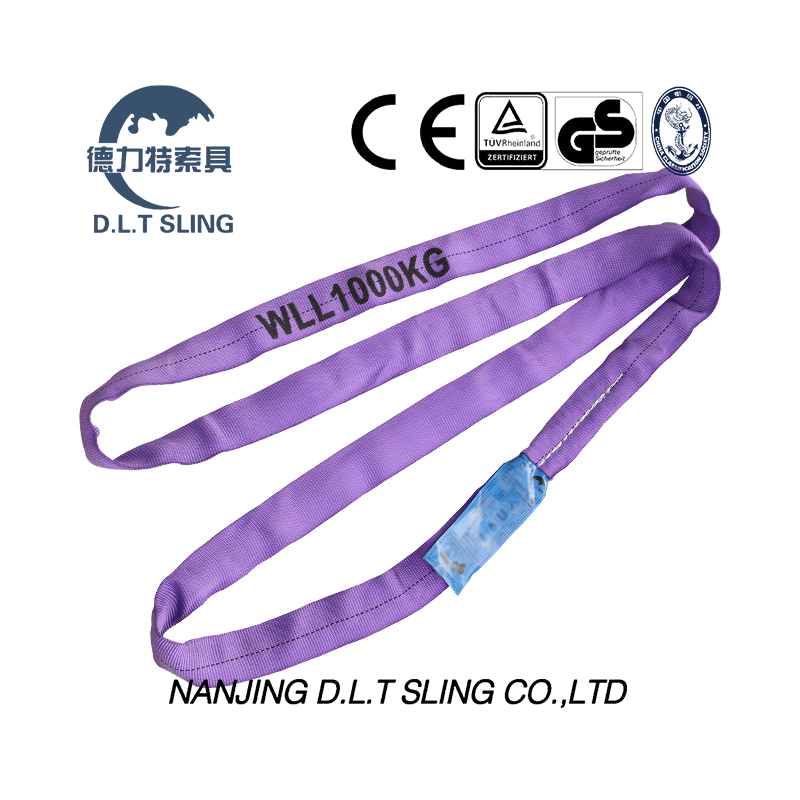
Defining the success criteria for synthetic rigging involves analyzing the physical characteristics of the load. A Flexible Lifting Sling is mandatory when handling painted, polished, or easily crushed components. Machined parts, boat hulls, composite aerospace materials, and large cylindrical pipes require a rigging solution that conforms perfectly to their geometry without inflicting localized pressure points.
The tubular, soft nature of this equipment ensures the lifting force is distributed evenly across the contact surface. This prevents the gouging or scratching that steel chains or wire ropes would inevitably cause. When lifting a freshly painted yacht hull or a precision-machined turbine rotor, surface damage is unacceptable. The soft jacket and pliable core mold to the contours of the load, providing a secure grip without leaving a mark.
While both are synthetic, their mechanical behavior differs significantly. The primary advantage lies in wear distribution. An endless configuration can be rotated with each use, ensuring that the contact points with the crane hook and the load change constantly. This infinite number of bearing points drastically extends the lifespan of the equipment. You simply shift the contact point a few inches before the next lift.
Flat web slings, featuring sewn eyes at each end, have fixed bearing points that suffer repetitive stress and friction during every lift. The eye of a web sling always sits on the crane hook, and the body always contacts the load in roughly the same area. Furthermore, the tubular profile navigates tight lifting eyes and complex hardware much easier than a wide, flat web sling. A flat web sling can bunch up and lose its rated capacity if forced into a narrow shackle, whereas a tubular design naturally compresses to fit the hardware.
For critical, high-tonnage lifts, engineers often specify multi-path designs. Standard single-path configurations encase all load-bearing yarns within one tubular jacket. Multi-path designs feature two or more independent load paths within a single outer cover. This provides critical redundancy. If one path fails due to severe localized damage, the secondary path prevents an immediate catastrophic drop, allowing the load to be lowered safely to the ground.
Additionally, these high-capacity slings frequently incorporate built-in fiber-optic inspection warning systems. A fiber-optic cable runs alongside the load-bearing yarns. If the internal core is compromised or overloaded, the fiber-optic cable breaks. This prevents light from passing through the cable, immediately signaling to the rigger that the equipment has suffered internal damage and must be removed from service. This takes the guesswork out of inspecting heavy-lift synthetics.
Evaluating synthetic options against wire rope and alloy chain requires a balanced look at operational realities. The advantages of synthetic materials include vastly superior ergonomics, a fraction of the weight, and unparalleled load protection. Riggers can carry high-capacity synthetic equipment over their shoulders, whereas equivalent steel chains require forklifts to position. This speeds up the rigging process and reduces physical strain on the crew.
However, the vulnerabilities are equally significant. Synthetic fibers are highly susceptible to cutting when exposed to sharp edges under tension. A steel chain can drag across a rough concrete edge without failing; a synthetic core will sever instantly under the same conditions. Furthermore, they possess much lower heat tolerance. While alloy chain can operate in foundries and steel mills at extreme temperatures, standard synthetics will melt and fail catastrophically in those same environments. You must match the material to the environment.
The rigging industry utilizes a standardized color-coding system for synthetic tubular jackets to help personnel quickly identify rated capacities. This visual system streamlines operations on busy job sites, allowing a rigger to grab the right equipment at a glance.
Jacket Color | Vertical Capacity (approx. lbs) | Choker Capacity (approx. lbs) | Basket Capacity (approx. lbs) |
|---|---|---|---|
Purple | 2,600 | 2,100 | 5,200 |
Green | 5,300 | 4,200 | 10,600 |
Yellow | 8,400 | 6,700 | 16,800 |
Tan | 10,600 | 8,500 | 21,200 |
Red | 13,200 | 10,600 | 26,400 |
White | 17,000 | 13,600 | 34,000 |
Blue | 21,200 | 17,000 | 42,400 |
Despite this convenient system, buyers and riggers must be instructed to always verify the manufacturer's identification tag over the jacket color. Fading from UV exposure, heavy dirt, or chemical staining can easily obscure the true hue. A faded green jacket might look yellow under certain lighting conditions. The tag is the only legally binding indicator of the equipment's working load limit. If the tag is missing or illegible, the equipment is dead and must be removed from service immediately.
The working load limit (WLL) of a Round Sling changes dramatically based on the rigging configuration. You cannot assume the vertical rating applies to every lift. In a Vertical hitch, the equipment supports the full weight directly. When configured in a Choker hitch, the capacity is typically reduced by 20% due to the stress created at the choke point. The fibers are compressed and bent back on themselves, which reduces their overall breaking strength.
However, the extreme flexibility of the tubular design maximizes surface contact in a choker hitch, gripping cylindrical loads tighter than any other material. When lifting bundles of pipe or smooth steel bar, a choker hitch provides superior load control. In a true Basket hitch, where both ends are placed on the crane hook and the load is cradled evenly, the capacity is doubled compared to the vertical rating. This assumes the D/d ratio (diameter of the load compared to the diameter of the sling) meets industry standards. If the load is too narrow, it creates a severe bend radius that negates the basket hitch multiplier.
Operational constraints must dictate procurement. Standard polyester degrades rapidly when exposed to high heat. The absolute maximum operating temperature is 194°F (90°C). Operating above this threshold causes the synthetic fibers to weaken, melt, and eventually fail. You cannot use standard synthetics near welding operations, steam pipes, or industrial furnaces.
Chemical compatibility is equally critical. Polyester offers excellent resistance to most common acids, making it suitable for certain chemical processing environments or battery handling facilities. However, polyester is rapidly destroyed by alkalis (bases). If a lifting operation involves exposure to caustic sodas, strong alkaline cleaning solutions, or certain bleaching agents, polyester must be strictly avoided. In these specific environments, alternative materials like nylon or steel must be evaluated by a qualified rigging engineer.
The primary failure mode of synthetic rigging is cutting under tension. Even a seemingly dull edge, such as the flange of an I-beam or the rough casting of a concrete block, acts like a razor blade when thousands of pounds of tension are applied to the synthetic fibers. The necessity of engineered edge protection cannot be overstated. Riggers must utilize heavy-duty sleeves, Kevlar pads, or magnetic corner protectors when lifting loads with sharp or abrasive edges.
Cardboard, rags, or scrap wood are not engineered edge protectors and violate safety protocols. When tension is applied, the synthetic fibers will slice right through a piece of cardboard and sever on the steel edge beneath it. Engineered edge protection is designed to withstand the cutting force and distribute the pressure over a wider area. If you are buying synthetic rigging, you must simultaneously purchase the appropriate edge protection.
Manufacturers incorporate built-in inspection features to assist riggers in identifying internal damage. Many designs include tattle-tails. These are small extensions of the core yarns that protrude through the jacket. If these tails disappear into the jacket or become uneven, it indicates that the internal core has been overloaded or stretched beyond its elastic limit. The core has essentially snapped or deformed inside the cover.
Additionally, colored warning yarns are often woven into the core. If the outer jacket is breached and these brightly colored warning yarns become visible, it signals immediate core exposure. You do not need to see severed core yarns to fail the inspection; simply seeing the warning yarns through a hole in the jacket is enough to require the equipment to be retired. These visual cues take the ambiguity out of daily inspections.
Mandatory inspection protocols are governed by ASME B30.9 and OSHA regulations. Inspections are categorized into Initial (prior to first use), Frequent (visual inspection by the user before each shift), and Periodic (documented inspection by a designated, qualified person at least annually). The removal-from-service criteria are strict and non-negotiable.
Check the identification tag. If it is missing or illegible, remove the equipment from service.
Inspect the entire length of the jacket for holes, tears, cuts, or snags that expose the core yarns.
Look for any signs of acid or caustic burns, which appear as hard, discolored patches.
Check for evidence of melting, charring, or weld spatter anywhere on the jacket.
Feel the equipment for hard, brittle spots that indicate internal heat damage or chemical degradation.
Examine the tattle-tails to ensure they are visible and even.
Maximizing the return on investment requires proper storage protocols. Synthetic fibers degrade when exposed to prolonged ultraviolet light from the sun or arc welding. Leaving equipment lying in the dirt or hanging on a fence in direct sunlight will destroy its tensile strength over time, even if it is never used to lift a load.
Equipment must be stored in cool, dry, dark environments. Hanging them on dedicated racks away from mechanical damage, chemical spills, and extreme heat sources ensures they maintain their structural integrity over time. A proper rigging loft or storage gangbox keeps the equipment off the ground and away from forklift traffic. Proper storage prevents premature degradation and ensures the equipment is ready and safe for the next critical lift.
When executing overhead lifts that demand maximum load conformity and surface protection, synthetic tubular rigging remains the premier choice. The continuous loop design provides an unmatched strength-to-weight ratio while virtually eliminating the surface damage associated with steel chains or wire rope. Procurement teams must base their selection logic on precise variables: maximum anticipated load weight, primary hitch configurations, environmental temperature limits, and potential chemical exposure on the job site.
Audit your current rigging inventory immediately to identify and destroy any damaged or illegible equipment.
Implement a strict daily inspection routine based on ASME B30.9 criteria for all rigging personnel.
Procure engineered edge protection for all lifts involving steel beams, concrete, or machined edges.
Consult with a certified rigging engineer to determine if high-performance HMPE fibers are required for your heavy-lift applications.
A: A web sling features a flat, woven construction with fixed sewn eyes at each end, limiting wear points. A round sling consists of endless core yarns encased in a protective tubular jacket, allowing it to be rotated to distribute wear evenly across its entire length.
A: It is measured by its effective working length (or reach), which is the distance from one end of the bearing point to the other when laid flat. This is exactly half of the total circumference or pull-to-pull length of the continuous loop.
A: While some manufacturers are authorized to repair minor tears in the outer protective jacket, any damage whatsoever to the internal load-bearing core yarns means the equipment cannot be repaired. It must be immediately destroyed and replaced.
A: According to ASME B30.9 standards, the maximum safe operating temperature for standard polyester synthetic rigging is 194°F (90°C). Exposure to temperatures above this limit will cause structural degradation and potential failure.
A: The industry uses a standard color-coding system on the outer jacket (e.g., purple, green, yellow) to quickly indicate the approximate capacity. However, the manufacturer's identification tag is the only legal and accurate indicator of the working load limit.
A: If the outer jacket is torn, cut, or abraded to the point where the internal core yarns become visible, the equipment meets the immediate removal-from-service criteria. It must be taken out of operation to prevent a catastrophic drop.
A: Yes, they are highly effective in a basket hitch. This configuration typically doubles the vertical working load limit, provided the load's bend radius and the D/d ratio are maintained within standard limits to prevent localized stress on the fibers.

