

close
Choose Your Site
Global
Social Media

Views: 0 Author: Site Editor Publish Time: 2026-07-29 Origin: Site


Rigging and material handling represent critical operational phases where equipment failure carries severe safety, financial, and regulatory consequences. Procurement managers and rigging engineers constantly face the challenge of balancing load protection, equipment weight, and environmental hazards against the inherent limitations of traditional wire rope or chain slings. Heavy steel chains can crush finished products, while wire ropes often succumb to saltwater corrosion or cause dangerous sparking in explosive atmospheres.
Synthetic lifting solutions bridge this gap. A webbing sling is a highly engineered, flexible lifting device primarily used to hoist, tow, and secure heavy loads while protecting delicate surfaces from damage. This guide evaluates the technical applications, material specifications, and compliance standards surrounding synthetic lifting equipment. By understanding the exact capabilities and limitations of these tools, you can make informed procurement decisions that prioritize site safety, protect valuable payloads, and optimize daily rigging operations.
Primary Function: Webbing slings are engineered for lifting, towing, and securing heavy loads where surface protection, flexibility, and a high strength-to-weight ratio are mandatory.
Configuration Variances: Selection depends heavily on load geometry, with options ranging from the Flat Webbing Sling for wide load distribution to the Endless Webbing Sling for rotational wear resistance.
Material Trade-offs: Polyester offers low stretch and acid resistance, while nylon provides shock absorption but loses capacity when wet and is vulnerable to specific chemical degradation.
Compliance & Safety: Accurate procurement requires matching the Working Load Limit (WLL) color-coding and stripe systems with the intended hitch method (vertical, choker, or basket) and implementing strict edge-protection protocols.
Traditional lifting gear like grade 80 chains and heavy-duty wire ropes often fail the success criteria of load integrity and handler ergonomics. When operational scenarios demand a softer touch, lighter equipment, or specific environmental resistance, synthetic slings become the mandatory choice. Defining the exact application parameters ensures you deploy the right tool for the specific lift.
Lifting machined parts, painted components, fiberglass structures, or finished architectural materials requires soft-surface contact. Steel chains and wire ropes exert concentrated pressure points that easily scratch, gouge, or crush delicate payloads. A synthetic sling conforms to the shape of the load, distributing the lifting force over a wider surface area.
This wide distribution prevents localized damage. For example, when hoisting a freshly painted yacht hull or a precision-machined aerospace turbine, the soft synthetic fibers grip the surface securely without abrading the finish. The flexibility of the material ensures the sling wraps tightly around irregular shapes, providing superior load control while maintaining the pristine condition of the payload. We frequently see this in precast concrete handling, where sharp steel chains would chip the decorative edges of architectural panels.
Synthetic rigging equipment offers ergonomic advantages that directly impact crew efficiency and safety. These slings provide comparable Working Load Limits (WLL) to steel alternatives at a fraction of the weight. A lifting chain capable of hoisting 10 tons requires multiple personnel or auxiliary machinery just to position it on the crane hook. A synthetic equivalent can be carried and installed by a single rigger.
This dramatic reduction in weight minimizes handler fatigue and lowers the risk of musculoskeletal injuries on the job site. Furthermore, lighter equipment reduces transport costs and significantly accelerates setup and teardown times. When rigging crews can move faster and safer, overall operational productivity increases. On high-rise construction sites, tower crane operators and riggers save hours each week simply by maneuvering lighter synthetic gear instead of dragging heavy chain blocks across concrete decks.
Explosive atmospheres demand specialized safety protocols. In petrochemical plants, oil refineries, grain silos, and chemical processing facilities, a single spark can trigger a catastrophic event. Metal rigging components striking against each other or against steel structures present a severe ignition hazard. Synthetic materials eliminate this sparking risk entirely.
Additionally, high-voltage utility areas require non-conductive lifting solutions. When hoisting transformers, utility poles, or working near live power lines, the dielectric properties of dry synthetic fibers provide a critical layer of insulation. This protects rigging personnel from accidental electrocution, making synthetic options the standard specification for electrical infrastructure projects.
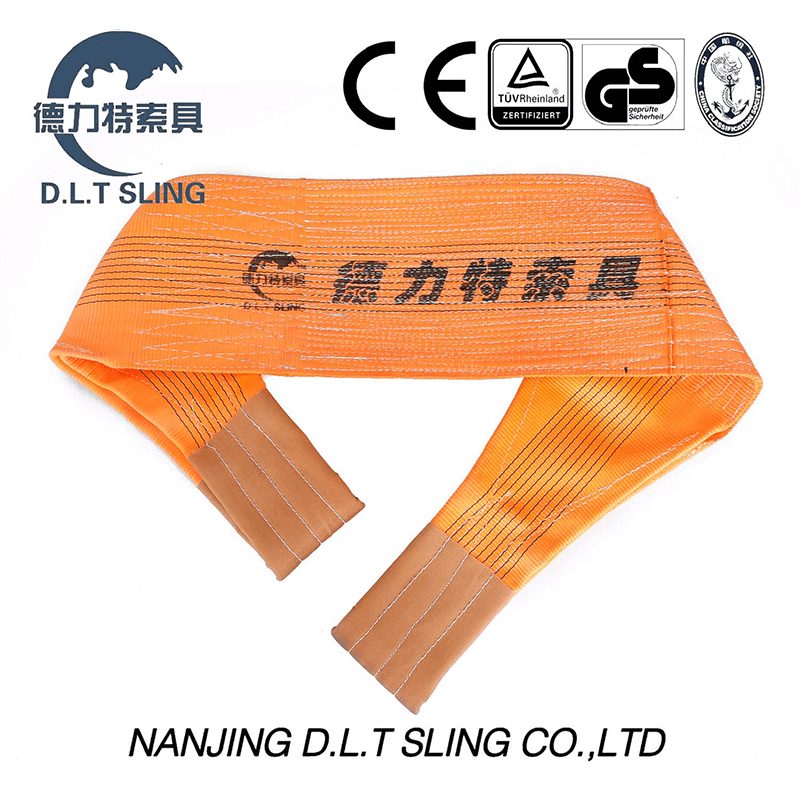
The structural design of a lifting sling dictates its specific application. Understanding the geometry and construction of different configurations allows you to match the equipment to the load profile accurately.
A Flat Webbing Sling is constructed from woven synthetic webbing, typically featuring reinforced eyes at each end. The construction varies by ply thickness, which directly correlates to load capacity. A simplex (single-ply) configuration offers high flexibility for lighter loads. A duplex (double-ply) configuration is the industry standard, providing a balance of strength and pliability. Quad-ply configurations are engineered for extreme heavy-lifting, stacking four layers of webbing for maximum tensile strength.
The primary benefit of this flat design is its wide surface area. When lifting fragile or easily crushed materials like drywall stacks, wooden trusses, or thin-walled pipes, the flat webbing distributes the pressure evenly across the load. This prevents the sling from biting into the edges and causing structural damage.
The terminations, or eyes, also play a crucial role. Type 3 flat eyes are woven in the same plane as the sling body, making them easy to slide under loads. Type 4 folded or twisted eyes are sewn at a 90-degree angle to the main body. This twist allows the eye to sit naturally on a crane hook or shackle without bunching or stressing the webbing fibers, ensuring a secure and stable connection.
An Endless Webbing Sling features a continuous loop construction, classified as Type 5. Instead of terminating in fixed eyes, the webbing is sewn end-to-end to form a complete circle. This geometry offers distinct operational advantages, primarily revolving around wear distribution and longevity.
The primary benefit of the continuous loop is the ability to rotate the hook and load contact points. With fixed-eye slings, the wear always occurs at the same bearing points inside the eyes. With an endless design, the rigger can shift the sling slightly before each lift. This distributes the friction and wear evenly across the entire length of the loop, significantly extending the operational lifespan of the equipment.
This configuration demonstrates superiority in choker hitches and when lifting cylindrical loads. When wrapping around pipes, tubing, bar stock, or logs, the continuous loop bites down securely, providing excellent grip and load control. The absence of bulky sewn eyes makes it easier to thread the sling through tight spaces or underneath loads resting close to the ground.
The chemical and physical properties of the synthetic fibers impact long-term viability and site safety. Selecting the wrong material for a specific chemical environment can lead to rapid degradation and catastrophic failure.
Polyester is the most common material used in modern synthetic rigging. Its physical properties make it ideal for precision lifting. Polyester exhibits low stretch characteristics, typically elongating only about 3% at its maximum Working Load Limit. This low stretch maintains precise load control, reduces dangerous bounce during the lift, and prevents the load from springing back when set down.
Environmentally, polyester offers high resistance to acidic environments, bleaching agents, and ultraviolet (UV) degradation. It can withstand prolonged exposure to sunlight without losing significant tensile strength. However, it has distinct limitations. Polyester is highly vulnerable to alkaline (basic) environments and will degrade rapidly if exposed to strong alkalis. Furthermore, it should never be used in environments where temperatures exceed 194°F (90°C).
Nylon, or polyamide, serves specific rigging needs where dynamic forces are at play. Its defining physical property is its higher stretch rate, typically elongating between 6% and 10% at WLL. This elasticity provides necessary shock absorption for dynamic or sudden loads, reducing the impact force transmitted to the crane hoist and the rigging hardware.
Nylon exhibits excellent resistance to alkalis, aldehydes, and certain solvents, making it the preferred choice in specific chemical processing applications. However, its limitations are severe. Nylon degrades rapidly in acidic environments. More critically, nylon absorbs moisture. When wet or saturated, it loses 10% to 15% of its rated strength. In sub-zero conditions, absorbed moisture can freeze, causing internal ice crystals to sever the load-bearing fibers from the inside out.
For highly specialized applications, high-performance fibers like Kevlar (Aramid) or Dyneema (HMPE) are specified. These materials offer extreme cut resistance, near-zero stretch, and exceptional strength-to-weight ratios. Kevlar provides extreme heat tolerance, capable of operating safely in environments up to 300°F (149°C) or higher, making it suitable for foundries and steel mills.
Dyneema actually floats on water and offers abrasion resistance that rivals steel. While these specialty fibers carry a significant cost premium, they solve complex rigging challenges where standard polyester or nylon would fail immediately.
Understanding chemical compatibility is vital for safe procurement. The following table compares the resistance profiles of standard synthetic materials.
Variable | Polyester | Nylon |
|---|---|---|
Acids | Good Resistance | Poor (Degrades Rapidly) |
Alkalis (Bases) | Poor (Degrades Rapidly) | Good Resistance |
Ethers & Alcohols | Good | Good |
Water Absorption | Minimal (Retains Strength) | High (Loses 10-15% Strength) |
Elongation at WLL | Approx. 3% (Low Stretch) | Approx. 6-10% (High Stretch) |
Maximum Temperature Limit | 194°F (90°C) | 194°F (90°C) |
Matching a sling to a specific lifting operation requires rigorous technical evaluation. You must calculate the exact forces applied to the equipment based on the load weight, the hitch method, and the lifting angles.
The Working Load Limit (WLL) is the maximum mass the equipment is authorized to sustain in general service. To facilitate rapid identification on the job site, manufacturers adhere to a standardized international color-coding system (such as EN 1492-1). This system allows riggers to instantly identify the nominal vertical capacity of the equipment:
Violet = 1 Ton
Green = 2 Tons
Yellow = 3 Tons
Grey = 4 Tons
Red = 5 Tons
Brown = 6 Tons
Blue = 8 Tons
Orange = 10 Tons and above
In addition to the color code, manufacturers weave black capacity lines or stripes directly into the body of the webbing. Typically, one black line represents one ton of WLL. A yellow sling will feature three black stripes. This serves as a secondary visual aid, especially useful if the equipment becomes dirty or faded.
Despite these visual indicators, you must always verify the manufacturer's identification tag before use. The tag details the exact WLL for various hitches, the material type, and the safety design factor. Industrial standards mandate strict safety factors, typically 5:1 for ASME B30.9 in North America and 7:1 for European EN standards. This means a sling rated for 1 ton must theoretically withstand 5 (or 7) tons before breaking, though it must never be loaded beyond its rated WLL.
The method used to attach the sling to the load drastically alters the effective WLL. The nominal capacity listed on the tag always refers to a straight vertical lift. Changing the geometry changes the capacity.
Hitch Type | Capacity Modifier | Application Notes |
|---|---|---|
Vertical Hitch | 100% of WLL | Direct overhead lift. Load must be perfectly balanced. |
Choker Hitch | 80% of WLL | Reduces capacity due to localized friction and severe bending stress at the choke point. |
Basket Hitch (90 degrees) | 200% of WLL | Legs must be perfectly vertical. Capacity drops rapidly as the angle decreases. |
The horizontal sling angle has a profound mathematical impact on tension. Lifting at shallow angles drastically increases the tension on each leg, requiring equipment with a much higher capacity than the actual weight of the load.
When the sling legs are perfectly vertical (90 degrees), the tension equals the load weight divided by the number of legs. As the angle drops, the tension multiplies. At a 60-degree angle, the tension increases slightly. At a 45-degree angle, the tension increases by roughly 41%. At a 30-degree angle, the tension on each leg equals the entire weight of the load. Lifting at angles below 30 degrees is highly dangerous and generally prohibited, as the extreme horizontal forces can crush the load and snap the webbing fibers instantly.
Even the highest quality lifting equipment will fail if deployed improperly. Addressing the primary causes of failure and engineering them out of the lifting plan is mandatory for operational safety.
The number one cause of synthetic rigging failure is unprotected lifting over sharp, abrasive, or small-radius corners. Synthetic fibers, while incredibly strong under tension, possess very low resistance to cutting and shearing forces. A load does not need to be razor-sharp to sever a sling; even a relatively blunt 90-degree steel corner can cut through tensioned webbing like a knife.
Mitigation requires strict protocols. You must mandate the procurement and use of engineered edge protectors. Sliding wear sleeves, sewn-on protective webbing, magnetic corner protectors, or heavy-duty polyurethane pads prevent direct contact between the tensioned fibers and the load edge. Cardboard, rags, or scrap wood are not acceptable edge protection and will fail under heavy loads.
Rigging equipment degrades over time through use, environmental exposure, and mechanical wear. Mandatory pre-use inspection protocols, aligned with standards like OSHA 1910.184 and ASME B30.9, are non-negotiable. The rigger must visually and physically inspect the entire length of the equipment before every single lift.
Follow these numbered steps for a proper pre-lift inspection:
Check the manufacturer tag to ensure it is legible and displays the correct WLL for the planned hitch.
Run your bare hands along the entire length of the webbing to feel for hardened spots, which indicate chemical or heat damage.
Inspect the edges for small cuts, snags, or fraying that could propagate under tension.
Examine the load-bearing splices and stitching for broken or worn threads.
Look for exposed red core warning yarns; if visible, the sling is structurally compromised.
Strict retirement criteria must be enforced. You must remove the equipment from service immediately if you discover acid or caustic burns, melting or charring of any part of the surface, snags, punctures, tears, or cuts. If the manufacturer's identification tag is unreadable or missing, the sling must be destroyed and discarded, regardless of its physical condition.
Synthetic lifting solutions represent the optimal choice for operations requiring surface protection, flexibility, and handler ergonomics. As long as riggers respect the physical limitations of the materials and mitigate environmental hazards, these tools provide unparalleled utility on the job site.
Audit your current lifting operations to identify areas where synthetic slings can replace heavy chains to improve ergonomics.
Assess your inventory of engineered edge protectors and purchase polyurethane pads for all sharp-corner lifts.
Remove any undocumented, tagless, or damaged rigging gear from service immediately and destroy it to prevent accidental use.
Consult with a certified rigging equipment supplier to specify the exact WLL and material configurations required for your upcoming heavy lifts.
A: A flat sling features a wide surface area for distributing pressure and terminates in specific sewn eyes for easy attachment to hooks. An endless sling is a continuous loop without fixed eyes. This allows the user to rotate the contact points, distributing wear evenly across the entire loop and extending the equipment's lifespan, particularly in choker hitches.
A: The exact WLL is printed on the manufacturer's legible tag attached to the equipment. This is supported by an industry-standard color-coding system and woven black capacity lines. You must then adjust this nominal WLL based on your specific hitch type and the lifting angle.
A: While possible in absolute emergencies, it is highly discouraged. Recovery and tow straps are designed with high-stretch materials to store and release kinetic energy safely during dynamic towing. Lifting slings are engineered for static vertical loads with minimal stretch, making them prone to snapping under sudden towing shock loads.
A: Standard polyester lifting equipment becomes unsafe and must be removed from service if exposed to temperatures exceeding 194°F (90°C). Prolonged exposure to extreme heat degrades the synthetic fibers, drastically reducing their tensile strength and leading to unpredictable failure under load.
A: The leading cause of failure is lifting loads without adequate edge protection. When tensioned synthetic fibers press against sharp edges, abrasive surfaces, or small-radius corners, they can be severed instantly. Always use engineered polyurethane pads or cut-resistant wear sleeves.

