

close
Choose Your Site
Global
Social Media

Views: 0 Author: Site Editor Publish Time: 2026-07-24 Origin: Site


Inadequate load securement poses severe operational and financial risks for businesses today. Warehouses routinely face dropped inventory and devastating workplace accidents when heavy loads shift unpredictably. Transport fleets risk massive Department of Transportation (DOT) fines for unsecured items. To mitigate these dangerous hazards, logistics professionals turn to engineered industrial solutions. Reliable cargo mesh netting serves as a robust compliance and safety tool. It operates seamlessly within the broader ecosystem of cargo control products. This article evaluates specific applications across commercial transport and warehouse storage environments. We will explore strict material specifications, safety ratings, and crucial purchasing criteria. You will learn exactly how to evaluate your current setup. Finally, we provide the framework you need to choose the right netting system for dynamic transit routes or static storage facilities.
Improper securement causes cascading failures across modern supply chains. A single shifted pallet can completely ruin a delivery schedule. Damaged goods result in immediate revenue loss and frustrated customers. Fulfillment centers face immense pressure to maintain fast throughput, and dropped inventory stops production lines completely. Furthermore, regulatory penalties severely impact profit margins. DOT inspectors routinely issue immediate out-of-service violations for poor securement practices on the highway.
Uneven loads present unique challenges for transportation and storage. Rigid tie-downs create dangerous pressure points on varied cargo. Single straps can easily crush the top layer of fragile goods. They also leave loose gaps lower down the pallet. Netting resolves this conformity issue entirely. It drapes naturally over the most irregularly shaped cargo. The webbed structure captures the entire geometric footprint safely. It distributes downward tension evenly across the whole surface area. This conformity advantage guarantees maximum stability without destroying fragile inventory.
Time dictates profitability in warehouse logistics. Applying dozens of individual straps to a complex load takes far too long. Drivers waste valuable hours securing odd-shaped machinery components. Advanced netting drastically reduces this deployment time. A single worker can cover a massive footprint in just a few minutes. To achieve optimal operational efficiency, crews typically follow these swift deployment steps:
Movement introduces severe kinetic forces. Freight experiences sudden braking, sharp turns, and continuous vibration. Vehicles require specialized containment strategies to keep public roadways safe.
Indoor facilities face entirely different securement challenges. Warehouses stack inventory high into the vertical space. Gravity and human error become the primary risks.
Many organizations default to familiar tie-down methods. However, legacy tools often fail when applied to complex securement challenges. You must understand how specialized netting compares against common alternatives.
Amateurs frequently rely on bungee cords. Industrial professionals recognize them as severe safety hazards. Bungees store unpredictable kinetic energy when stretched. They frequently snap back, causing severe eye or facial injuries. Furthermore, bungees possess zero verifiable Working Load Limit (WLL). You cannot mathematically calculate their safety margins. Netting provides an engineered, highly predictable static containment method instead. It removes the dangerous snap-back risk entirely.
Ratchet straps hold massive tension effectively. They are ideal for heavy, rigid, monolithic items. You use them for steel pipes or solid machinery blocks. However, standard straps fail when securing varied collections of items. Netting proves far superior for these mixed loads. It safely bundles multiple, smaller, oddly shaped goods together under one cohesive barrier.
Warehouses consume miles of single-use plastic shrink wrap daily. This habit creates massive environmental waste. Netting offers a reusable, eco-friendly alternative. Logistics teams use woven nets rapidly for internal warehouse transfers. This sustainable swap drastically cuts recurring material costs over time.
Alternative Cargo Securement Methods Comparison
| Securement Method | Ideal Application | Primary Limitation | Reusability Rating |
|---|---|---|---|
| Cargo Netting | Uneven loads, multiple items, secondary containment | Requires a brief initial training period | Highly Reusable |
| Ratchet Straps | Heavy, monolithic, rigid freight | Can easily crush fragile or loose cartons | Highly Reusable |
| Bungee Cords | Light household or recreational use only | Dangerous snap-back risk; absolutely no WLL | Low to Moderate |
| Shrink Wrap | Weatherproofing perfectly uniform pallets | Generates massive environmental plastic waste | Single-Use Only |
Procuring the right securement gear requires careful analysis. Purchasing departments must look beyond the price tag. You must evaluate environmental exposure, load weight, and existing hardware.
Environmental exposure dictates your primary material choice. Polyester remains the absolute best option for outdoor transport. It boasts extremely high UV resistance. It features very minimal stretch under heavy tension. It also resists water absorption during severe rainstorms, preventing rot. Nylon serves different specific needs. It provides better performance for applications needing slight shock absorption. It stretches slightly to absorb sudden impacts. However, UV rays and constant water exposure can degrade nylon webbing over time.
The aperture size dictates your containment success. You must correlate the mesh hole size to your specific cargo footprint. The mesh gaps must be noticeably smaller than your smallest individual item. This strict correlation prevents dangerous mid-transit slip-throughs. A load of small auto parts requires a tight two-inch mesh. A load of large furniture boxes allows for a broader four-inch mesh.
Novice buyers often confuse Working Load Limit (WLL) with breaking strength. You must clarify this vital safety distinction. Break strength indicates the exact tension where the fibers physically snap. WLL represents the safe, everyday operational margin. Buyers must always source netting based strictly on WLL. Manufacturers typically set the WLL at one-third of the total tested break strength. Never exceed the WLL during normal operations.
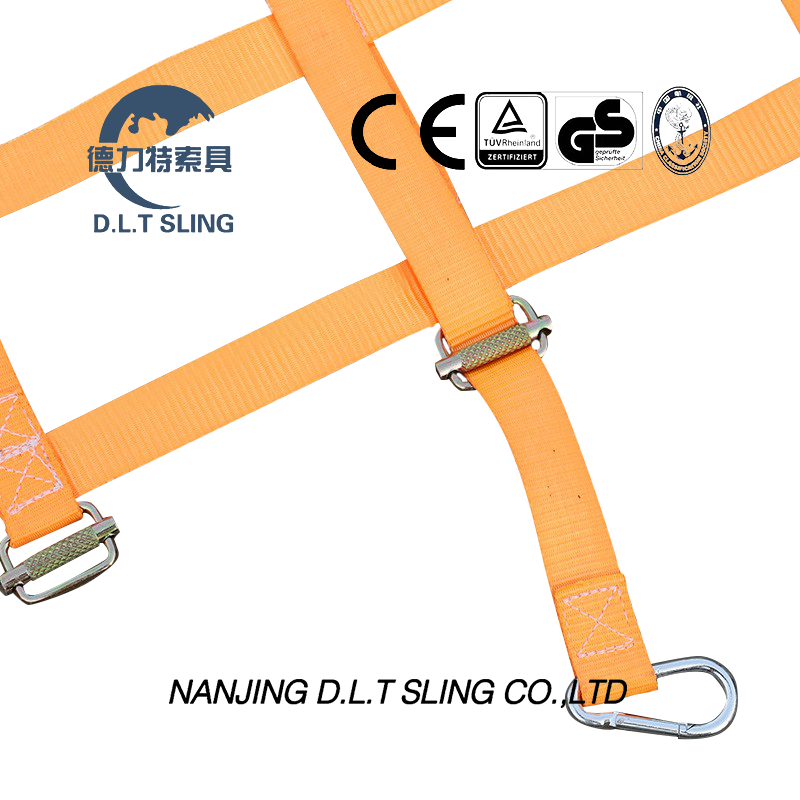
Cargo nets require incredibly strong anchor connections. They feature integrated hardware options like zinc-plated cam buckles, vinyl-coated snap hooks, or heavy-duty O-rings. Evaluate these fittings against your specific environment. They must seamlessly integrate into your existing fleet D-rings or warehouse E-track systems. Mismatched hardware compromises the entire securement system.
Introducing new safety equipment always involves some operational friction. Transitioning to complex netting systems requires patience and dedicated training. Warehouse staff or commercial drivers face a mild learning curve initially. They must learn how to handle large nets without creating massive tangles. They also need specific training on proper, even tensioning techniques. Rushing this training phase leads to improper usage and subsequent safety failures.
Equipment degrades over time through friction and weather exposure. Strict pre-use inspections are absolutely mandatory for all cargo control products. Workers must examine the gear before every single transit route or shift. You must retire the equipment immediately if you observe any of the following conditions:
Compliance protects your workforce and your financial bottom line. The DOT strictly enforces road transit rules through the Federal Motor Carrier Safety Administration (FMCSA). OSHA governs indoor facility storage standards. Both authoritative agencies explicitly require rated, undamaged securement tools. Using unrated, unbranded, or cheap netting introduces immense legal liability. Proper documentation and legible manufacturer WLL tags must remain visible on the equipment at all times.
Proper cargo mesh netting provides an incredibly scalable safety solution. It remains a highly reusable method for securing complex, uneven loads. It actively safeguards industrial facilities against falling inventory. By conforming to irregular shapes, it outperforms traditional rigid straps and dangerous bungee cords.
Audit your primary operational pain points to start the procurement process. Identify your specific highway debris risks or warehouse rack safety gaps. Look closely at your most uneven pallet configurations. Use these specific operational factors to determine your required material type, mesh size, and Working Load Limit.
Assess your current load securement protocols today. Identify any dangerous compliance gaps immediately before an accident occurs. Review your existing hardware compatibility. We highly recommend consulting a qualified industrial securement specialist to source custom netting dimensions tailored exactly to your unique facility or fleet.
A: Knotless netting is woven or stamped smoothly. It works best for fragile goods because it lacks abrasive pressure points. Knotted netting features individual knots at every intersection. This design offers higher localized strength. Industrial sectors prefer knotted styles for extremely heavy-duty, rugged applications.
A: Yes. Commercial manufacturers heavily prioritize custom dimensions. You can order exact width and length measurements. You can also specify exact hardware placements. This ensures a perfect, secure fit for specialized fleet vehicles or unique storage rack configurations.
A: Lifespan depends entirely on environmental exposure. UV radiation, chemical contact, and physical friction degrade the fibers. There is no strict timeline. Routine visual inspection remains much more critical than a calendar date. Retire the net immediately upon finding frayed fibers or bent hardware.
A: Netting generally functions as a secondary containment system. It prevents loose items from escaping primary securement. However, heavy-duty webbing nets can act as the primary securement for specific loose loads. You can only do this if the net's rated WLL strictly meets the total load requirements.

