

close
Choose Your Site
Global
Social Media


Views: 0 Author: Site Editor Publish Time: 2026-07-20 Origin: Site


The hidden operational and liability costs of cargo securement failures rarely stem from the webbing. They often trace back to compromised hardware. A single faulty mechanism can trigger a cascade of supply chain disruptions. While buyers often focus heavily on strap length and end fittings, the ratchet handle serves as the mechanical heart of any tensioning system. If this vital component fails to engage properly, binds under pressure, or succumbs to environmental wear, the entire assembly becomes a liability. Weak hardware jeopardizes operator safety and compromises load integrity. This guide breaks down the essential engineering, material science, and load rating mechanics required to critically evaluate your hardware. You will learn how to procure industrial-grade cargo control products without falling victim to exaggerated manufacturer claims. Let us explore exactly what makes these tools reliable in demanding field environments.
Fleet managers frequently encounter a massive gap between procurement savings and operational reality. Buying cheap hardware looks great on an initial spreadsheet. However, the field tells a remarkably different story. Low-quality parts lead to continuous replacements. They cause frustratingly delayed loading times. Most importantly, they introduce severe safety hazards into your daily logistics chain.
A weak ratchet strap buckle degrades rapidly under heavy, repetitive use. This degradation exposes your team to unnecessary physical risks. We must examine the most frequent hardware breakdowns observed during actual transit operations.
Best Practice: Always mandate driver feedback logs regarding hardware performance. If multiple drivers report sticky gears, you should immediately quarantine that batch of hardware.
Common Mistake: Procurement teams often mistake a heavy physical weight for high quality. Heavy cast iron feels robust. However, it shatters much easier under stress compared to lighter, precision-machined steel components.
A robust tie-down system requires precise mechanical synergy. You must evaluate the internal components critically. The interaction between the gear, the pawl, and the release trigger dictates overall performance. We will explore the technical differences separating professional-grade equipment from amateur alternatives.
Precision-machined gears offer vastly superior operation. Manufacturers cut them directly from solid steel blocks. This meticulous process ensures exact tolerances. Conversely, cast components involve pouring molten metal into molds. They often cool unevenly. This cooling creates brittle spots and rough edges. Machined gears guarantee smoother ratcheting and better long-term reliability.
Component Manufacturing Comparison
| Feature | Machined Components | Cast Components |
|---|---|---|
| Production Method | Cut from solid steel blocks | Poured into molds |
| Tolerance Level | High precision, exact fit | Low precision, variable fit |
| Long-Term Reliability | Excellent, resists deformation | Poor, prone to cracking |
| Operation Feel | Smooth, fluid ratcheting | Rough, prone to binding |
Single-gear models pull tension asymmetrically. They create damaging lateral wear on the webbing. Synchronized dual gears solve this problem brilliantly. They distribute the pulling force evenly across the entire strap width. This dual action reduces internal friction. It significantly extends the life of both the hardware and the webbing.
Snap-back injuries happen far too frequently in logistics. Identifying handles designed with distinct, predictable release triggers prevents this. A high-quality release mechanism operates fluidly. It requires deliberate but smooth pressure to disengage the pawl. You should never have to strike the release lever to free a secured load.
Best Practice: Cycle the handle rapidly without any webbing attached. Listen closely for a crisp, distinct clicking sound. A muffled or grinding noise indicates poor manufacturing tolerances.
Common Mistake: Operators frequently ignore grit buildup inside the pawl track. Failing to clear dirt accelerates the wear on the gear teeth exponentially.
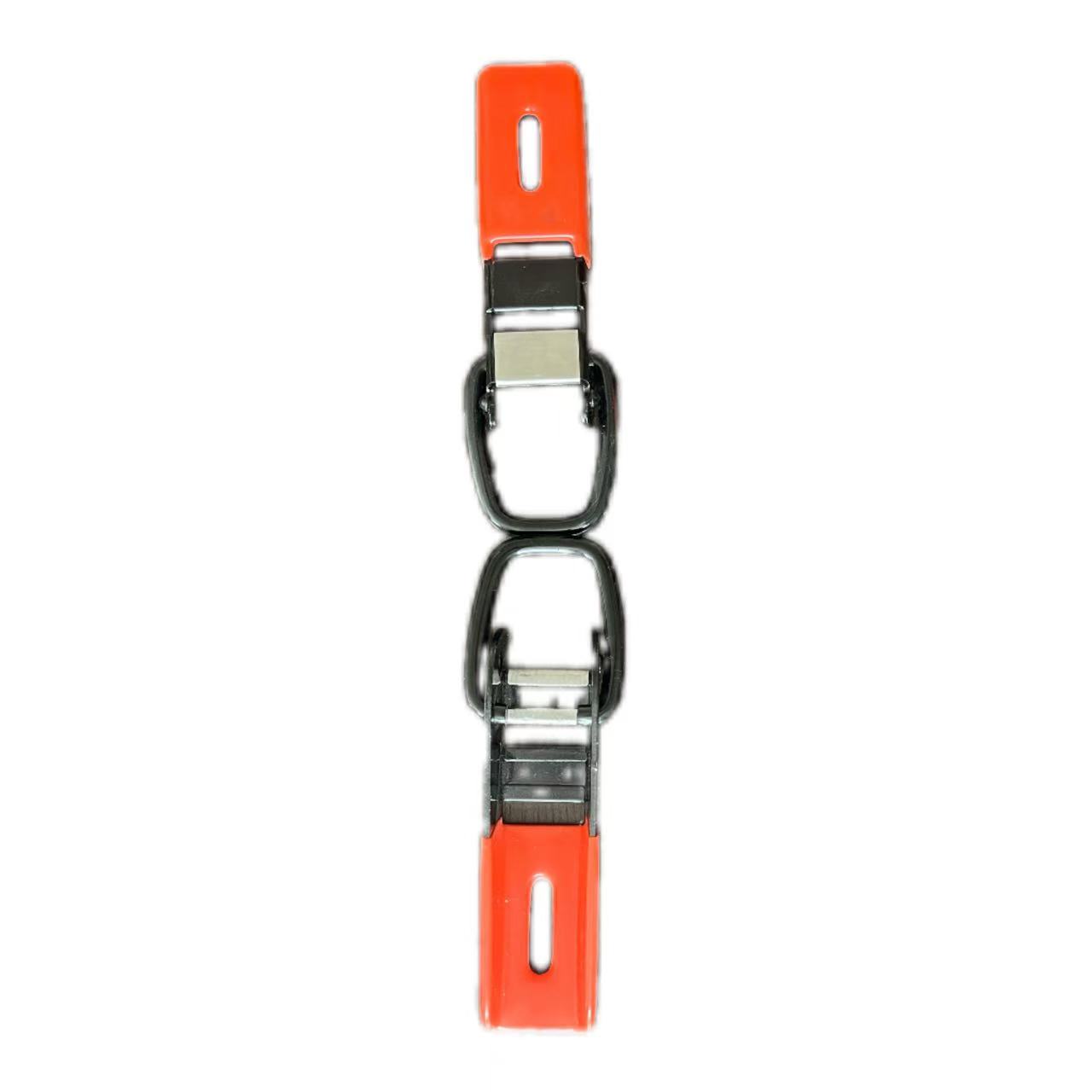
You must carefully match the metal alloy and its protective coating to your operating environment. Environmental degradation stands as the primary cause of premature equipment retirement. Rust destroys gear functionality. UV radiation degrades plastic components. Choosing the correct surface treatment protects your investment and ensures driver safety.
Handle comfort directly influences user compliance. If a handle hurts to use, workers will not apply adequate tension. Bare metal grips cause blistering. They also slip easily when wet. Molded plastic grips improve comfort slightly. However, they frequently crack under extreme winter cold.
Rubberized aluminum grips represent the optimal choice. Wide, rubberized options significantly reduce operator fatigue. They ensure consistent tensioning across multiple loads. They remain easy to operate even when users wear heavy leather work gloves. An ergonomic ratchet tie down handle encourages proper securement habits.
Best Practice: Audit your primary geographic routes before ordering. Fleets crossing northern winter regions should mandate heavy zinc or stainless steel exclusively.
Common Mistake: Assuming standard zinc plating survives exterior use. Many buyers purchase interior-rated hardware for exterior flatbed use. They act surprised when the gears rust solid within three months.
Evaluating cargo equipment requires understanding mathematical and legal distinctions. You cannot rely on vague marketing terminology. You must look at verified engineering metrics. Authoritative frameworks guide safe procurement and keep fleets compliant.
The industry universally sets the Working Load Limit (WLL) at exactly one-third of the assembly's Break Strength. This ratio provides a critical safety buffer. Dynamic forces multiply cargo weight during sudden braking or evasive swerving. A 10,000-pound break strength yields a 3,333-pound WLL. You must calculate your tie-down requirements based exclusively on the WLL.
Load Metric and Safety Margin Chart
| System Break Strength | Working Load Limit (WLL) | Suitable Cargo Weight Category |
|---|---|---|
| 3,000 lbs | 1,000 lbs | Light ATVs, Motorcycles |
| 10,000 lbs | 3,333 lbs | Mid-size Equipment, Pallets |
| 15,000 lbs | 5,000 lbs | Heavy Machinery, Vehicles |
| 20,000 lbs | 6,666 lbs | Industrial Steel, Lumber |
An assembly is only as strong as its weakest component. The mechanical rating of the buckle often dictates the entire system's rating. You might pair a heavy 12,000-pound webbing with a weaker 5,000-pound handle. The maximum break strength of that entire assembly becomes only 5,000 pounds. Never ignore the hardware limits. The webbing rarely snaps first.
Unscrupulous sellers frequently print inflated numbers. You must spot unreliable load claims early. Always request WSTDA or DOT compliance testing documentation. Reputable manufacturers gladly provide third-party laboratory reports. If a supplier refuses to share these certificates, walk away immediately.
Best Practice: Always over-engineer your securement strategy. If securing a 6,000-pound machine, use four straps rated for 3,333 pounds WLL each. This distributes the stress evenly.
Common Mistake: Calculating requirements based on Break Strength instead of WLL. This illegal practice invites catastrophic failure during emergency highway maneuvers.
Procurement teams need a repeatable evaluation process. Use this shortlisting logic to avoid implementation risks. A structured approach guarantees hardware consistency across your entire fleet.
Sourcing reliable hardware requires moving past basic price comparisons. You must critically evaluate gear precision. You need to select appropriate material coatings tailored specifically for your environment. Strict adherence to WLL standards protects your fleet and the general public. We highly advise procurement managers and owner-operators to audit their current hardware systematically. Check your existing failure rates. Request verified product samples from prospective vendors before committing to bulk purchases.
Take proactive action today to secure your loads safely. Contact our cargo securement specialists to discuss load-specific hardware recommendations. We can provide the necessary compliance documentation you need for absolute peace of mind.
A: Pre-trip inspections are mandatory. Look for visible rust on the gears. Test the internal spring tension manually. Ensure the handle lever operates smoothly without forced resistance. If you notice any bent metal or cracked housing, remove the unit from service immediately.
A: Jamming typically stems from three common issues. First, operators often over-spool webbing onto the mandrel. Second, extreme over-tensioning deforms the gear teeth. Finally, a severe lack of lubrication on the release pawl creates high metal-on-metal friction. Regular maintenance prevents these frustrating jams.
A: No. Reputable products conform to specific regional guidelines. Look for WSTDA compliance in North America or EN 12195-2 in Europe. Unbranded or generic products often claim exceptionally high break strengths. However, they rarely adhere to these strict regulatory safety margins.

