

close
Choose Your Site
Global
Social Media


Views: 0 Author: Site Editor Publish Time: 2026-07-20 Origin: Site


Sourcing lifting equipment represents a high-stakes procurement decision for any industrial operation. Equipment failure translates directly to operational downtime or critical safety hazards on the floor. The continuous loop design of an endless sling offers superior versatility and wear-rotation compared to traditional eye-and-eye slings. However, purchasing the wrong specification introduces immediate compliance risks and severe safety vulnerabilities. Buyers must navigate varying load capacities, material types, and strict regulatory standards to ensure every lift remains secure. We will provide procurement and safety managers an evidence-based evaluation framework to vet suppliers confidently. You will learn how to verify technical specifications and select the correct sling for specific applications. This guide ensures your next purchase aligns perfectly with operational safety protocols.
An endless sling’s capacity is dynamic. It changes based on how you attach it to the load and the crane. Buyers must match the sling’s rating not just to the load weight, but to the specific geometry of the lift. Ignoring this geometry often leads to catastrophic overloading.
Industry standards mandate a strict safety factor for synthetic lifting products. In the United States, ASME guidelines dictate a 5:1 design factor. European EN standards mandate an even stricter 7:1 ratio. You need to understand what this ratio actually means in practice.
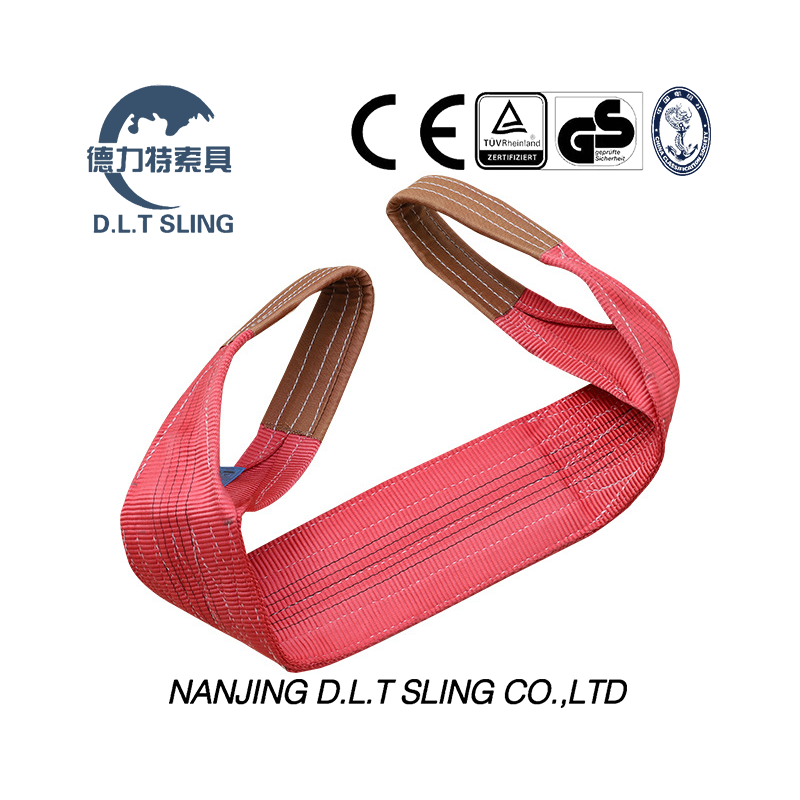
If you procure a sling rated for a 5,000 lbs Working Load Limit, it actually breaks at 25,000 lbs under a 5:1 ratio. However, operations must strictly adhere to the stated WLL. The built-in safety margin accounts for dynamic movements, minor wear, and shock loading. It does not give operators permission to exceed the tag rating. Discussing these specific capacities during procurement is crucial. Sourcing specific capacities, such as 5 ton lifting straps, requires verifying the manufacturer’s testing documentation for that exact weight class. You cannot rely on visual estimations alone.
Common Mistake: Procurement teams sometimes accept catalog ratings without checking the design factor. Always ask suppliers to confirm their stated WLL aligns with the 5:1 or 7:1 standard required by your regional safety body.
The base WLL of a sling applies only to a straight vertical hitch. Once you change the hitch configuration, the capacity changes drastically. Operators commonly use three main configurations. Vertical hitches maintain 100% of the base WLL. Choker hitches reduce the capacity, typically to 80% of the base WLL. The choke point pinches the synthetic fibers, reducing their overall strength.
Basket hitches, conversely, can increase capacity. A true basket hitch at a 90-degree angle can provide up to 200% of the base WLL. The load distributes evenly across two vertical legs. However, as the angle of the basket changes, the capacity drops. This math confuses many floor workers. Therefore, your primary action item during procurement is simple. Ensure the manufacturer provides a load chart directly on the product tag for all three configurations.
Hitch Capacity Overview Chart
| Hitch Configuration | Capacity Percentage (Relative to Base WLL) | Typical Application Scenario |
|---|---|---|
| Vertical Hitch | 100% | Direct lifting using a single point of attachment. |
| Choker Hitch | 80% | Snugging loads like pipes or lumber to prevent slipping. |
| Basket Hitch (90° Angle) | Up to 200% | Cradling loose or wide loads evenly. |
| Basket Hitch (60° Angle) | Approx. 170% | Cradling loads where sling legs angle inward. |
Sourcing the wrong synthetic fiber leads to rapid chemical degradation. It also introduces hazardous load bouncing during complex lifts. You must match the fabric chemistry to your specific working environment.
Polyester represents the most common material for flat woven synthetic slings. It offers a very low stretch profile, typically extending only about 3% at rated capacity. This low stretch offers operators much better load control. Minimal bounce means the load stays exactly where the crane positions it.
Beyond physical mechanics, polyester handles certain chemicals exceptionally well. It remains highly resistant to acidic environments and bleaching agents. If your facility processes battery acids or uses strong bleaching washdowns, polyester survives safely. It serves as the ideal choice for most general logistics and manufacturing use cases.
Nylon behaves very differently than polyester. It features a much higher stretch profile. A nylon sling stretches approximately 8-10% at its rated capacity. This elasticity proves extremely useful for absorbing shock loads. If a crane operator frequently snatches loads too quickly, nylon absorbs that sudden kinetic energy safely.
However, nylon possesses unique chemical vulnerabilities. It resists alkaline and basic environments beautifully. It degrades rapidly when exposed to acids. A single splash of sulfuric acid can silently destroy a nylon sling's internal fibers. You must map the facility's chemical exposure risks before committing to a webbing sling material. Never guess the chemical makeup of your environment; consult the safety data sheets.
An undocumented sling is an unusable sling. Regulatory bodies mandate strict traceability. If a safety inspector cannot read a sling's tag, they will pull it from service immediately. Procurement must enforce tagging rules heavily.
You must specify that tags remain permanent. Manufacturers often use heavy-duty leather or reinforced vinyl. Standard paper tags rip off during the first week of heavy industrial use. Once the tag vanishes, the sling becomes illegal to use.
Use a strict checklist of required data when reviewing sample products. The tag must display the manufacturer's name or trademark clearly. It must list the material type, usually denoted by both text and specific color codes. It must display the WLL for at least three hitch types (vertical, choker, and basket). Finally, it must feature a unique traceability code or serial number. This code allows you to trace the sling back to its original manufacturing batch.
Different global regions enforce distinct testing frameworks. In North America, the tag must explicitly state compliance with ASME B30.9 and OSHA 1910.184. These standards govern the manufacturing, use, and inspection of lifting slings. For European and global operations, look for the CE marking and EN 1492-1 compliance.
Consider non-compliant tags a massive risk factor. You should reject any supplier that uses generic, easily removable paper tags. You should also reject suppliers who omit the safety factor ratio from their documentation. Insisting on rigorous compliance protects your workforce from catastrophic drops.
The primary advantage of an endless webbing sling is the ability to rotate the bearing point. Operators can shift the contact points before every lift, extending the asset's lifespan. However, edge damage remains the leading cause of premature failure. A sharp steel corner cuts through synthetic fibers instantly under tension.
You cannot lift raw steel plates or rough castings with bare synthetic webbing safely. You must evaluate options for protective sleeves. Buyers can choose from several durable materials:
You must determine if sliding sleeves or sewn-on wear pads suit your intended loads better. Sewn-on pads stay fixed in one place. Sliding sleeves allow the endless loop to still be rotated freely. For continuous loops, sliding sleeves usually provide the best functional advantage.
Temperature constraints dictate synthetic performance. Standard synthetics melt or lose critical strength at high heat. Verify the slings are rated for your specific operating environment. Standard nylon and polyester fail above 194°F (90°C). If you operate near furnaces or heavy forging equipment, you need specialized heat-resistant materials, not standard webbing.
UV degradation also destroys synthetics silently. Prolonged sunlight exposure causes actinic degradation. The fibers become brittle and fade in color. Assess your facility's storage conditions. Ensure teams store slings indoors, away from direct sunlight and harsh weather elements.
You must protect the procurement investment by filtering out white-labeled, low-quality imports. Many untrustworthy vendors sell cheap slings with completely unverified load claims. A rigorous vetting process stops these dangerous products from entering your facility.
Trust but verify. Require batch testing certificates prior to finalizing any bulk orders. Reputable manufacturers test their batches rigorously to ensure consistent tensile strength. For high-stakes applications, ask for individual proof load test certificates.
In a proof load test, the manufacturer physically pulls the sling to 200% of its rated WLL before shipping it. They log the results and provide a certificate tied directly to the sling's serial number. This documentation provides a vital legal shield if an accident ever occurs on your site.
Evaluate the supplier’s ability to provide custom configurations. Can they deliver custom lengths required for specialized machinery? Can they sew specific wear pads onto the webbing? They should also follow standard color-coded width standards, such as the DIN EN 1492-1 color coding system, to make visual identification easy for floor workers.
Assess replacement availability closely. Slings fail visual inspections frequently due to normal wear and tear. Can the supplier meet short-notice fulfillment? If an inspector removes a sling from service during a daily morning inspection, you need a replacement fast. Extended lead times disrupt your entire production schedule.
Procuring endless webbing slings requires moving beyond basic pricing. It demands a thorough evaluation of hitch-specific capacities, strict chemical compatibility, and rigorous tag compliance. Focusing solely on the initial price tag often invites severe safety hazards onto the production floor. By understanding how environmental factors and load geometries impact synthetic fibers, you guarantee a safer operational environment.
Recommended Next Steps:
A: No. Load-bearing synthetic webbing cannot be repaired. If there are cuts, snags, or broken stitches, the sling must be immediately removed from service and destroyed. Only protective sleeves can sometimes be replaced.
A: While both form a continuous loop, a web sling is made of woven flat webbing. A round sling consists of continuous load-bearing yarn encased in a separate tubular jacket. Web slings provide a wider surface area for load distribution.
A: ASME standards require a documented periodic inspection at least annually (or more frequently based on severe service conditions), alongside a mandatory visual inspection by the user before every single shift or lift.
A: Under EN 1492-1 standards, the color of the sling indicates its WLL (e.g., Yellow for 3-ton, Red for 5-ton). However, buyers should always verify the printed tag, as US manufacturers are not strictly bound by European color codes.

