

close
Choose Your Site
Global
Social Media

Views: 0 Author: Site Editor Publish Time: 2026-08-04 Origin: Site


Rigging failures carry severe operational, financial, and legal consequences on any job site. A lifting sling is only as safe as its physically verifiable, compliant tag. Without proper identification, crane operators and riggers operate blindly, introducing unacceptable risks to personnel and heavy equipment. Site supervisors, safety directors, and procurement teams face strict, zero-tolerance OSHA and ASME compliance audits regularly. Utilizing an untagged, illegible, or improperly documented sling introduces massive liability, leads to immediate failed inspections, and creates catastrophic safety hazards. You cannot verify the working load limit without a legible tag, and guessing capacities leads directly to dropped loads and equipment failure.
Understanding exact tag requirements is the first step in technical procurement and risk mitigation. This guide breaks down mandatory tag components, material-specific regulatory frameworks, and how to evaluate and source a fully certified lifting sling for industrial applications. Proper tagging ensures every lift is calculated, legal, and safe.
Mandatory Identification: Every lifting sling must have a permanently affixed, legible tag detailing the manufacturer, material, and rated capacities (Working Load Limits) for specific hitch types.
Zero Tolerance for Missing Tags: Under OSHA 1910.184 and ASME B30.9, any lifting sling with a missing, defaced, or illegible tag must be immediately removed from service, regardless of its physical condition.
Material-Specific Standards: Tag requirements vary by material; for example, an ASME webbing sling requires synthetic fiber specifications, whereas alloy steel chain tags require grade and reach details.
Procurement Priority: Prioritize heavy-duty tag construction (e.g., stamped metal, rubberized sleeves, or heavy-duty vinyl) and the availability of digital or physical proof-testing certificates.
Safety managers must align procurement with federal and industry standards to ensure baseline success criteria for site safety and avoid costly OSHA citations. When an inspector walks onto a construction site or into a manufacturing facility, the rigging hardware is often the first thing they check. If the tags are missing or unreadable, the fines accumulate quickly, and operations grind to a halt.
OSHA enforces federal law regarding workplace safety, and OSHA 1910.184 mandates strict requirements for all rigging equipment used in material handling. ASME B30.9 provides the consensus standards for the design, operation, inspection, and maintenance of slings. These two frameworks share a strict, uncompromising directive: no sling shall be used without proper, legible identification. Inspectors look for these tags immediately upon arriving at a job site. The tag is the legal birth certificate of the rigging hardware. Without it, the hardware does not legally exist as a rated lifting device.
Field crews often misunderstand the relationship between OSHA and ASME. OSHA writes the law and issues the citations. ASME writes the engineering standards that OSHA references. If a piece of rigging gear fails ASME B30.9 inspection criteria, it automatically violates OSHA regulations. This dual-layered regulatory environment means that compliance is not optional. It requires a proactive approach to equipment management, starting with the tag.
A Certified Lifting Sling undergoes rigorous proof testing, features full manufacturer traceability, and complies with ASME design factors. These slings come with accompanying certification papers that prove they were manufactured to specific engineering tolerances. Certified rigging equipment stands in stark contrast to unrated, off-the-shelf utility straps found in hardware stores. Utility straps lack verified working load limits and are not designed for overhead lifting.
Using unrated straps for overhead lifting introduces catastrophic risk. A certified product guarantees that the materials, stitching, and hardware have been tested to handle the stated capacities with a built-in safety factor. For synthetic slings, this safety factor is typically 5:1. This means the sling is designed to break at five times the stated working load limit. However, this safety factor is strictly for absorbing shock loads and wear, not for exceeding the rated capacity printed on the tag.
Job sites often experience dangerous confusion regarding equipment applications. Material-handling slings fall under ASME B30.9 and OSHA 1910.184. Personal fall protection equipment, like restraint or fall arrest lanyards, falls under ANSI Z359 and OSHA 1910.140. You must never interchange this equipment. A lifting sling must never serve as a fall-protection lanyard, and fall-protection equipment must never handle overhead lifting.
Their distinct tagging requirements reflect completely different safety margins and shock-absorbing capabilities. Fall protection lanyards are designed to deploy and absorb the kinetic energy of a falling human body. Rigging slings are designed to hold static and dynamic loads rigidly. If a worker uses a rigging strap to tie off in an aerial lift, a fall will result in severe internal injuries because the strap will not absorb the shock. Conversely, using a shock-absorbing lanyard to lift a steel beam will cause the lanyard to deploy, dropping the load. The tags clearly state the intended use, which is why reading and understanding them is critical.
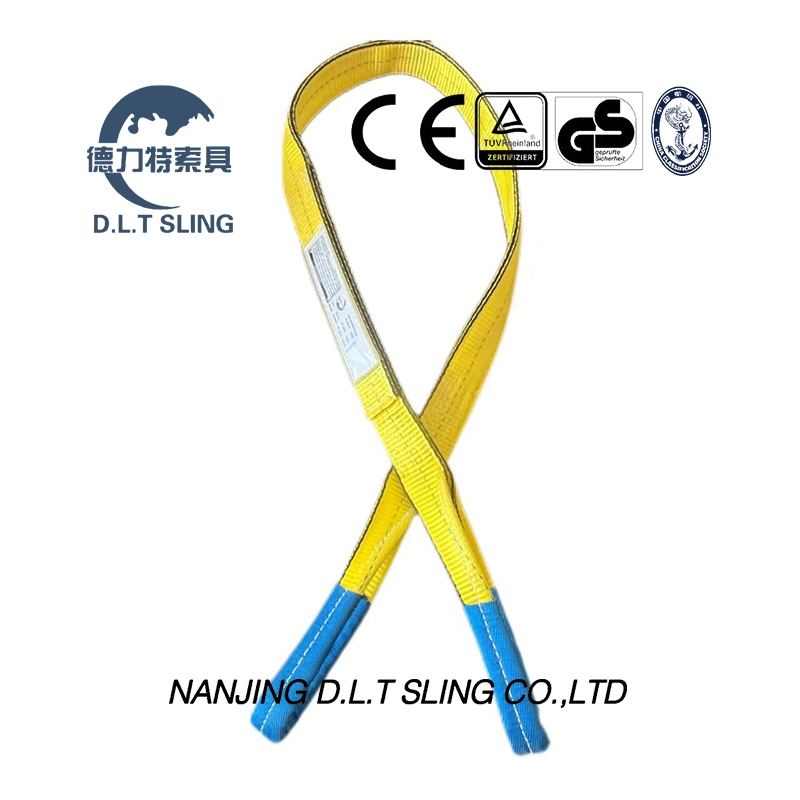
Tag requirements depend heavily on the construction material. Understanding these specific data points facilitates accurate inspection and inventory audits. A rigger must be able to look at a tag and instantly know the capacity for the specific hitch they are rigging.
An ASME Webbing Sling requires specific synthetic fiber details because different materials react differently to chemicals and environments. The tag must display the name or trademark of the manufacturer. It needs a manufacturer's code, stock number, or unique serial number for traceability. The tag must show rated loads, known as the Working Load Limit (WLL). This limit must be listed for the three primary hitch types: Vertical, Choker, and Basket.
It must state the type of synthetic material, such as Nylon or Polyester. Nylon stretches more than polyester and reacts differently to acids and alkalis. Finally, it must indicate the design factor, which is typically 5:1 for synthetic web slings. If any of this information is faded, torn off, or illegible, the sling is dead. There is no guesswork allowed in rigging.
Wire rope slings require the manufacturer name and rated loads for hitch types. They must list the number of legs if configured as a multi-leg bridle. The sling diameter or size must also be present. Wire rope tags are often metal tags swaged onto the eye of the sling. These metal tags can get crushed or bent, making them hard to read. If the stamped numbers are illegible, the wire rope must be removed from service.
Alloy steel chain slings have different requirements. Their tags must show the manufacturer name and the grade of chain, such as Grade 80, 100, or 120. They require the nominal chain size, reach or length, and number of legs. The tag must also display the rated load for specific lift angles. Chain sling tags are usually heavy steel rings or stamped plates attached to the master link. Because chains are used in the most brutal environments, these tags take a beating. Regular inspection of the tag attachment point is necessary to ensure it hasn't broken off.
Tags wear out rapidly in harsh industrial environments. They suffer from abrasion, chemical exposure, paint overspray, and UV degradation. When a tag cannot be read, you must remove the equipment from service immediately. This is a strict operational protocol. You must implement a red-tag and quarantine process to prevent the accidental re-use of non-compliant equipment.
Store quarantined items in a locked, designated area until they are destroyed or recertified. Do not just throw a rejected sling in the corner of the tool room. Someone on the next shift will grab it and use it. Cut the eyes off rejected synthetic slings before throwing them in the dumpster to ensure they can never be used again. For chains and wire rope, tag them out clearly and send them back to the manufacturer for potential repair and recertification.
Choosing the right equipment requires evaluating durability, scalability, and long-term compliance. The tag itself is a major factor in the lifespan of the tool. Buying cheap rigging gear often costs more in the long run because the tags wear out before the sling does.
Evaluate physical tag materials carefully before purchasing. Options include leather, vinyl, heavy-duty polyurethane, or stamped metal. Assess the tag protection mechanisms provided by the manufacturer. Look for transparent heavy-duty clear vinyl sleeves. Recessed tag areas and edge-guard protection also extend tag life. Flimsy paper-like tags wear out quickly, forcing the premature replacement of an otherwise healthy sling.
When procuring synthetic slings, look for manufacturers that sew the tag under a protective flap or enclose it in a thick, clear plastic tube. This prevents the tag from rubbing against rough loads like concrete or steel grating. For wire rope, ensure the metal tag is thick enough to withstand being dropped on concrete without the stamped numbers flattening out.
Tag Material | Durability Level | Best Application Environment | Common Sling Type |
|---|---|---|---|
Standard Vinyl | Low to Medium | Clean, indoor manufacturing | Light-duty synthetic webs |
Heavy-Duty Polyurethane | High | Outdoor construction, UV exposure | Heavy-duty synthetic webs, round slings |
Stamped Metal | Maximum | High heat, abrasive conditions | Alloy chain, wire rope |
Leather Flap over Vinyl | High | Steel erection, sharp edges | Premium synthetic webs |
RFID Embedded | Maximum (Digital) | Large scale inventory tracking | All premium slings |
Assess the supplier's ability to provide serialized certificates of conformance. They must supply proof testing documentation upon request. Evaluate modern digital tracking solutions. RFID chips or QR codes embedded in the tag offer scalable inventory management. Automated inspection management reduces human error and ensures compliance tracking.
When managing hundreds of pieces of rigging gear across multiple job sites, manual paper logs become impossible to maintain accurately. RFID tags allow inspectors to scan the sling with a tablet, instantly pulling up its manufacturing date, proof test certificate, and inspection history. This level of traceability is invaluable during an OSHA audit or a post-incident investigation.
Match the sling type and its tag material to the specific environment. High-heat or abrasive environments destroy synthetic tags instantly. These conditions require metal-tagged chain slings or wire rope. Fragile loads require synthetic slings. Ensure these synthetic options feature shielded tags to prevent scratching the load surface.
Chemical environments require special consideration. Nylon is destroyed by acids, while polyester is destroyed by alkalis. The tag must clearly state the material so the rigger knows if it is safe to use in a specific chemical plant or refinery setting. If the tag is missing, the rigger cannot know the material, making it a deadly hazard in chemical environments.
Purchasing compliant equipment is only the first step. Maintaining compliance on active job sites requires strict operational discipline. Rigging gear degrades with every lift. Managing that degradation is the core of a safe lifting program.
OSHA requires daily visual inspections by a designated competent person. This inspection must happen before every shift. The inspector must start with physical tag verification. They must confirm the tag is present and completely legible. If the tag fails this check, the inspection stops, and the item is quarantined.
Locate the tag on the rigging hardware.
Verify the manufacturer name and serial number are legible.
Confirm the Working Load Limits for Vertical, Choker, and Basket hitches can be read clearly.
Check the physical condition of the tag attachment point to ensure it is not tearing loose.
Proceed to inspect the body of the sling only after the tag passes inspection.
A fully readable tag does not guarantee safety. The sling body must remain uncompromised. You must check for other mandatory removal criteria. Look for acid or caustic burns and signs of melting. Inspect for snags, broken stitches, or abrasive wear. Check metal components for severe corrosion or chain elongation. Any of these defects mandate immediate removal from service.
For synthetic webs, look for red core warning yarns. Many manufacturers weave red threads into the core of the strap. If you can see the red yarn, the outer protective jacket has worn through, and the strap must be destroyed. For wire rope, count the broken wires. OSHA has strict limits on how many broken wires are allowed per strand and per lay length. For chains, measure the links for stretch and inspect the inner bearing surfaces for gouges and wear.
Protect tags and materials through proper storage. Store equipment in dry, UV-protected areas. Hang them on designated racks to prevent moisture buildup and ground-level damage. Leaving synthetic straps in the back of a pickup truck exposed to sunlight will degrade the fibers and fade the tag ink rapidly.
Use edge protectors during lifts. Edge protectors prevent physical tag damage and protect the synthetic fibers from sharp corners. A sharp steel edge can cut a synthetic strap under tension instantly. Always pad the corners, and ensure the tag is positioned away from the load bearing points so it doesn't get crushed during the lift.
Conduct an immediate audit of all current rigging hardware in your facility to identify missing tags.
Remove any untagged or illegible slings from service and place them in a secure quarantine area for destruction.
Contact a certified rigging supplier to replace non-compliant inventory with properly tagged, traceable equipment.
Implement a daily pre-shift inspection checklist that prioritizes tag legibility before checking the sling body.
Upgrade to heavy-duty or shielded tags for environments with high abrasion or chemical exposure to reduce replacement costs.
A: The sling must be removed from service immediately. OSHA and ASME standards prohibit the use of any sling with an unreadable or missing tag, regardless of how new or undamaged the sling body appears.
A: No. Rigging crews cannot field-repair or hand-write replacement tags. Only the original manufacturer or a qualified entity can re-tag, proof-test, and recertify a lifting sling.
A: OSHA is federal law enforced by safety inspectors with the authority to issue citations and fines. ASME B30.9 is the consensus technical standard that provides the specific engineering and operational rules that OSHA references and enforces.
A: Yes. For alloy steel chain, wire rope, and certain synthetic slings, manufacturers must provide a proof test certificate indicating the sling has been pulled to its designated proof load (typically 2x the WLL) before shipping.
A: Slings require three levels of inspection: a pre-shift visual inspection by a competent person before every use, periodic inspections (typically documented monthly or quarterly depending on use intensity), and an annual documented inspection by a qualified inspector.
A: The WLL is the maximum load that the sling can safely lift under normal conditions. This limit changes dramatically based on the hitch configuration (vertical, choker, or basket) and the angle of the lift, all of which must be clearly mapped out on the tag.
A: Absolutely not. Material lifting slings and fall protection lanyards are governed by entirely different design factors, standards (ASME B30.9 vs. ANSI Z359), and tagging requirements. They are never interchangeable.

