

close
Choose Your Site
Global
Social Media

Views: 0 Author: Site Editor Publish Time: 2026-07-27 Origin: Site


Inadequate load securement quietly drains logistics budgets through damaged freight, steep compliance fines, and severe workplace injuries. Every time a load shifts unpredictably during transit, you risk significant operational disruptions. Modern logistics networks handle increasingly complex and varied freight profiles. Because of this reality, fleet managers are rapidly shifting away from traditional single-point restraints like standard tie-down straps. These basic straps often fail to secure multi-piece or uneven cargo effectively. We need comprehensive containment systems to keep goods completely intact and workers safe. This is where cargo mesh netting steps in as a highly verifiable, compliance-friendly solution. It handles complex load distribution safely while dramatically improving warehouse safety standards. In this guide, you will learn how engineered mesh designs distribute tension, which specific materials survive harsh environments, and how to properly maintain these critical nets. You will also discover how to align your securement strategies with the strictest regulatory frameworks.
Load shifts cost logistics companies millions of dollars annually. Freight damage rates spike violently when unsecured items move inside trailers. Insurance premiums rise immediately after preventable accident claims. Transit delays frustrate your customers waiting for delayed shipments. You lose operational revenue every time a pallet collapses on the dock. These hidden costs severely impact your bottom line.
Regulatory bodies strictly monitor load securement hazards. The Federal Motor Carrier Safety Administration (FMCSA) enforces specific securement rules for commercial vehicles. Highway patrol and Department of Transportation (DOT) officers conduct rigorous roadside inspections daily. They look for inadequate restraints and load shifting indicators. On the indoor front, OSHA mandates strict safety boundaries within warehouse environments. Failure to comply with these frameworks results in steep penalties and out-of-service orders.
Many fleets still rely heavily on standard ratchet straps or heavy chains. These conventional restraints struggle with modern consolidated freight. They often fail completely on multi-piece or unevenly shaped cargo. A narrow standard strap creates intense pressure points on boxes. This localized crushing easily damages fragile packaging beneath the strap. Furthermore, standard straps leave large dangerous gaps across the load surface. Smaller boxes can easily slip through these voids during highway transit. A single loose box creates a cascading failure across the entire pallet.
How does a mesh system solve these complex securement problems? It relies heavily on surface area containment mechanics. A wide web design drapes securely over diverse pallet profiles. It captures loose items securely within its grid. Smaller boxes cannot slip through the tight mesh gaps. The netting hugs the irregular shapes securely.
Compare this modern approach to using solid tarps. Solid tarps cover freight entirely but act like giant sails in heavy winds. They also prevent drivers from visually inspecting the load during mandatory stops. Standalone straps offer excellent visibility but lack broad surface coverage. Cargo netting bridges this operational gap perfectly. You can use it as a standalone solution for uniform pallet loads. You can also deploy it as a supplemental containment layer over challenging, irregularly shaped loads.
One major advantage is mitigating dangerous point-stress. Traditional straps focus all downward tension into a narrow two-inch band. A webbed grid operates very differently. It absorbs kinetic energy evenly across its surface. It disperses this force safely across the entire cargo profile. During hard braking, the load naturally shifts forward. The netting catches it like a giant flexible catcher's mitt. This broad energy distribution prevents exterior boxes from crushing under localized pressure.
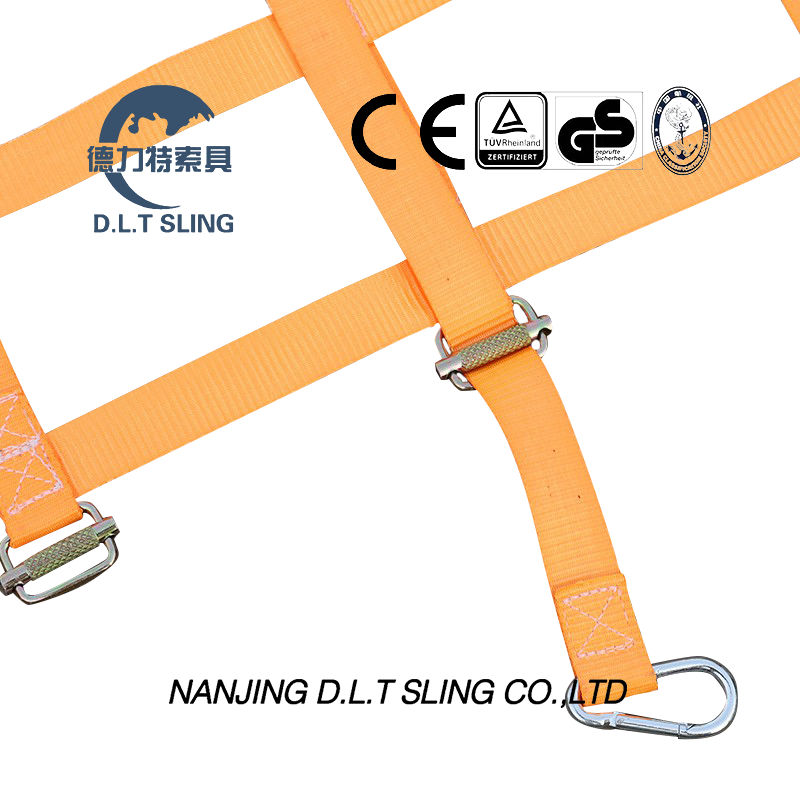
Defining your specific application dictates your overall securement success. You must perfectly match the netting design to your exact operational environment. Securement needs vary wildly across different logistics sectors.
Over-the-road transport requires highly versatile securement options. Box trucks frequently utilize E-track compatible netting systems. Drivers can quickly snap these nets directly into interior wall rails. This secures mixed loads securely during multi-stop routes. Flatbed drivers use heavy-duty, weather-resistant versions for outdoor load containment. Delivery teams also install specific nets at the rear trailer doors. This safety barrier prevents dangerous door-spills upon opening the back doors at the dock.
Indoor safety relies heavily on durable, fixed barriers. Pallet rack backing prevents loose boxes from falling into busy pedestrian aisles. Conveyor belt systems need sturdy fall protection underneath overhead runs. Automated storage and retrieval systems (ASRS) require strict, visible safety boundaries. Specialized mesh barriers keep human workers separated from fast-moving automated machinery.
Extreme forces define global air and sea shipping. Air freight encounters severe vertical turbulence during normal flight operations. Maritime containers face violent lateral swaying on rough seas. High-tension cargo nets secure unit load devices (ULDs) firmly inside aircraft holds. Specialized partition nets also divide long maritime containers internally. They withstand extreme lateral forces while keeping distinct client shipments safely separated.
Buying the right equipment requires precise technical knowledge. Do not guess on critical material specifications. Different synthetic fibers react uniquely to environmental stressors. Selecting the wrong material causes rapid equipment failure.
| Material Type | Stretch Factor | Environmental Resistance | Ideal Operational Use Case |
|---|---|---|---|
| Polyester | Very Low | High UV & High Water Resistance | Flatbeds & Open Maritime Transport |
| Nylon | High (Shock Absorbing) | Medium UV & Low Moisture Resistance | Air Freight & Indoor Shock Protection |
| Polypropylene | Low | High Chemical Resistance, Low UV | Covered Warehouse Operations |
Never confuse Working Load Limit (WLL) with Break Strength during procurement. Break Strength marks the exact point of catastrophic laboratory failure. It represents the maximum force applied before snapping. WLL represents the maximum safe capacity for daily commercial use. WLL is typically calculated as one-third of the verified Break Strength. Basing real-world safety calculations on Break Strength invites disaster. Always procure gear based on verifiable WLL ratings provided by the manufacturer.
Grid hole size matters immensely for containment effectiveness. We call this measurement the aperture. You must calculate the necessary aperture based on your smallest transported freight unit. If you transport six-inch boxes, a ten-inch aperture fails completely. The mesh must physically block the smallest possible object from escaping the web. Smaller apertures require more webbing material, making them heavier but vastly more secure for mixed parcels.
Standardizing your fleet hardware saves significant operational time. Evaluate cam buckles and snap hooks carefully before ordering. Heavy loads demand robust, commercial-grade tensioning hardware.
Many operators mistakenly believe synthetic webbing is completely indestructible. This dangerous myth leads directly to severe accidents. All textile materials degrade naturally over time. Constant tension, friction, and environmental exposure break down synthetic fibers steadily.
You must implement rigorous, documented inspection protocols. Dock workers and drivers must examine gear physically before every single use. Do not skip this step.
Operational bottlenecks often occur during initial equipment rollouts. Drivers and warehouse staff face a temporary learning curve. Provide hands-on tensioning training immediately. Proper tensioning secures the load firmly without crushing it. Over-tightening causes severe operational damage. It ruins delicate freight and permanently stretches the net itself.
Establish a clear lifecycle and mandatory replacement policy. Create a safe retirement timeline for all synthetic webbing. Base this timeline on actual usage frequency and environmental exposure levels. A net used daily in the harsh sun degrades rapidly. A net used indoors lasts considerably longer. Retire questionable equipment proactively before it fails completely in transit.
Upfront investments in industrial-grade netting yield substantial operational returns. The initial procurement costs are heavily offset by reducing damaged goods. You avoid steep regulatory fines and costly workplace injury claims. Proper securement systems enhance your operational reputation among shipping clients.
When shortlisting vendors, prioritize absolute transparency. Demand third-party testing certificates for all load-bearing textiles. Request verifiable WLL ratings printed directly on the product tags. Seek out custom-fit consultation before placing bulk fleet orders. A reliable vendor analyzes your specific operational environment before recommending a fiber type.
Take immediate action to improve your fleet safety. Audit your current load securement failure points today. Identify where loose items cause damage during transit. Contact a securement specialist for a comprehensive site or fleet assessment. Upgrade your restraints to keep your people safe and your cargo perfectly intact.
A: Elastic nets use bungee-style stretch cords designed for light consumer use, like securing groceries in a pickup truck. Heavy-duty mesh nets utilize rigid industrial webbing like polyester or nylon. They feature high Working Load Limits (WLL) designed specifically for commercial freight, preventing heavy cargo movement.
A: Yes, they are DOT compliant provided their verified WLL meets federal requirements. The aggregate WLL of all securement devices, including the net, must equal at least 50% of the cargo's total weight. Ensure the net is specifically rated and tagged for commercial flatbed usage.
A: Lifespan varies heavily based on usage and environment. Indoor warehouse netting often lasts up to five years. Outdoor flatbed netting exposed daily to severe UV rays, harsh weather, and constant friction may require replacement every 12 to 18 months. Regular inspections determine actual retirement dates.
A: Generally, no. Commercial safety standards dictate that once load-bearing webbing tears or frays significantly, the net's structural integrity is compromised. Its original WLL is no longer valid. You must remove the damaged net from service immediately and replace it to maintain strict compliance and safety.

