

close
Choose Your Site
Global
Social Media

Views: 0 Author: Site Editor Publish Time: 2026-07-19 Origin: Site


Heavy lifting always carries incredibly high stakes in industrial environments. Dropping a suspended load risks severe bodily injury or catastrophic facility damage. A sudden rigging failure stops daily operations instantly. Furthermore, equipment wear creates hidden, dangerous costs over time. Traditional lifting mediums often fail modern operational needs. Wire rope and heavy alloy chains easily damage fragile or finished loads. They also suffer from permanent fixed wear points. These fixed spots concentrate friction and drastically limit operational lifespans. Today, professional riggers need smarter, better alternatives.
Polyester endless webbing slings offer a unique structural advantage for heavy lifts. They provide seamless rotational wear distribution. This extends their safe working life considerably. They effortlessly combine high lifting capacity with excellent load protection. These synthetic tools have become a cost-effective standard for compliant, safe rigging operations worldwide. You will learn exactly how these slings work. We will cover their distinct mechanical benefits, capacity scaling, environmental limits, and crucial safety standards.
Rigging hardware comes in many different configurations. You often see traditional eye-to-eye slings on busy job sites. They feature fabricated loops sewn at each end. These loops act as permanent, fixed lifting points. Over time, heavy crane hooks constantly rub the exact same spots. This isolated friction degrades the synthetic material quickly.
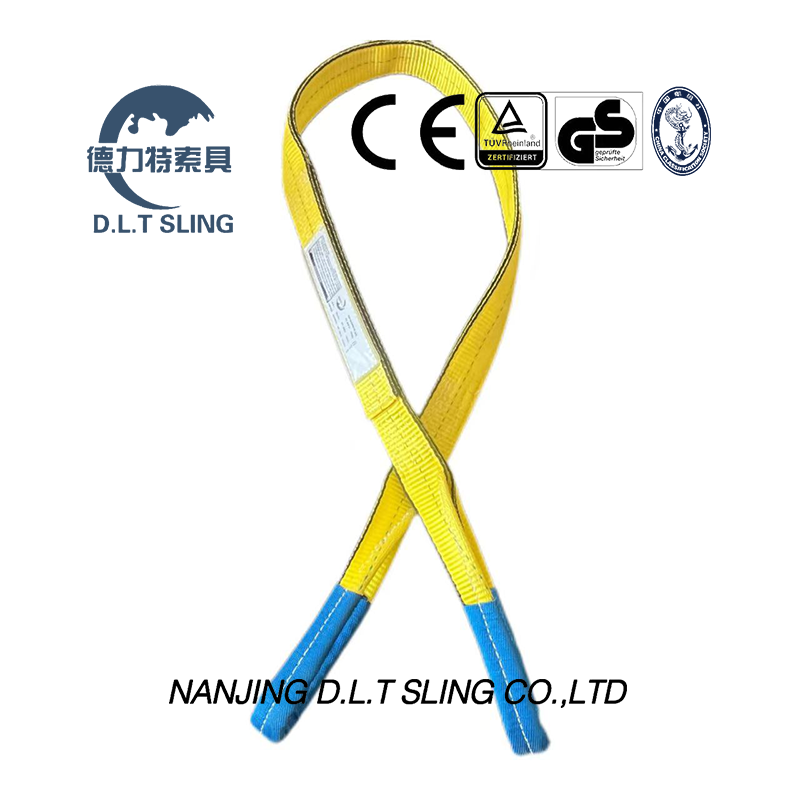
An endless webbing sling (often classified as a Type 5 configuration) completely solves this problem. It forms one continuous, unbroken loop. You have no fixed lifting eyes anywhere. Riggers can easily rotate the continuous loop by hand. You shift the contact point for every single lift. We call this critical process wear point rotation. It distributes abrasive damage across the entire perimeter smoothly. You avoid concentrated degradation entirely.
This continuous loop design also dominates when executing a choker hold. Cylindrical or asymmetrical loads require a tight, biting grip. A fabricated eye seam often bulges or stresses under tight choker configurations. The continuous loop slides smoothly through itself. It pulls tight around the load evenly. You achieve a much more secure grip. It effectively prevents the load from slipping during vertical transport.
Choosing the right material ensures absolute safety and precision. We prefer high-grade polyester over nylon for heavy lifting tasks. Nylon stretches up to ten percent under load. This causes undesirable load bounce during a lift. Polyester offers a remarkably low stretch profile. It typically stretches only about three percent at rated capacity. This gives you predictable, steady control over massive heavy equipment.
Surface area plays a massive role in load protection. A typical flat webbing sling distributes the load’s weight across a much wider footprint. Cables and chains aggressively dig into materials. A wide polyester band wraps softly around the delicate surface. It prevents localized crushing on painted, finished, or fragile components. You can safely lift expensive aerospace parts or freshly painted yacht hulls.
You can easily scale these solutions for massive industrial lifts. Deploying a 6 ton webbing sling provides tremendous rigging capability. You can safely lift heavy structural steel or large manufacturing machinery. You just must verify your safety margins properly. A standard vertical lift gives you the full six-ton capacity. If you use a basket hitch, that capacity effectively doubles to twelve tons. Always consult the manufacturer tag to confirm operational limits.
Material Application and Safety Comparison
| Material Type | Stretch Profile | Best Application | Primary Limitation |
|---|---|---|---|
| Polyester Webbing | Low (~3%) | Fragile, finished loads; precision lifting | Vulnerable to sharp edges without sleeves |
| Nylon Webbing | High (Up to 10%) | Absorbing shock loads | Load bounce during precision tasks |
| Alloy Chain | Minimal | Extreme heat, rough castings | Heavy weight; damages soft surfaces |
We must demonstrate clear, balanced trust in our equipment. Synthetic materials cannot survive everything in the field. You must know when polyester slings are the wrong choice. Never use them in environments exceeding 194°F (90°C). High heat rapidly melts the synthetic fibers. You must also keep them away from specific alkalis. Furthermore, never execute lifts involving unprotected, razor-sharp edges. A sharp steel corner will slice through synthetic webbing instantly.
However, polyester excels in specific harsh conditions. It offers excellent resistance to long-term UV degradation. You can use it safely around many common industrial acids. It also features incredibly minimal water absorption. It resists destructive rot and mildew perfectly. Since it rejects water, it maintains flexibility in freezing conditions. Ice will not lock up the internal fibers.
You must treat edge protection as a mandatory requirement always. Sleeves and heavy corner pads are not optional accessories. They represent a non-negotiable compliance standard for synthetic gear. We must protect synthetic slings from rough, abrasive surfaces. A simple magnetic corner pad prevents catastrophic failure.
Rigging hardware acts as a vital consumable asset. You use it, it wears out, and you replace it. Frequent hardware replacements heavily impact your operational budgets. Smart procurement requires thoroughly evaluating the overall return on investment.
We measure operational ROI by looking at purchase price and lifespan. Alloy chains cost significantly more upfront. Polyester slings offer substantially lower initial procurement costs. Combine this fact with the wear-point rotation feature discussed earlier. Your safe operational lifespan increases dramatically because wear distributes evenly. You spend less money initially. You also buy replacements far less often. This drastically improves your long-term budget efficiency.
You also gain massive inventory efficiency across your facility. Endless designs offer extreme operational versatility. You can use them across vertical, choker, and basket hitches seamlessly. Purchasing departments benefit greatly from this flexibility. You can stock fewer variations of sling types. A single versatile tool reduces warehouse clutter and streamlines ordering.
Rigging operations demand strict adherence to authoritative frameworks. You should anchor your daily safety protocols in established standards. We strictly follow guidelines like ASME B30.9 and OSHA 1910.184 in North America. European operators look toward EN 1492-1 and EN 1492-2. These detailed standards dictate exact compliance criteria.
Visual inspection protocols literally save lives. Operators must check equipment before every single lift. You must look for exact, specific fail states. If you spot any of these defects, remove the equipment immediately.
Manufacturers also include highly visible built-in safety features. Most high-quality slings feature internal core warning yarns. These are typically brightly colored red threads woven deeply inside the outer jacket. Abrasive damage eventually wears through the tough outer layer. The red core warning threads then become visible. They visually signal a critical operational danger. You must immediately remove the sling from service.
Proper rigging selection ensures optimal safety and operational efficiency. You must follow a strict evaluation checklist before attempting any heavy lift. Always verify your total load weight first. Next, thoroughly assess the working environment for heat or chemical hazards. Finally, confirm the surface fragility of your load to prevent accidental damage.
Taking the right next steps protects your crew and your assets. We strongly advise you to consult a certified rigging load chart immediately. Assess your exact need for cut-resistant edge protection. Once you confirm your structural requirements, reach out to a trusted supplier. Request a technical quote tailored to your specific Working Load Limit needs.
A: The difference lies in their core material structure. A flat design features a woven flat web that directly bears the load. An endless round sling contains load-bearing core yarns completely encased inside a separate tubular jacket. Flat designs provide a wider footprint for delicate surfaces, while round slings conform tightly around awkward shapes.
A: Choker hitches generally reduce your lifting capacity by roughly 20% compared to a straight vertical lift. Extreme hitch angles can reduce capacity even further. You must avoid guessing. Always rely directly on the manufacturer tags attached to the equipment and consult standard rigging capacity reduction charts.
A: No. You must prioritize safety above all else. OSHA and ASME standards strictly prohibit repairing structural cuts in synthetic webbing. If the load-bearing fibers sustain a cut, tear, or severe abrasion, you must permanently destroy and replace the equipment immediately.

