

close
Choose Your Site
Global
Social Media

Views: 0 Author: Site Editor Publish Time: 2026-07-15 Origin: Site


High-value, fragile, or finished loads present unique rigging challenges. Aerospace components, luxury yachts, and polished architectural metals demand extreme care. Standard wire rope or chain often causes costly surface damage. They crush materials during heavy lifts. Preventing load marring requires specialized lifting equipment. You need gear designed to distribute pressure evenly without sacrificing the Working Load Limit (WLL). Finding this balance ensures safe and damage-free material handling. A polyester round sling provides the optimal balance of high-capacity lifting, minimal stretch, and load-contouring softness. It makes lifting high-value goods safer and highly predictable. This reliable tool has become the industry standard for delicate material handling operations. You will learn the physics behind soft lifting. We will compare materials and explore critical safety compliance factors. Finally, we will show you how to specify the correct lifting gear to protect valuable assets.
Lifting finished products carries massive financial stakes. Marring, crushing, or scratching a finished product during a lift results in expensive rework. Scrapped materials and delayed project timelines follow closely behind. Standard rigging gear simply cannot handle delicate surfaces safely. Metal chains bite into soft edges instantly. Wire ropes leave deep grooves in finished plastics. You must rely on physics to protect your expensive assets. Spreading the load force across a wider surface area solves this fundamental issue.
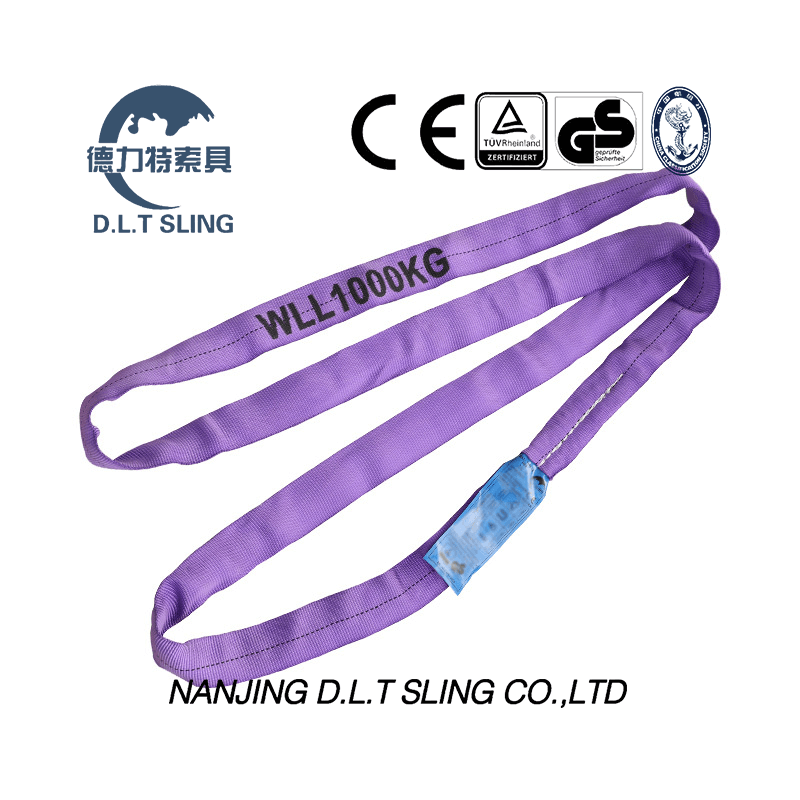
A continuous loop design offers a massive mechanical advantage. It features an endless loop of load-bearing polyester yarns. A tubular jacket encloses these vital core yarns securely. You can rotate the entire assembly easily between uses. Rotating it shifts the wear points across different sections. This simple action extends the lifespan of your lifting gear significantly. It ensures you always have a fresh, soft contact area ready. The endless loop distributes tension uniformly through all internal fibers.
Load contouring becomes crucial when utilizing choker hitches. Flexible properties make this gear highly effective for odd shapes. The material naturally flattens and widens over the contact point. It allows rigging crews to grip smooth or cylindrical loads tightly. Using a choker hitch provides excellent grip security on slippery materials. The soft material wraps securely without biting into the surface. It molds exactly to the load's contour perfectly. This prevents the cargo from slipping out of the choke.
Material choices dictate lift success completely. Rigging crews must evaluate synthetic options carefully. You cannot treat nylon and polyester as identical tools. They behave entirely differently under heavy tension. Nylon stretches up to 10% under a heavy load. Polyester stretches roughly 3% under similar stress. Lower stretch equals less bounce during suspension. You gain much higher precision for delicate load placements. Crane operators rely on this predictability for exact positioning. They need loads to stop exactly when the hook stops moving.
Moisture absorption also varies greatly between synthetic materials. Polyester resists water absorption far better than nylon. Nylon acts like a sponge in rainy outdoor conditions. It absorbs water quickly and becomes significantly heavier. This absorbed water creates dangerous situations during winter operations. It prevents the sling from freezing, stiffening, or degrading in damp environments. Your crew can trust polyester to remain flexible in harsh weather.
We must also compare round designs against flat web styles. Flat web slings feature rigid, reinforced woven edges. These stiff borders can dig into a fragile load easily. They concentrate force along a very narrow line. Round slings flatten out organically against the object being lifted. They distribute weight more evenly across delicate surfaces. Flat slings also wear at fixed lifting points, usually the eyes. Endless loop designs avoid this localized abrasion completely. You just rotate them to spread out the daily wear evenly.
| Feature | Polyester Round Sling | Nylon Web Sling |
|---|---|---|
| Elongation (Stretch) | Approx. 3% (Low) | Up to 10% (High) |
| Water Absorption | Very Low (Resists freezing) | High (Can freeze or degrade) |
| Load Contouring | Excellent (Organic flattening) | Moderate (Rigid edges can dig) |
| Wear Distribution | Rotatable (Even wear) | Fixed Points (Eye wear) |
Different industries rely heavily on soft lifting solutions. Finding the right application ensures both safety and product integrity. Heavy industries demand flawless execution during complex maneuvers. Even microscopic surface damage can compromise structural integrity.
Aerospace and aviation manufacturing requires absolute precision. Mechanics lift composite fuselage sections regularly. They also handle highly machined turbine components daily. Surface integrity remains mission-critical for overall flight safety. Soft rigging gear prevents micro-fractures in sensitive aerospace carbon fiber. Any surface scratch on an airplane wing requires immediate structural review. Using synthetic loops guarantees a soft, non-abrasive touch.
Marine and boat handling yards face similar challenges. Marinas hoist heavy fiberglass yacht hulls daily. Crews must avoid cracking the expensive exterior gel coat. Soft slings apply even pressure across the curved hull bottom. They prevent localized stress that causes structural spider cracks. You can place them carefully around delicate rudder assemblies. They conform to the deep V-shape of speedboats effortlessly.
Architectural and finished metals demand pristine handling. Construction teams move polished stainless steel often. They also lift anodized aluminum and large glass panels. Even minor scratches result in immediate part rejection here. Replacing a scratched architectural panel ruins project budgets quickly. Soft contact materials ensure these panels reach their destination flawlessly.
Power generation facilities move massive internal components constantly. Technicians place heavy generator rotors precisely. These large machined shafts become unbalanced easily if dented. Minimal stretch properties allow operators to lower them smoothly. They guide them into tight stator housings without sudden bouncing. A gentle touch prevents catastrophic damage to sensitive electrical coils.
We often assume synthetic material stays safe automatically. This transparent assumption leads directly to serious workplace accidents. While round slings are safe for the load, the load is not always safe for the sling. You must mitigate edge-cutting risks proactively.
"Soft" definitely does not mean "cut-proof." Sling protection remains mandatory when wrapping around load edges. You must use cut-resistant sleeves or hardened corner pads. Use them even if the edges do not appear razor-sharp. A 90-degree steel corner will slice synthetic fibers under tension. The pressure multiplies exponentially at the exact point of contact. Ignoring edge protection violates fundamental rigging safety rules.
Environmental constraints affect synthetic performance drastically. Chemical exposure limits dictate where you can safely rig loads. Polyester remains highly resistant to most acidic environments. It survives well in certain chemical processing plants. However, it degrades quickly when exposed to strong alkalis. Certain cleaning solvents or industrial chemicals will destroy the core fibers. Always verify the chemical makeup of your specific work environment first. Acidic fumes might seem harmless but they degrade synthetics over time.
Inspection and retirement criteria follow strict guidelines. You must follow OSHA 1910.184 and ASME B30.9 rules. Standard failure conditions dictate immediate removal from service. Watch out for melted or charred protective jackets. Look closely for chemical burns, acid splatters, or brittle areas. Any visible load-bearing core yarns mean instant inspection failure.
Follow these essential inspection steps before every lift:
This dual-jacket design acts as a brilliant built-in warning system. It alerts operators before catastrophic failure occurs. The contrasting inner jacket color stands out visibly when exposed. It removes ambiguity from the daily inspection process completely.
Choosing correct specifications prevents operational delays and safety hazards. Industry standards utilize a universal color code system universally. This system simplifies the selection process dramatically.
Decoding capacity via color-coding speeds up rigging tasks. Purple indicates a 2,600 lbs vertical capacity rating. Green represents a 5,300 lbs vertical working limit. Yellow jumps up to an 8,400 lbs vertical capacity. This visual system ensures the rigging team selects correct capacities instantly. It removes dangerous guesswork during fast-paced operational shifts. You can verify the capacity from across the warehouse floor visually.
Matching sling length to your sling angle requires careful math. Angles change tension dynamics severely during any lift. You must calculate tension increases based on lifting angles. A 60-degree angle exerts different stress than a 30-degree angle. Lower angles increase the effective load on each leg rapidly. The tension multiplier increases sharply as the angle flattens out. Understanding this math avoids overloading during basket or choker hitches. You must train your crew to calculate these angle factors daily.
Standard polyester handles most typical lifts effectively. However, some facilities feature extreme abrasion levels or intense heat. Upgrading your jacket material solves these tough environmental challenges. Manufacturers offer advanced Kevlar or Aramid blend protective covers. Double-wall jackets provide an extra layer of physical defense. They keep the core yarns safe in hostile manufacturing zones. They resist sparks and sharp corners much better than standard jackets. You can request custom lengths and specialized covers for unique lifts.
Standardizing on polyester gear for delicate loads minimizes product damage. It enhances lifting precision and ensures daily rigging safety. Soft synthetic materials simply outperform rigid metal chains here. The continuous loop design offers unmatched flexibility and durability.
We encourage buyers to audit their current lifting practices immediately. Calculate the hidden costs of load damage in your facility. Evaluate your current sling inventory against OSHA standards strictly. Removing damaged gear prevents catastrophic drops and expensive liabilities.
Promptly contact an in-house rigging engineer or technical sales specialist. Ask them to size and specify the exact slings required. They will help you navigate complex angles and harsh environments. Ensure your facility handles every high-value lift flawlessly today.
A: Polyester slings are generally safe up to 194°F (90°C). For applications exceeding this temperature, specialized aramid or wire mesh slings must be evaluated.
A: A round sling application typically involves lifting cylindrical, fragile, or oddly shaped loads where the sling must conform tightly to the load's geometry. Flat webs are generally used for uniform loads where a flat contact surface is sufficient.
A: If the outer jacket is breached but the inner yarns are intact, it may sometimes be repaired by the manufacturer, but standard practice per ASME B30.9 is to remove it from service immediately for professional evaluation. If core yarns are visible or cut, it must be destroyed.
A: Yes. A choker hitch typically reduces the Working Load Limit (WLL) of a sling by about 20% compared to a vertical hitch. Always consult the manufacturer's tag for specific hitch capacities.

