

close
Choose Your Site
Global
Social Media

Views: 0 Author: Site Editor Publish Time: 2026-07-04 Origin: Site


Securing freight properly drives fleet efficiency and ensures public highway safety. Fleet managers face a constant, high-stakes challenge daily. They must balance strict FMCSA compliance and robust load security while preventing excessive procurement spending. Poor securement is far more than a basic safety hazard. It actively threatens profit margins on every single trip. Cargo damage, unexpected DOT fines, and severe liability claims quickly destroy operational revenue.
Navigating hardware choices requires clear standards. This guide delivers a strictly objective, criteria-based framework. We aim to help you evaluate and source heavy-duty cargo control products at scale. You will discover exactly how to match the right hardware to specific trailer types. You will also learn how to identify quality manufacturing and standardize your entire fleet's securement inventory for maximum reliability.
Procuring securement hardware demands a strategic approach. Evaluating success requires looking far beyond the initial purchase price. Decision-makers must define clear performance metrics across their operations.
Fleet operators should measure hardware efficiency through specific operational outcomes. First, track your replacement frequency. Cheap straps fray quickly and require constant repurchasing. Next, measure the time saved during loading and unloading procedures. High-quality ratchets operate smoothly and save drivers valuable minutes per stop. Finally, monitor your out-of-service violations. Quality hardware reduces inspection failures significantly. These metrics provide a true picture of procurement success. They reveal how durable equipment streamlines daily logistics.
Ignoring FMCSA cargo securement rules triggers severe financial penalties. Enforcement actions range from hefty fines to immediate out-of-service orders. A delayed truck ruins customer delivery schedules and damages business reputation. Furthermore, liability skyrockets during a load shift event. If shifting freight causes an accident, legal claims can devastate a company. Documented, high-quality hardware mitigates this legal risk directly. Using certified equipment proves your commitment to public safety.
Many fleets suffer from fragmented inventory. They allow mixed-standard, unverified securement gear across their network. This fragmentation creates massive operational risks. Drivers struggle to verify aggregate Working Load Limits when mixing unknown brands. Unverified hardware fails unpredictably under heavy stress. Standardization solves this problem entirely. Supplying identical, high-grade equipment across a fleet ensures predictable performance. It simplifies driver training and streamlines warehouse operations.
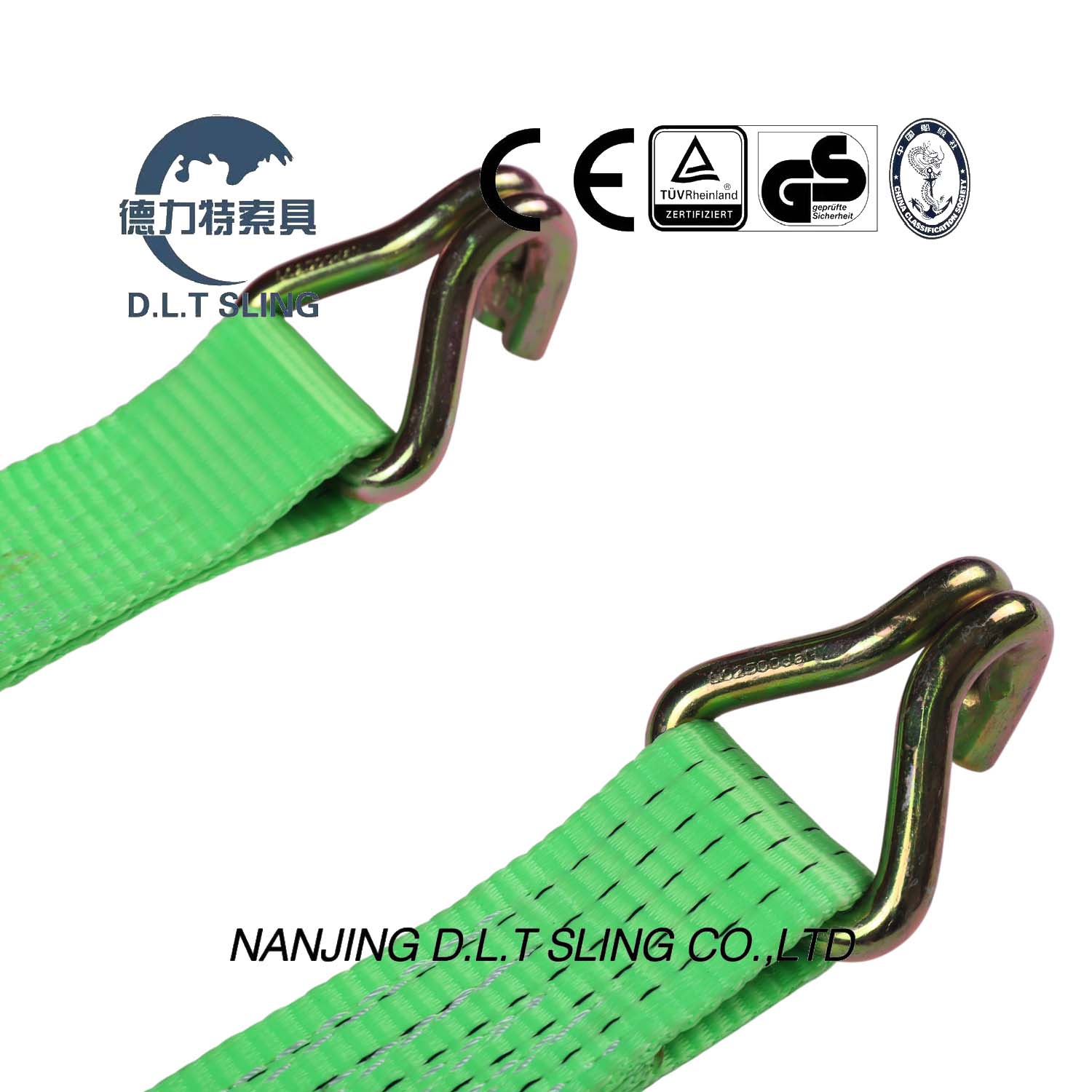
You cannot use a one-size-fits-all approach for freight securement. Different environments demand highly specialized hardware configurations. Matching the correct tools to the exact application ensures maximum holding power.
Interior transport requires modularity and excellent load distribution. Track systems form the foundation of enclosed trailer securement.
Maximizing vertical space is crucial for profitability. Shoring beams and load bars lock into these tracks easily. They create temporary decking systems. This prevents pallets from shifting backward or crushing fragile goods below them. Operators must also choose the correct interior logistics straps. Cam buckle straps apply gentle tension. They work perfectly for fragile cargo. Standard interior ratchets provide extreme tension for heavy, stable pallets.
Exposed loads face extreme wind sheer, road vibration, and harsh weather. Heavy-duty tie-down solutions are absolutely mandatory here. Winch straps handle massive lumber stacks and construction materials. Transport chains and heavy binders lock down yellow iron and heavy machinery securely.
Selecting the right ratchet tie down for specific weather environments and abrasive loads prevents catastrophic failure. Harsh climates destroy standard materials rapidly. Abrasive brick or steel edges will slice through tensioned webbing in miles. You must deploy edge protection and corner guards constantly. These devices prolong strap life dramatically. They also protect fragile cargo perimeters from crushing under high strap tension.
Securement does not end on the highway. Stationary cargo control keeps staging areas safe. Pallet bands secure stacked boxes quickly without wasteful shrink wrap. Heavy-duty netting contains loose items within designated warehouse zones. Localized tie-down points secure unbalanced loads temporarily. Finally, dock-to-truck transition hardware plays a vital role. Dock boards and stabilizing jacks prevent load shifting during the initial forklift movement.
Understanding technical specifications prevents dangerous purchasing errors. Procurement teams must evaluate hardware using strict engineering definitions.
The industry standard ratio is strict. The Working Load Limit (WLL) is typically one-third of the Break Strength. Break Strength simply measures the exact point where new equipment fails under a laboratory test. It does not account for road vibration, sudden braking, or material aging.
Evaluating products based on Break Strength instead of WLL is a critical compliance and safety error. FMCSA regulations dictate that aggregate securement capacity must rely solely on WLL. If a buyer purchases a strap rated at 10,000 lbs Break Strength, they can only legally secure roughly 3,333 lbs with it. Ignoring this rule guarantees compliance failure.
Webbing construction dictates field longevity. Buyers must choose between polyester and nylon carefully. Polyester resists UV degradation brilliantly. It also limits stretching under heavy tension. Nylon stretches significantly more, making it poor for rigid loads. Nylon also absorbs water, which weakens the fibers and causes rot.
| Feature | Polyester | Nylon |
|---|---|---|
| Stretch factor | Low (Ideal for rigid securement) | High (Prone to load shifting) |
| UV Resistance | Excellent | Moderate to Poor |
| Water Absorption | Very Low | High |
| Primary Use Case | Flatbed straps, E-track straps | Recovery tow straps |
Hardware durability requires equal scrutiny. Inspecting the ratchet strap buckle, hooks, and D-rings for corrosion resistance saves money long-term. Zinc-plated components offer basic protection for dry environments. Galvanized hardware withstands tougher conditions. Powder-coated metal resists harsh chemical corrosion and salt spray effectively.
Traceability guarantees compliance during roadside inspections. Every strap must feature a legible, permanently affixed manufacturer tag. This tag must detail the explicit WLL clearly. The rule here is unforgiving. A missing or unreadable tag equates to a zero-pound WLL during DOT inspections. Officers will declare the strap useless. They will place the truck out of service immediately if the remaining straps lack sufficient aggregate strength.
Purchasing top-tier equipment only solves half the problem. Proper daily execution determines your actual safety record. Fleets must enforce strict operating procedures.
Companies must define out-of-service criteria clearly. Drivers must know exactly when to discard damaged gear. Standard Operating Procedures (SOPs) should mandate pre-trip hardware checks.
Drivers and loaders require ongoing education. They must understand aggregate WLL calculations perfectly. Securing a 10,000-pound machine requires multiple straps calculating out to at least 5,000 pounds of aggregate WLL. Furthermore, operators must understand proper tie-down angles. Fastening a strap at a shallow 30-degree angle reduces its effective downward holding force drastically. Incorrect angles allow dangerous load shifting during hard braking.
Environmental degradation ruins hardware faster than heavy usage. UV rays bake webbing left on flatbeds. Rain rusts tensioning gears. Implement best practices for storing straps and chains safely. Roll straps tightly and store them in dry, ventilated toolboxes. Keep transport chains slightly oiled to prevent deep rust. Proper storage habits extend your inventory lifespan significantly.
Choosing the right vendor ensures your fleet remains compliant year after year. Procurement teams should evaluate suppliers against four distinct criteria.
Prioritize vendors who provide verifiable testing data openly. They should test their products in certified facilities. Look for suppliers who adhere strictly to Web Sling & Tie Down Association (WSTDA) standards. This adherence proves they follow rigorous engineering and safety protocols.
Your fleet will need replacements constantly. Assess a vendor's ability to consistently supply identical replacement parts. Switching brands randomly disrupts fleet standardization. A reliable supplier maintains deep inventory levels. They fulfill large orders quickly without substituting inferior components.
Determine if the supplier offers tailored solutions. Custom-length straps eliminate dangerous slack on specific trailer dimensions. Specific end-fittings connect smoothly to unique anchors. Furthermore, company-stenciled webbing deters job-site theft aggressively. Thieves rarely steal branded equipment.
Never roll out a massive hardware change blindly. Establish a pilot program first. Purchase a small batch of hardware from your shortlisted supplier. Test these products in your most demanding, high-stress environments. Monitor their performance for thirty days. Gather driver feedback regarding ease of use. Once the hardware passes this field test, proceed with a full-fleet rollout confidently.
Cargo control hardware is a critical safety and compliance investment. It is never merely a disposable commodity. High-quality gear protects your drivers, shields your company from liability, and preserves your profit margins.
We encourage decision-makers to act immediately. Audit your current securement inventory against strict FMCSA standards and exact WLL requirements. Discard any equipment missing legibility tags. Finally, prompt action today prevents accidents tomorrow. Reach out to shortlisted suppliers to request detailed quotes, technical engineering specs, and full compliance documentation.
A: The FMCSA mandates one tie-down for articles five feet or shorter weighing 1,100 lbs or less. For longer cargo, use one tie-down for every 10 feet of length, plus an additional tie-down for any fraction thereof. Weight minimums always dictate that aggregate WLL must equal at least half the cargo's total weight.
A: Replace them based entirely on physical condition, not calendar age. Immediate replacement is mandatory if you spot cuts, severe abrasions, burn marks, knots in the webbing, or bent hardware. A missing or illegible manufacturer WLL tag also mandates immediate removal from service.
A: Mixing brands introduces significant risk. While many track fittings feature universal designs, manufacturing tolerances vary. Mismatched components might rattle loose or fail to engage fully. This mismatch effectively derates the system's overall WLL, jeopardizing your compliance and safety.
A: A cam buckle relies on the user's physical pulling strength to apply tension, making it ideal for fragile loads that over-tightening might crush. A ratchet strap uses a mechanical gear system to apply extreme tension. Ratchets are required for securing heavy, rigid freight safely.

