

close
Choose Your Site
Global
Social Media

Views: 0 Author: Site Editor Publish Time: 2026-07-10 Origin: Site


Purchasing lifting equipment requires critical risk management. You cannot treat it as a simple commodity transaction. Using unverified rigging gear introduces massive vulnerabilities to your operations. Uncertified gear often causes catastrophic load drops. They trigger severe OSHA violations. They also result in costly operational downtime. Evaluating a flat webbing sling demands a comprehensive approach. You must look far beyond the stated weight capacities. You need to investigate the underlying manufacturing processes. You must verify strict testing standards. Slings failing to meet established regulations compromise site safety instantly. This guide outlines the exact criteria you need. Procurement managers and safety engineers must use these standards to vet suppliers. We will explore how to select fully compliant lifting equipment. By mastering these regulatory frameworks, you will secure verifiable reliability. You will protect your workforce and streamline your compliance audits effortlessly.
Substandard lifting equipment poses a direct threat to your bottom line. Non-compliance is never just a theoretical issue. It translates into real-world business risks. Workplace fatalities remain the most devastating consequence. However, even incidents without injuries carry severe financial penalties. Insurance companies routinely deny claims involving undocumented rigging gear. A single failed lift can cause massive project delays. These delays disrupt supply chains and damage your corporate reputation permanently. You must recognize these risks before authorizing any equipment purchase.
Regulatory bodies maintain strict oversight over lifting operations. Agencies like OSHA actively audit rigging equipment on construction sites and manufacturing floors. They look for specific compliance indicators. Inspectors mandate the immediate removal of undocumented gear. If a sling lacks proper certification, operations halt immediately. You face steep fines for every non-compliant item discovered. Ignorance of the standards does not excuse the violation. You must maintain perfect records for every piece of rigging hardware you deploy.
Procurement teams must redefine their success criteria. Finding the lowest price is a dangerous strategy. A successful purchase requires entirely different metrics. You need 100% verifiable documentation for every batch. You must demand batch-tested reliability from your suppliers. The equipment must align perfectly with your site-specific safety protocols. By prioritizing these elements, procurement becomes a strategic safety function. You protect the company from liability while ensuring uninterrupted daily operations.
Global lifting operations rely on authoritative regulatory baselines. Two primary frameworks dominate the market. Buyers must differentiate between these solution categories carefully. Selecting the correct standard depends on your geographical location and corporate policies.
Operations in North America typically follow the ASME B30.9 standard. This framework governs the fabrication and use of synthetic lifting equipment. It strictly requires a minimum Design Factor of 5:1. This means the sling must withstand five times its rated working load before breaking. This safety margin accounts for dynamic movements and minor wear. Manufacturers face intense scrutiny to meet these guidelines.
Fabrication under this standard demands rigorous consistency. Sewing patterns must meet exact specifications. Thread materials must match the webbing composition. A certified flat webbing sling ASME product guarantees predictable performance under stress. Proof testing procedures validate the assembly strength. Buyers should always verify ASME compliance when sourcing equipment for US-based facilities.
European markets operate under the EN 1492-1 standard. This framework imposes even stricter safety requirements. It mandates a Safety Factor of 7:1. The higher margin provides exceptional protection against overload scenarios. EN standards also prioritize visual identification systems to prevent human error.
The standard uses a mandatory color-coding system. Users can instantly verify the Safe Working Load (SWL). This visual cue speeds up selection in busy environments. Common color codes include:
You must evaluate which standard fits your operational footprint. Multinational companies often standardize on the stricter metric. This creates uniform safety protocols across global sites. Guide your purchasing decisions by cross-referencing local laws and internal safety mandates.
| Feature | ASME B30.9 | EN 1492-1 |
|---|---|---|
| Primary Region | North America | Europe & Global |
| Design/Safety Factor | 5:1 Minimum | 7:1 Minimum |
| Color Coding | Recommended but not mandatory | Strictly Mandatory |
| Traceability Focus | Permanent legible tagging required | Tagging plus certification certificates |
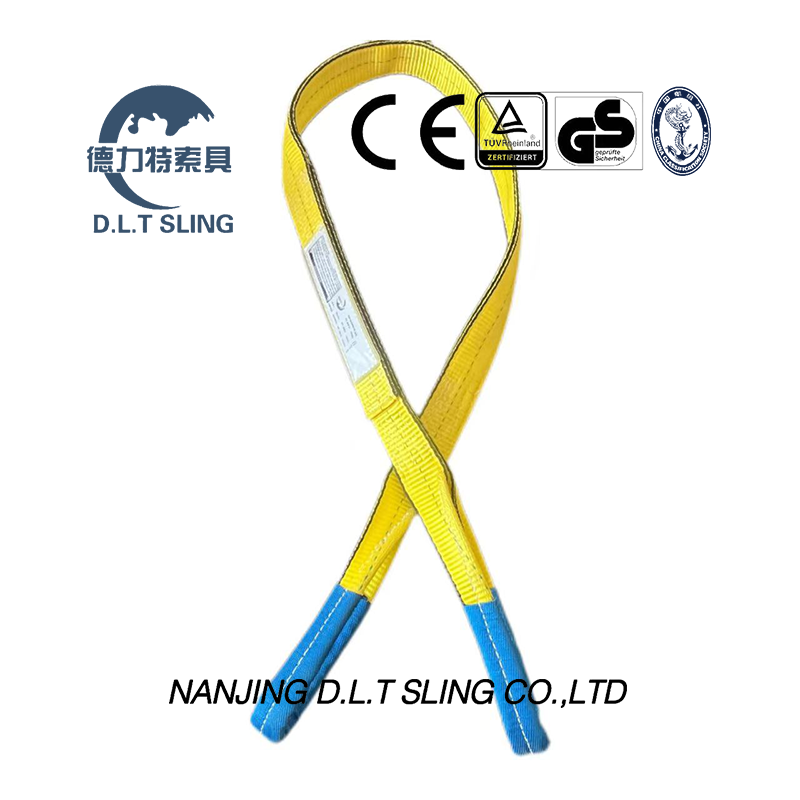
The material composition directly dictates operational viability. You cannot deploy identical slings across different environments safely. Standards link specific materials to distinct features and outcomes. Chemical exposure and tension requirements must guide your selection process.
Manufacturers use three primary synthetic fibers. Each offers unique behavioral characteristics under tension.
Configuration standards classify slings by their eye designs. There are several standard flat eye configurations. Type 1 and Type 2 feature triangle and choker metal fittings. Type 3 and Type 4 utilize flat or twisted sewn eyes. Type 5 represents endless loop designs. Type 6 features reversed eyes.
You must specify reinforced eyes for high-use scenarios. Reinforcement layers prevent premature friction wear at the bearing points. This extends the usable life significantly. You must also distinguish between flat and tubular webbing. Flat designs provide wider load distribution. They prevent damage to fragile cargo. Tubular designs offer thicker cross-sections. They provide better inherent edge protection during complex rigging setups.
The identification tag serves as your primary defense against compliance failures. It represents the most common point of failure in field operations. Industrial environments subject tags to severe abrasion and UV degradation. If a tag becomes illegible, the sling instantly loses its certification. You must implement strict risk mitigation strategies regarding traceability.
Every standard mandates specific tag elements. You must verify these components during your receiving inspections. A permanently affixed tag must display the following information clearly:
We advise buyers to establish a strict rejection rule. You must disqualify any shipment containing compromised tags. Reject any webbing sling if the tags are missing entirely. Hand-written modifications are completely unacceptable. A lack of a traceable serial or batch number is an immediate red flag. Quality manufacturers invest heavily in durable, permanent tagging solutions. Poor tagging indicates broader manufacturing deficiencies.
Procurement teams need a robust shortlisting logic. You must separate reputable manufacturers from high-risk importers. Low-cost alternatives often hide dangerous manufacturing shortcuts. A systematic vetting framework ensures you only partner with trustworthy suppliers.
Start by requesting proof testing documentation. Reputable suppliers provide test certificates willingly. Facilities typically test slings to 200% of their rated capacity. This destructive and non-destructive testing validates the fabrication process. If a vendor hesitates to produce batch testing records, eliminate them from your list.
Next, verify their quality management systems. Require an active ISO 9001 certification. This standard ensures the manufacturing facility operates under controlled processes. It guarantees consistency from one production run to the next. Consistent sewing patterns and material sourcing are critical for safety.
Assess their approach to customization versus compliance. You may need custom lengths or integrated protective sleeves. Ensure the supplier can offer these modifications without voiding the underlying standard compliance. Unauthorized field modifications destroy safety certifications instantly. The manufacturer must integrate customizations during the certified fabrication process.
Take decisive next-step actions before committing to bulk orders. Always request a physical sample first. Inspect the stitching quality and the durability of the ID tag. Ask the vendor for a localized compliance statement. This document should explicitly state how their product meets your regional regulations. Thorough vetting eliminates compliance surprises down the road.
Purchasing lifting equipment is fundamentally a compliance exercise first. It is a pricing exercise second. Prioritizing initial savings over rigorous standards invites disastrous operational risks. You must evaluate manufacturers on their adherence to ASME or EN frameworks. Traceability, proper material selection, and verified testing are non-negotiable requirements.
We strongly advise procurement teams to standardize their inventory. Choose one primary standard across your facilities. Committing exclusively to ASME B30.9, for example, simplifies your field inspections dramatically. It prevents rigging crews from confusing safety factors or load limit charts.
Take immediate action today. Audit your current rigging inventory thoroughly. Remove any slings with missing or illegible tags immediately. Contact a qualified sales team to request a fully compliance-checked product quote. Upgrading your inventory ensures seamless operations and uncompromising safety.
A: A competent person must perform a visual inspection daily before use. They must check for cuts, abrasions, and tag legibility. Furthermore, you must conduct and document periodic inspections at least annually. The frequency of these documented inspections should increase based on the severity of the service conditions.
A: Standards emphasize physical condition over strict chronological age. However, environmental degradation occurs even in storage. UV exposure, extreme temperatures, and chemical fumes degrade synthetic fibers over time. You must always follow the specific manufacturer guidelines regarding lifespan. When in doubt, replace the equipment to guarantee safety.
A: No. Regulatory frameworks strictly prohibit repairing load-bearing synthetic webbing. You cannot restitch or patch structural damage. If a sling suffers cuts, severe abrasion, or acid burns, you must remove it from service. The standard protocol requires immediate destruction and replacement of the compromised item.

