

close
Choose Your Site
Global
Social Media

Views: 0 Author: Site Editor Publish Time: 2026-07-11 Origin: Site


Heavy machinery relocation requires balancing maximum load control alongside zero surface damage. Traditional chains and wire ropes often fall short during these delicate operations. They create severe pressure points, easily crushing precision-machined housings or expensive protective coatings.
Industrial handlers must prioritize load distribution to ensure absolute asset protection. Utilizing a flat webbing sling solves this challenge effectively. The flexible material molds smoothly to equipment contours, preventing concentrated stress. Proper rigging choices eliminate costly cosmetic rework while keeping operational timelines strictly intact.
We will establish an objective framework to help you evaluate and implement synthetic slings. You will discover practical methods for sizing rigging hardware in commercial environments. Furthermore, we will explore vital compliance rules to keep your next lift completely secure. By mastering these principles, you prevent catastrophic drops and protect your valuable industrial investments.
Rigid rigging hardware presents significant financial risks during equipment moves. Chains and wire ropes easily inflict cosmetic or structural damage. Paint jobs crack under localized pressure. Delicate machined surfaces suffer deep gouging from metal links. This damage forces companies into expensive repair cycles. Operations stall while technicians fix avoidable mistakes. Replacing compromised equipment housings destroys project budgets. The risk multiplies when moving refurbished CNC machines or newly painted generators.
The woven polyester matrix offers a smarter, safer alternative. The fabric provides excellent shock absorption during sudden tensioning. It flattens out upon contact, distributing the load over a tremendously wide area. This flexibility allows the material to mold safely around intricate heavy machinery. You achieve superior grip without applying concentrated crushing forces. Soft rigging adapts to irregular shapes naturally. Operators find it much easier to handle than heavy chain blocks.
A successful lifting operation depends on three clear success criteria. First, you must achieve zero load shifting during the entire lift. Any slippage compromises operator safety. Second, the equipment must sustain zero asset damage. No scratched paint or bent panels should occur. Finally, the setup must adhere strictly to fully compliant load limits. Achieving these goals requires adopting flexible synthetic rigging solutions. Modern industrial facilities view synthetic slings as essential protective tooling, not just generic lifting accessories.
Best practices dictate assessing the machinery surface before selecting rigging. Smooth, polished steel requires maximum surface friction. Woven polyester delivers this friction naturally. Common mistakes include using bare wire rope on finished painted surfaces. This error always results in permanent aesthetic damage.
Rigging hardware comes in various specialized styles. We must evaluate them based on strict application requirements. Selecting the wrong gear guarantees operational failure.
Wire rope and chain represent the traditional heavy-duty choices. These rigid options work best for high-heat environments. They excel in highly abrasive conditions or extremely heavy fixed-point lifts. Foundries and steel mills rely on them constantly. However, they carry significant drawbacks for finished machinery. They require thick protective padding to prevent load scratching. Handling them takes considerable physical effort due to their sheer weight. They also lack the shock-absorbing properties found in textile alternatives.
Round slings provide a versatile middle ground. These tubular designs contain continuous load-bearing core yarns protected by a jacket. They are highly ideal for multi-leg lifts. You can easily use them for choking cylindrical loads like pipes or thick shafts. The continuous loop rotates slightly after each use. This rotation distributes wear evenly, extending their overall operational lifespan. However, their thicker profile can sometimes bunch up in narrow lifting points.
The woven flat design stands out as the absolute optimal choice for wide load bearing. It proves vastly superior in basket hitches under flat-bottomed machinery. The broad surface area increases contact friction, preventing dangerous slipping. It protects delicate finishes far better than round profiles. A wide strap distributes crushing forces laterally. This makes it perfect for lifting fragile electrical enclosures or aerospace components.
You must recognize one critical transparent limitation inherent to all textiles. Flat webs remain highly susceptible to shear cuts. We never recommend them for raw steel plates unless you use engineered edge protectors. Sharp corners slice through tensioned polyester instantly, causing catastrophic drops. Ignoring edge protection remains the most common mistake in industrial rigging.
| Hardware Category | Ideal Use Cases | Primary Disadvantages | Asset Protection Level |
|---|---|---|---|
| Chain and Wire Rope | High-heat, extreme abrasion tasks | Heavy, damages surfaces easily | Poor (Requires thick padding) |
| Polyester Round Slings | Cylindrical loads, choked lifts | Can bunch in tight shackles | Moderate to High |
| Woven Flat Slings | Flat-bottomed machinery, wide loads | Vulnerable to shear edge cuts | Excellent (Maximum distribution) |
Correctly sizing your rigging hardware prevents incredibly dangerous overloading scenarios. Working Load Limits (WLL) govern the absolute safe operational thresholds. You must never exceed these engineered ratings.
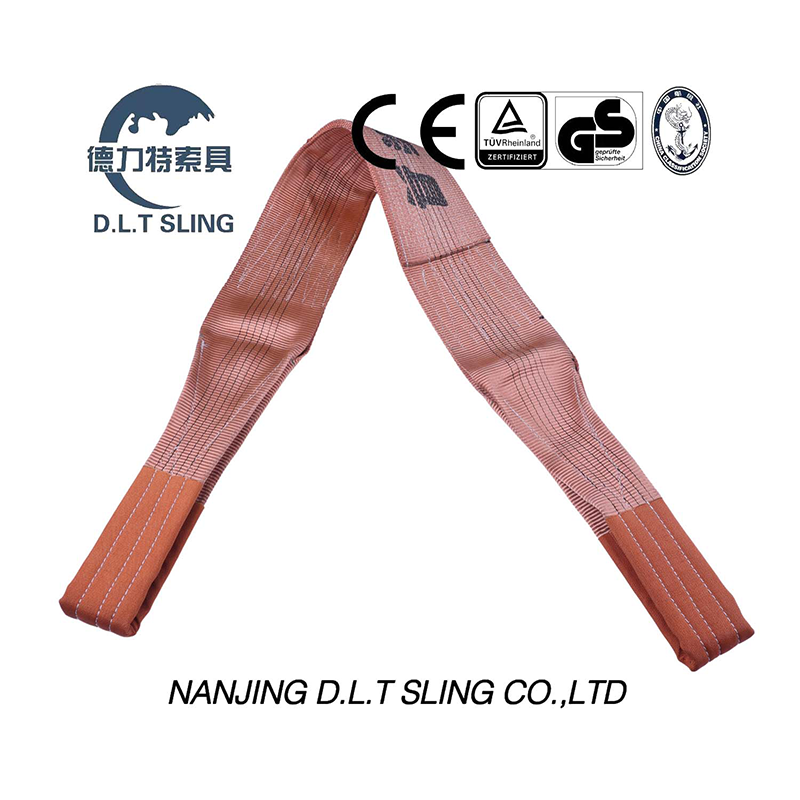
The lifting industry uses standard visual compliance to identify capacities instantly. You can spot 5 ton lifting straps setups rapidly by their bright red color. Conversely, a solid brown color immediately indicates a 6 ton webbing sling. This standardized color-coding speeds up selection on busy shop floors. It prevents language barriers from causing fatal rigging mistakes. Operators know exactly what capacity they hold just by glancing at the fabric.
You must account for the hitch derating factor during lift planning. The way you connect the gear changes its strength.
Procurement teams should embrace strong scalability considerations. Standardizing sling lengths and capacities reduces inventory confusion. It prevents dangerous operator guesswork. Supplying only high-capacity options minimizes the risk of grabbing an undersized unit. If your facility mostly lifts 4-ton machines, standardizing on larger brown straps provides a built-in safety margin.
Rigging safety relies heavily on established standard frameworks. You must follow ASME B30.9 and EN 1492-1 requirements strictly. These regulations dictate manufacturing, testing, and operational tolerances for synthetic web slings. Compliance prevents accidents and shields your company from severe legal liabilities. Regulatory bodies audit these standards meticulously after workplace accidents.
Mandatory tagging serves as your very first line of defense. Every single unit must feature a legible manufacturer’s tag. This tag displays the WLL, material type, and serial number. If any tag is missing or unreadable, remove the unit from service immediately. We enforce this rule with absolutely no exceptions. Untagged hardware constitutes a severe compliance violation. You cannot guess the capacity based solely on color if the tag falls off.
Real-world degradation silently reduces the WLL over time. Prolonged UV exposure weakens the woven polyester fibers chemically. Sunlight makes the material stiff and brittle. Chemical spills create invisible structural damage deep within the weave. Alkalis degrade some synthetics rapidly, while acids destroy others. Weld spatter instantly melts critical load-bearing threads. Operators must store textiles in cool, dark, and dry lockers.
We maintain a balanced claim regarding synthetic rigging capabilities. No textile lifting device is indestructible. You must implement predictable lifecycle management. Scheduled replacement intervals ensure you retire equipment before it fails. Do not wait for visible tears to replace cheap textile gear. Replacing old straps annually costs far less than dropping a million-dollar CNC machine.
Deploying new lifting hardware requires strict implementation protocols. You must train personnel thoroughly before the very first lift. Proper onboarding ensures everyone understands visual inspection protocols.
Pre-lift inspection requirements form the core of daily workplace safety. Operators must perform non-negotiable visual checks. They must look for snagged webbing across the entire surface. They must identify any broken core yarns or deep abrasions. Melted fibers or chemical burns mandate instant equipment rejection. Any localized reduction in width or thickness indicates internal fiber failure.
Accessory integration drastically improves equipment longevity. You must purchase cut-resistant sleeves for sharp load transitions. Corner pads provide a crucial buffer against intense shear forces. You also need appropriately sized shackles. Small shackle pins cause the eye to bunch up tightly. Bunching concentrates the stress, reducing the overall breaking strength. Wide-body shackles offer a broader bearing surface, protecting the sewn eye loops.
Your vendor evaluation checklist should contain specific qualifying questions. Procurement departments must prioritize safety over bottom-line pricing. Use these numbered criteria when vetting new suppliers:
Partnering with transparent manufacturers eliminates dangerous counterfeit gear from your supply chain. Reliable vendors provide vital technical support when calculating complex multi-leg lifts.
Selecting the correct synthetic rigging protects your valuable machinery assets. It secures the heavy load while actively preventing costly surface gouging. Wide polyester bands distribute pressure safely across delicate equipment housings. You achieve maximum stability without sacrificing cosmetic finishes.
Safety officers and procurement teams must take immediate action. Audit your current sling inventory today. Check every single unit for legible identification tags. Discard units showing UV damage, fraying, or chemical burns. Ensure you have adequate edge protection accessories ready before your next heavy machinery move. Proactive safety measures save money and protect human lives.
A: Yes, you can use them in choker hitches. However, this configuration reduces the overall lifting capacity by approximately 20%. You must calculate this derating factor before lifting. Additionally, ensure the strap eye does not bunch up forcefully against the machine housing, as this weakens the load-bearing fibers.
A: The primary difference involves load distribution and visual identification. Red straps denote a 5-ton limit, while brown indicates a 6-ton capacity. A 6-ton unit is physically wider. This extra width distributes heavier machinery weight over a larger surface area, offering superior protection against localized crushing forces.
A: Operators must perform visual pre-use checks daily before every single lift. Look for snags, cuts, or melted fibers. Beyond daily checks, a qualified person must conduct documented periodic inspections. These formal inspections occur annually or more frequently based on severe environmental conditions and heavy usage rates.
A: Premature failure almost always stems from external damage, not a manufacturing defect. Sharp edge shear cuts easily slice synthetics under tension. Improper sling angles severely amplify the forces applied to the webbing. Invisible chemical degradation or prolonged UV exposure can also quietly destroy the fiber strength over time.

