

close
Choose Your Site
Global
Social Media

Views: 0 Author: Site Editor Publish Time: 2026-07-12 Origin: Site


Using a flat webbing sling incorrectly creates more than just a severe safety hazard on your job site. It introduces immense liability risks. It causes unexpected operational downtime. It accelerates equipment replacement costs rapidly. Heavy lifting environments demand total precision. Safety officers and procurement teams must align completely. They need consensus on proper usage and material limitations. They must also enforce strict OSHA or ASME compliance protocols. This alignment protects frontline personnel. It also shields your operational bottom line.
We frequently see crews make critical field errors. They make these errors despite having access to basic safety manuals. This guide breaks down the most frequent implementation mistakes. It highlights common selection errors occurring in modern rigging operations. You will discover an evidence-based framework here. We provide tools for evaluating and correcting errors. You can use this guide to standardize your rigging hardware protocols. By addressing these blind spots proactively, operations drastically reduce accident probabilities. Proper usage simultaneously maximizes the lifespan of your valuable gear.
Framing the financial and regulatory impact of rigging failures is essential. This conversation must move beyond basic safety metrics. Equipment failures drain operational budgets aggressively. They cause halted production lines. They invite severe regulatory fines. They often result in heavily damaged goods. A truly successful rigging operation achieves zero load drops. It maximizes the lifecycle of synthetic materials efficiently. It also maintains verifiable compliance documentation for every single lift.
We assume your operations already utilize documented load charts. However, human error in field applications remains a massive variable. Field workers often bypass established safety limits unintentionally. They might rush a complex lift schedule. They might misjudge an awkwardly shaped load. These small oversights rapidly translate into catastrophic failures. Reliable operations require strict protocol adherence. They require constant vigilance from every crew member. Neglecting proper protocols guarantees financial losses. It guarantees heightened scrutiny from safety regulators. Proper management focuses on proactive hazard elimination.
The most prevalent core error involves static capacity assumptions. Many riggers treat a sling’s vertical capacity as static across all lifting configurations. They use the same limits for choker, basket, and angled lifts. This mistake proves highly dangerous. Different lift setups drastically alter the actual tension. They shift stress applied directly to the fibers. We must detail how the lift angle impacts this tension. A reduced angle multiplies the force exponentially. For example, lifting at a 30-degree angle effectively doubles the stress. This stress hits the webbing sling immediately.
Rigging crews often estimate these angles visually. They rarely use standardized measurement tools on the floor. This visual guesswork leads directly to unintended overloading. Human eyes cannot calculate precise geometric forces. When legs spread further apart, vertical lifting power drops. This geometry shifts stress horizontally. Workers might use a 60-degree angle but calculate for 90 degrees. This common mistake reduces real capacity by over 13%. If they drop to 30 degrees, they lose 50% of their capacity.
To solve this, you must mandate clear protocols. Post load-angle charts on the shop floor everywhere. You should specify slings built with adequate safety factors. They must handle anticipated angular lifts comfortably. Teach operators to measure angles from the horizontal plane correctly.
| Sling Angle (Horizontal) | Tension Multiplier Factor | Effective Capacity Loss |
|---|---|---|
| 90 Degrees | 1.000 | 0% |
| 60 Degrees | 1.155 | 13.4% |
| 45 Degrees | 1.414 | 29.3% |
| 30 Degrees | 2.000 | 50.0% |
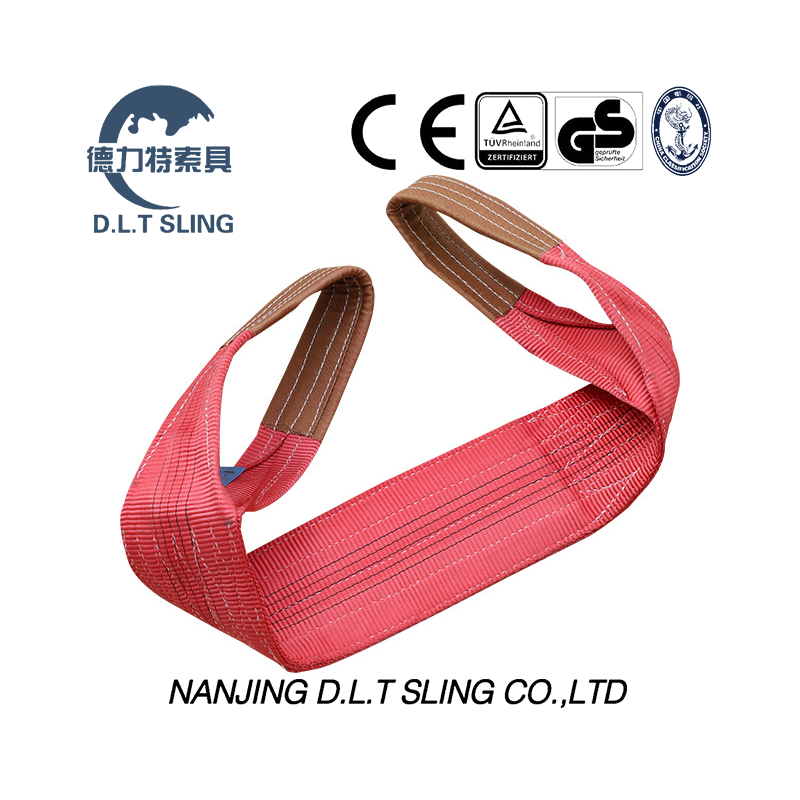
Lifting loads possessing sharp or abrasive edges invites immediate disaster. You cannot lift these items without dedicated cut-resistant sleeves. Unprotected corners remain the leading cause of synthetic sling failure. Synthetic fibers are highly susceptible to shearing. They degrade quickly under heavy friction. Even a mathematically correct load can sever a sling entirely. This severance happens if point-loading occurs on a raw edge. Point-loading focuses massive tension onto one millimeter of fiber.
The load weight becomes irrelevant in these shearing scenarios. We must evaluate different edge protection solutions carefully. Basic wear pads only protect against friction. They prevent surface scuffing well. However, they do not stop high-pressure cutting. Cordura sleeves slide over edges smoothly. Engineered edge guards provide true cut protection instead. They use specialized high-density materials like Kevlar. Kevlar actually stops a sharp steel beam from slicing through.
We must dispel a very common industry myth here. Many believe heavy-duty webbing does not require edge protection. This assumption is entirely false. No synthetic sling is inherently cut-proof. Heavy load tension turns even slight edges into razor blades. Imagine lifting a raw steel I-beam. Even a slightly beveled edge acts like a knife under 5,000 lbs of pressure. Always use appropriate protective accessories.
Treating all synthetic slings as interchangeable is a costly error. This practice ignores critical environmental variables. Chemical, thermal, and UV exposures dictate your material choices. You cannot use the same sling everywhere safely. We must evaluate specific material dimensions closely.
Polyester proves ideal for acidic environments. It handles certain chemical washes very well. It also suits applications requiring minimal stretch. Polyester typically exhibits about 3% stretch at its rated capacity. This minimal stretch provides excellent load control during precise maneuvers. Nylon works much better in alkaline environments. It handles grease and oils differently. Nylon provides excellent shock absorption during dynamic lifts. It shows approximately 10% stretch at rated capacity. This stretch absorbs sudden dynamic impacts safely.
You must map the operational environment directly to specific material properties. Chemical plants demand specific resistances. Battery acid drops destroy nylon fast. Offshore rigging setups face constant saltwater exposure. High-UV outdoor construction breaks down generic fibers quickly. Sun exposure literally breaks down synthetic polymers at a molecular level. Fading color often indicates severe structural weakening. Slings left outside in a yard for six months lose massive capacity. Proper matching avoids accelerated degradation. It saves massive replacement budgets annually.
Treating daily inspections as a simple paperwork exercise is dangerous. It creates a massive liability checkpoint for management. Daily checks represent your first line of defense. Authoritative guidelines offer clear operational directives. We rely heavily on standard OSHA requirements. We also follow ASME B30.9 removal criteria strictly. A sling must be removed from service immediately under specific conditions. Ignoring these signs violates federal compliance. It endangers lives unnecessarily.
A trained operator must look for several critical failure indicators:
Tracking sling lifecycles across large job sites proves notoriously difficult. Spreadsheets often fail to capture real-time field data. You should standardize procurement through specialized, tech-forward suppliers. Look for vendors offering serialized tags. Seek out robust RFID integration options. This technology ensures highly accurate digital inspection logs. It allows safety managers to track specific items reliably. It removes the guesswork from replacement cycles.
We must evaluate suppliers of cargo control products carefully. You must look beyond just their initial unit price. Cheap equipment often costs more over its abbreviated lifespan. Proper shortlisting logic ensures long-term safety. It guarantees much better operational efficiency. You should demand transparency from your manufacturing partners.
Consider these key vendor criteria when making procurement decisions:
Take clear next-step actions today. Do not wait for an accident to force protocol changes. Audit your current inventory thoroughly and aggressively. Identify high-frequency failure points across your facilities. Notice where equipment degrades the fastest. Establish a vendor relationship supporting automated replacement cycles. Integrate rigorous compliance training directly into your purchasing agreements. Educated buyers inevitably run safer floors.
Maximizing the ROI and safety of your lifting hardware requires a definitive operational shift. You must move away from reactive replacement completely. We strongly advocate for proactive application strategies. Correct material selection remains paramount for long-term success. Rigorous environmental matching extends equipment lifespans significantly. Proactive care transforms safety from a cost center into a reliable asset.
We encourage you to schedule a comprehensive rigging safety audit immediately. Download a reliable load-angle calculation chart for your floor teams today. Post these charts near all primary lifting stations. Consult directly with a product specialist soon. They can evaluate your current cargo control inventory expertly. Taking these steps protects your valuable workforce. It protects your expensive materials. It secures your operational future securely and profitably.
A: The industry standard mandates a 5:1 design factor for synthetic slings. This ratio strictly dictates manufacturer design requirements. It ensures the breaking strength is five times higher than the rated capacity. It does not provide a buffer for operators to exceed the tagged Working Load Limit. Always strictly adhere to the clearly stated WLL.
A: No. You cannot repair cut or structurally damaged synthetic fibers. While you might salvage certain metallic hardware components safely, you must immediately destroy and replace the synthetic webbing itself. Once its structural integrity becomes compromised, the sling poses an unpredictable and severe hazard.
A: Users must conduct a mandatory visual inspection before every single lift. Look for any visible signs of damage or wear. Additionally, a qualified person must perform and document a periodic inspection. This documented review must occur at least annually, or more frequently depending on the severity of use.
A: Synthetic fibers feature strict operational limits. They generally remain safe to use in environments up to 194°F (90°C). Exceeding these thermal limits permanently degrades the fiber structure. This heat causes invisible internal damage. It melts internal yarns and leads directly to sudden failure during routine lifts.

