

close
Choose Your Site
Global
Social Media

Views: 0 Author: Site Editor Publish Time: 2026-07-18 Origin: Site


Rigging operations demand precision, reliability, and careful equipment selection. Selecting the wrong synthetic lifting sling configuration invites premature abrasion. It also creates unsafe rigging practices and drives up frequent replacement expenses. While both endless and eye-to-eye configurations share similar foundation materials, their structural differences drastically change field performance. These distinct architectures dictate load distribution, hitch compatibility, and overall operational lifespan. Choosing correctly ensures your team lifts heavy objects safely. It also helps you optimize equipment longevity across demanding industrial environments. This comprehensive guide provides a technical and operational breakdown of these two popular sling types. You will learn how loop architecture directly impacts load dynamics during active lifts. We will also help procurement and rigging professionals match the correct sling to specific load requirements. By the end, you can confidently align your equipment choices with strict safety compliance standards.
Understanding the fundamental design of synthetic slings helps you predict their behavior under tension. The manufacturing style determines how weight transfers from the load to the crane hook. Structural configuration serves as the primary differentiator between these two rigging tools. We evaluate them based on industry-standard classifications.
Manufacturers construct the Type 5 sling as a continuous, unbroken loop. This design requires overlapping the webbing ends and sewing them into a single, robust load-bearing splice. The primary advantage here is the complete absence of a fixed lifting point. The load bearing distributes dynamically across the entire length of the strap. Operators do not have to rely on designated bearing eyes. Instead, the continuous design allows the contact zones to change every time you rig a load. This dynamic load distribution reduces localized stress. It prevents rapid material degradation at any single point along the webbing.
Eye and eye slings feature a traditional flat body. They possess specially sewn loops at both ends. Type 3 represents flat eyes, while Type 4 utilizes twisted eyes. This configuration creates a fixed, predictable connection point. The design is better suited for specific, repeatable lifting geometries. In these setups, the hook and load points do not change frequently. The tapered loops slide easily over hardware. This fixed geometry provides exceptional stability for balanced, symmetrical lifts. However, the fixed nature means the same sections bear the friction and tension repeatedly.
Both structural types originate from identical high-performance synthetic fibers. Manufacturers typically build them as a high-strength polyester flat webbing sling. Polyester dominates the rigging industry for several operational reasons. It delivers identical chemical resistance across all sling types. The material offers excellent UV stability for outdoor applications. It also resists mild acids effectively. Furthermore, polyester limits stretch characteristics to approximately 3% under full working load limits. This minimal stretch ensures maximum load control during critical lifting phases.
| Sling Feature | Type 5 (Endless) | Types 3 & 4 (Eye and Eye) |
|---|---|---|
| Connection Point | Variable/Dynamic | Fixed Eyes |
| Load Distribution | Spread across full length | Concentrated at eye bearings |
| Body Structure | Continuous double-layer loop | Flat body with terminal loops |
| Material Stretch | Approx. 3% (Polyester) | Approx. 3% (Polyester) |
Rigging professionals choose continuous loop configurations to solve specific operational challenges. This architecture shines in high-volume, abrasive environments. It offers distinct mechanical advantages over traditional fixed-eye designs. You must evaluate your daily lifting habits to maximize these benefits.
The continuous structure offers a unique defense against friction. You can physically shift the sling after each use. This physical rotation ensures the hook and load contact points change constantly. By altering the contact zones, you prevent isolated friction degradation. Repeated lifts no longer damage the exact same fibers. You effectively spread the wear and tear over the entire surface area. This active management strategy dramatically delays the need for replacement.
Certain hitches demand flexibility and surface conformity. A continuous loop conforms more securely around cylindrical or irregular loads. It outperforms the fixed eyes of other slings in these specific applications. When you apply a choker hitch, the continuous loop slides seamlessly through itself. It bites down hard on materials like steel pipes or timber. The sliding action creates a tighter, more uniform grip. Basket hitches also benefit from the dual-leg support of a folded continuous loop. The material hugs the load contours tightly.
Every rigging solution carries specific field considerations. Because it forms a double-layered continuous loop, an endless webbing sling behaves differently on hardware. It can be significantly bulkier at the connection point. Two layers of thick webbing must sit inside the hook bowl. Operators must ensure the crane hook possesses sufficient internal clearance. You must prevent bunching or localized stress on the webbing edges. Cramming too much material into a small hook causes fiber crushing. This crushing compromises the structural integrity of the synthetic material.
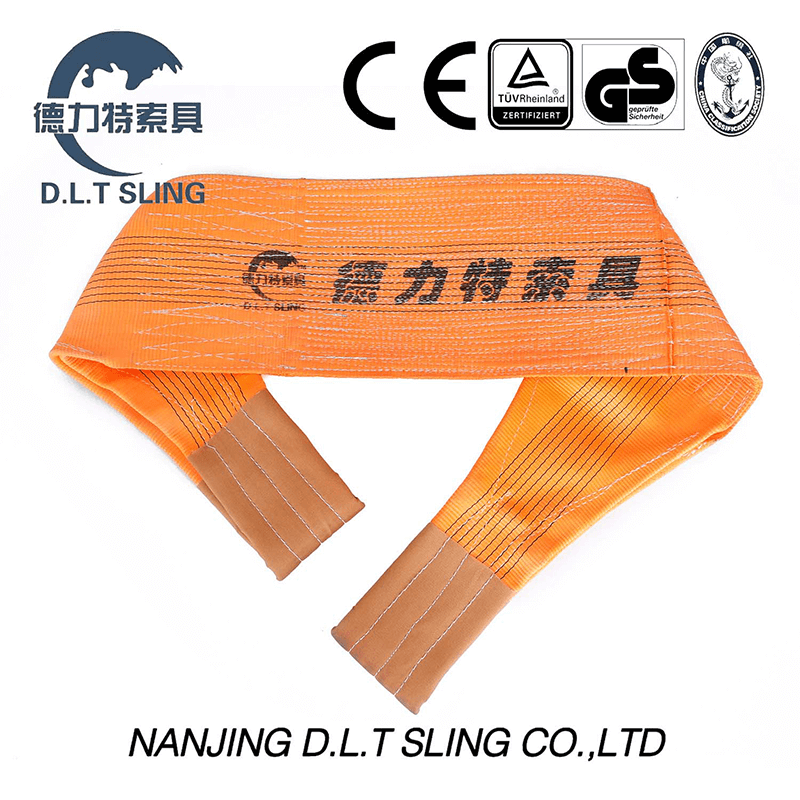
Fixed-eye configurations remain a staple in construction and manufacturing facilities. Their straightforward design solves clearance issues. They handle predictable, repetitive lifting geometries perfectly. You should specify this design when space and precision dictate the rigging plan.
Hardware crowding poses a severe safety hazard during complex lifts. The tapered eyes reduce the volume of material resting in the crane hook. Manufacturers fold and stitch the eye webbing to narrow its width. This narrowing process creates a low-profile connection point. The design is ideal for multi-leg sling assemblies. When you place three or four slings on a single hook, you need maximum clearance. Reduced material volume prevents the slings from overlapping or binding against the hook latch.
Riggers face challenges after they safely land a heavy load. You must retrieve the rigging gear without damaging it. The flat body and distinct ends make retrieval simpler. It is much easier to slide out from underneath a landed load. The single-layer flat body resists snagging on rough surfaces. Compare this to the potentially twisting double-layer of a continuous loop. The single flat layer pulls smoothly past blocking and cribbing materials. You save valuable time during the load-unhooking phase.
Industrial applications sometimes demand reinforced equipment. Manufacturers offer robust upgrades for fixed-eye designs. You can request the integration of heavy eye webbing modifications. These upgrades include reinforced or fully wrapped eyes. Factories stitch extra layers of abrasive-resistant webbing directly into the bearing points. They design these additions specifically to combat wear at the fixed hook point. The reinforced eyes endure severe friction from rough shackle pins or rusted crane hooks.
Procurement teams must weigh technical specifications against operational realities. Choosing the right sling requires analyzing how you actually use the equipment. We break down the critical purchasing criteria below.
Budget constraints heavily influence equipment selection. Eye-to-eye slings are often slightly cheaper upfront for standard lengths. Their straightforward manufacturing process keeps initial prices lower. However, continuous loops generally yield a higher return on investment. The rotatable wear points offer immense long-term value. You effectively double or triple the operational lifespan in high-abrasion environments. While you might pay slightly more initially, the delayed replacement cycle generates significant savings. Frequent replacements disrupt operations and consume procurement resources.
Versatility dictates how much rigging gear you need to store. Both configurations support Vertical, Choker, and Basket hitches. You can rig almost any standard load using either type. However, the endless flat lifting webbing sling offers a distinct advantage for cylindrical objects. It delivers a tighter grip in a choker hitch due to the sliding nature of the loop. The continuous webbing adjusts naturally to the load's exact diameter. Fixed eyes sometimes create a rigid pivot point that prevents the choker from cinching down completely.
Edge protection is mandatory for synthetic rigging. You must evaluate how protective sleeves fit over both types. Sliding sleeves are highly effective on continuous loops. You can slip a tubular sleeve over the webbing and position it exactly where needed. As you rotate the sling, you simply slide the pad to the new contact point. In contrast, eye-and-eye slings often require a different approach. They typically need fixed wear pads sewn directly into the eyes. You then add sliding pads on the main body. This dual-pad requirement complicates the protective setup.
Rigging safety relies on strict adherence to established protocols. Synthetic materials require vigilant oversight to prevent catastrophic failures. You must integrate mandatory inspections into your daily operational routine.
Regulatory bodies govern the manufacturing and usage of lifting equipment. Both configurations must strictly comply with OSHA 1910.184. They must also meet ASME B30.9 standards. These frameworks dictate design safety factors, testing requirements, and usage limitations. You must ensure your purchased equipment features legible, manufacturer-attached identification tags. Without an intact tag, the equipment immediately violates compliance standards. You must remove untagged items from service.
Field inspections uncover the physical differences between the two designs. Endless slings require careful inspection of the single splice point. The heavy stitching at the overlap represents a critical structural component. You must check for broken stitches or yarn unraveling at this specific junction. Conversely, eye and eye slings present different failure zones. They frequently fail inspection at the inside bearing point of the eye. The intense friction against the hook crushes and cuts the fibers in the loop. You must meticulously examine the eyes for thinning or glazing.
Never use either sling without adequate edge protection if the load has sharp corners. Neither configuration is immune to slicing without proper corner pads. A sharp steel edge will sever a fully rated synthetic strap instantly under tension. You must deploy engineered wear pads, magnetic corner protectors, or heavy-duty sleeves. Relying solely on the sling's base material is a dangerous and non-compliant practice. Protect your rigging gear to protect your personnel.
Your specific lifting environment dictates the best rigging solution. Choose the endless design if your primary goal is maximizing operational lifespan through wear-point rotation. It is the superior choice if you frequently utilize choker hitches on variable loads. The continuous structure adapts brilliantly to changing load dynamics and abrasive surfaces.
Conversely, choose the eye and eye design if you require a lower-profile connection. It serves you best when you perform primarily vertical lifts. It is also the safest option if you have limited space in the lifting hook and run multi-leg setups.
As a next step, consult with a certified rigging engineer. Audit your standard load dimensions and center of gravity requirements. Review your current equipment replacement rates before submitting your procurement RFQ. Proper auditing guarantees you purchase the safest, most efficient tools for your facility.
A: Yes, it excels in choker hitches. The continuous loop slides smoothly through itself, creating a tight, secure cinch around the load. It often provides better load control and grip than fixed-eye alternatives, especially on cylindrical objects like pipes or logs.
A: Polyester is generally preferred for its lower stretch rate. It stretches around 3% under full load, compared to nylon's 10%. This lower stretch provides superior load control and bounce reduction. Polyester also offers better resistance to acidic environments and UV degradation.
A: Replacement is mandatory if you discover visible cuts, snags, melting, or chemical damage during inspection. You must also remove it from service if the red core warning yarns become exposed, or if the identification tag is illegible or missing. This rule applies regardless of the sling's configuration.

