

close
Choose Your Site
Global
Social Media

Views: 0 Author: Site Editor Publish Time: 2026-07-05 Origin: Site


Mismatched load securement triggers massive DOT compliance fines every year. Damaged freight ruins profit margins instantly. Liability exposure threatens fleet survival on the highway. Commercial trucking requires highly specific hardware. You must tailor it precisely to your freight’s geometry, weight, and trailer type. Generic solutions scale poorly across diverse fleets. They drastically increase your operational risk during transit. You cannot safely rely on a one-size-fits-all approach. This guide provides an evidence-based framework for evaluating securement hardware. We will help you pair the right tools to specific load categories. You will learn to ensure compliance and safety across your daily operations. Correct equipment choices drive operational efficiency consistently. Proper hardware selection prevents cascading failures mid-transit. By mastering these core principles, you protect your drivers and your bottom line.
Securing freight correctly goes far beyond following basic best practices. It represents a heavily audited legal requirement under FMCSA guidelines. Local transport authorities strictly enforce these safety standards globally. Regulators demand verifiable proof of proper load matching. The cascading costs of poor product selection accumulate rapidly. Drivers face rejected loads at receiving docks. Premature hardware degradation forces frequent replacements. Worst of all, Out-of-Service (OOS) violations halt operations entirely. OOS penalties directly impact your carrier safety rating.
You must clearly define success criteria for your securement strategy. A successful cargo setup standardizes hardware across your entire fleet. Standardization minimizes confusion during loading. You need verifiable WLL ratings clearly visible on all equipment. Missing tags automatically lead to compliance failures. Your chosen hardware should also minimize operator fatigue. Easy-to-use tensioning devices keep drivers safe and efficient. We recommend establishing strict baseline standards before purchasing new equipment.
Enclosed trailers dominate standard freight transport. These environments demand highly organized space management.
Open-air transport introduces severe environmental and physical challenges. You cannot control the ambient conditions.
Specialty freight requires precision over pure brute force. A standard approach will easily damage these items.
Load Securement Match Chart
| Freight Type | Primary Securement Method | Key Hardware Required |
|---|---|---|
| Palletized / Dry Van | Blocking and Bracing | E-Track, Shoring Beams, Logistics Straps |
| Heavy Flatbed | Downward Tension | Ratchet Straps, Chains, Binders |
| Vehicles / Rolling | Direct Point Anchoring | Wheel Nets, D-Rings, Soft Ties |
You must evaluate interior systems based on modularity and weight capacity. Assess how well logistics tracks integrate into your existing trailer walls. Properly installed E-track runs horizontally or vertically along the van interior. L-track offers a lower profile for specialized tight spaces. This matching logic works best for enclosed palletized freight. Look specifically for robust locking mechanisms on decking beams. Cheap beams often suffer from vibration loosening. Vibration loosening leads to mid-trip cargo collapses. Quality shoring beams lock securely and resist road vibrations effectively.
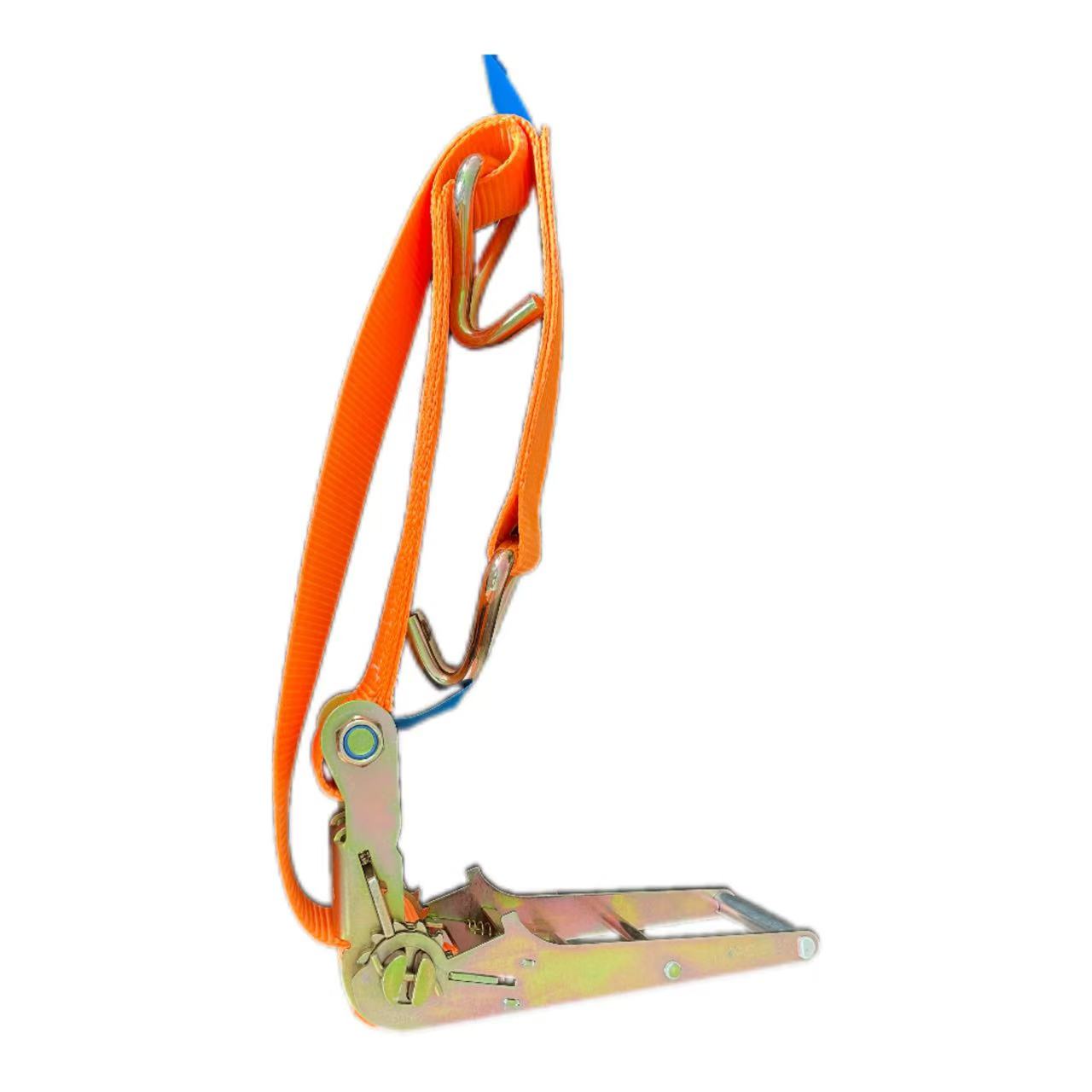
When assessing straps, you must evaluate stretch percentage and abrasion resistance. Look closely at the tensioning mechanism itself. Synthetic webbing stretches slightly under load to absorb shock. However, excessive stretch causes dangerous load shifting. You must deploy a heavy duty ratchet tie down for flatbed applications. These typically utilize 2-inch to 4-inch webbing. They provide the immense downward pressure required for open-air transit. Conversely, you should specify a double J hook ratchet tie down when securing loads to standard D-rings. Double J hooks excel at grabbing narrow anchor points. Flat hooks cannot securely seat in these tight configurations.
Steel chains offer unmatched durability for severe applications. You evaluate chains based on their manufacturing grade. Grade 70 transport chain remains the industry standard. You also must choose between ratchet binders and lever binders. Chains are completely mandatory for heavy machinery and steel coils. Sharp-edged freight would instantly sever standard synthetic webbing. We must note a critical safety concern regarding binders. Lever binders present a significantly higher kickback injury risk. The handle can snap open violently during tensioning. Ratchet binders represent the safer, more modern standard. They allow controlled tensioning without sudden force release.
Understanding hardware specifications prevents catastrophic failures. You must grasp the critical difference between Break Strength and Working Load Limit. Break Strength acts primarily as a marketing metric. It indicates the exact point of absolute failure in a laboratory. Working Load Limit serves as your true safety and compliance metric. The industry standard utilizes the 1/3 Rule. The WLL equals one-third of the total Break Strength. You must demand transparent WLL tags from all suppliers. Inspectors check these tags during every weigh station stop. Missing tags default the hardware to a zero-pound rating.
Hardware metallurgy significantly impacts equipment longevity. Evaluate the corrosion resistance of all metal components carefully. Zinc-plated hardware offers basic protection against rust. Powder-coated components provide superior defense in harsh winter transport conditions. Road salt destroys unprotected metal quickly. You must also evaluate webbing thread count and edge protection. Relying solely on the bare strap remains a massive mistake. Sharp cargo edges slice through tight webbing easily. We outline the absolute necessity of proper edge protectors. V-boards and corner guards distribute pressure evenly. They prevent catastrophic mid-transit strap failure.
Metal Coating Performance Guide
| Coating Type | Corrosion Resistance | Ideal Application |
|---|---|---|
| Bare Steel | Very Low | Indoor / Temporary Only |
| Zinc Plated | Moderate | Standard Van / Occasional Flatbed |
| Powder Coated | High | Harsh Weather / Winter Transit |
Auditing existing anchor points represents an often-overlooked implementation risk. A premium strap remains completely useless if the trailer's rub rail is compromised. Rusted D-rings pull out under minimal tension. Damaged E-track allows clips to slide freely. You must verify structural integrity before attaching any tension device. Environmental degradation actively destroys synthetic materials. We warn buyers frequently about UV damage and moisture rot. Sun exposure breaks down polyester fibers over time. Moisture trapped in rolled web slings causes dangerous mold rot. Establish early on that all synthetic cargo control products are consumable assets. They are never lifetime purchases.
You must implement rigorous pre-trip inspection protocols. Drivers need a clear framework for daily hardware evaluation. This maintains consistent fleet compliance and road safety. We recommend the following mandatory checks:
Avoid the dangerous race to the bottom during procurement. Advise your purchasing team against sourcing unbranded or uncertified hardware. Cheap components look identical to premium gear on a screen. However, cheaper upfront costs disappear instantly. A single DOT fine eclipses any perceived savings. Uncertified gear snaps under pressure and ruins your reputation.
You must apply strict vendor vetting criteria. Look for suppliers who provide clear, transparent testing documentation. They should demonstrate full compliance with WSTDA (Web Sling & Tie Down Association) standards. Professional vendors also support scalable fleet ordering to maintain consistency. As an actionable next step, audit your current fleet anchor points. Conduct a thorough load-type inventory today. Understand exactly what you haul before issuing any new purchase order.
Matching securement products requires calculated engineering decisions. You must base your choices entirely on weight, shape, and trailer infrastructure. Ignoring these variables leads directly to regulatory fines and damaged goods. Standardized, high-quality equipment streamlines operations and removes guesswork for drivers. Investing in correctly specified, compliant hardware protects your profit margins securely. It safeguards your drivers and the general public alike. We encourage you to consult a dedicated securement specialist today. Browse a vetted catalog of certified hardware to properly outfit your entire fleet.
A: Flat hooks are designed to slide securely under a flatbed's rub rail, spreading the tension evenly across a wider surface. Double J hooks are specifically engineered to hook directly into D-rings, O-rings, or narrow anchor points where a wider hook cannot fit.
A: FMCSA regulations require the aggregate Working Load Limit (WLL) of all active tie-downs to equal at least 50% of the cargo's total weight. For example, a 10,000 lb load requires tie-downs with a combined WLL of at least 5,000 lbs.
A: Use transport chains for cargo featuring sharp, highly abrasive edges like steel plates, raw logs, or heavy construction equipment. The extreme weight, sharp corners, and constant friction of these loads would quickly cut or snap synthetic webbing.

