

close
Choose Your Site
Global
Social Media

Views: 0 Author: Site Editor Publish Time: 2026-07-03 Origin: Site


Equipment failure during lifting operations is not just a frustrating operational delay; it represents a severe safety hazard and a massive liability risk for your company. You simply cannot afford to cut corners when dealing with heavy loads suspended overhead. Routine inspection of your lifting gear forms the definitive line between safe daily operations and catastrophic failure. Overlooking a minor frayed edge or a small chemical burn on a strap often leads to sudden load drops. Operators must rely on structured, daily checks to catch these dangerous defects early.
This guide provides a definitive daily inspection checklist and clear removal criteria for your gear. We also outline a framework for evaluating replacement equipment to ensure strict regulatory compliance. You will learn exactly how to maintain a safer workplace while standardizing your approach to lifting equipment management.
Lifting heavy materials safely requires strict adherence to documented industry standards. Organizations like OSHA and frameworks such as ASME B30.9 provide clear regulatory baselines for facility safety. You must view these regulations as your absolute minimum requirement. Compliance serves as merely a baseline, not your ultimate safety target. Striving beyond these minimum requirements protects your team and safeguards your bottom line.
Consider the severe financial and legal liabilities of a dropped load. Industrial accidents result in severely injured workers, destroyed valuable inventory, and halted production lines. Contrast these massive business risks against the highly predictable, low cost of proactive equipment replacement. Buying new gear costs a fraction of the price of managing a single workplace accident.
Visual checks remain your primary line of defense. They easily catch about 90 percent of common surface issues before use. However, you must recognize their inherent limits. A standard visual inspection cannot detect internal fiber fatigue caused by historical overloading. You should carefully track usage cycles alongside daily physical inspections to ensure complete operational safety. Incorporating these tracking habits transforms an average safety culture into an exceptional one.
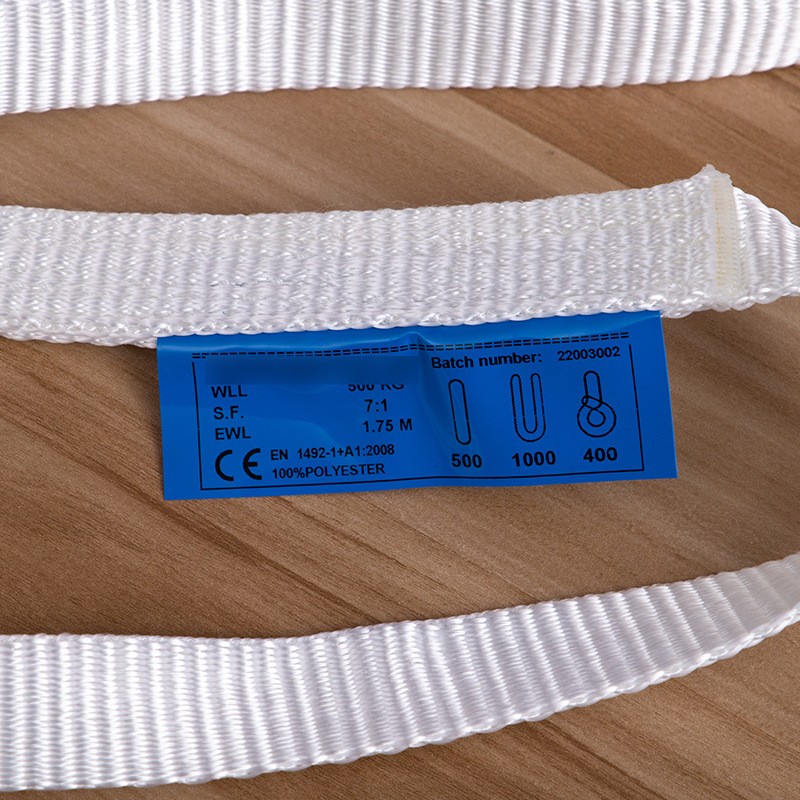
Before every shift, operators must perform a thorough physical assessment of their lifting gear. A comprehensive webbing sling checklist ensures nothing gets overlooked during the rush of a busy workday. Establishing this habit prevents minor issues from escalating into dangerous failures.
Your inspection always begins at the manufacturer’s identification tag. You must check for its physical presence and overall legibility before doing anything else. If the tag is missing or completely unreadable, remove the item from service immediately. Operators need to clearly verify the Working Load Limit (WLL). They should also check the material type and traceability codes to match the equipment to the specific lifting task at hand. Never guess the weight capacity of untagged lifting gear.
Next, examine the entire length of the strap fabric. You must inspect both sides thoroughly.
Harsh workplace environments rapidly degrade synthetic fibers over time. Look closely for any melting, charring, or weld splatter indicating accidental heat damage. Identify potential chemical burns on the fabric. These often present as localized discoloration or unexpected stiffness in the material. Finally, check for severe bleaching or physical brittleness. These specific visual signs usually point to prolonged UV degradation from improper outdoor storage. Operators should report any fabric stiffness immediately.
Finding a visible defect means making an immediate decision about equipment safety. We follow a strict "No-Repair" rule for all synthetic web materials. You cannot safely repair structural damage on these flexible tools. You must destroy compromised gear completely to prevent accidental reuse. Simply throwing a damaged strap in the trash is incredibly dangerous. An unknowing worker might retrieve it later. Always cut it into multiple unusable pieces instead.
Many modern straps feature internal red warning yarns built directly into the core. Explain to your operators exactly how these safety indicators function. As the protective outer layers wear down from friction, the bright red fibers become highly visible. If you see these red yarns peeking through, you must retire the equipment immediately. There are no exceptions to this rule.
You also need measurable defect thresholds to guarantee consistent decision-making. Operators should not rely on personal guesswork or unsafe assumptions. Set clear, documented visual triggers for replacement across your entire facility. A standardized chart helps operators make fast, accurate safety calls.
| Defect Category | Specific Trigger for Removal | Action Required |
|---|---|---|
| Edge Cuts and Snags | Any cut exceeding a tiny fraction of the total width. | Destroy and discard immediately. |
| Structural Stitching | Broken or unraveling stitches in any load-bearing splice. | Destroy and discard immediately. |
| Surface Abrasion | Fuzzy or heavily worn areas exposing internal warning yarns. | Destroy and discard immediately. |
| Chemical Exposure | Acid or alkali burns causing brittle, melted, or stiff fibers. | Destroy and discard immediately. |
For lifting systems utilizing metal fittings, you must perform a dedicated hardware inspection. Examine all metal components very carefully under good lighting. Look for obvious deformation, deep pitting, or hairline crack detection. A perfectly good synthetic strap becomes entirely useless if the attached metal hook is structurally failing.
Retiring old equipment requires you to source appropriate replacements promptly. Evaluating your options thoroughly ensures you match the correct tool to your specific application. Reliable cargo control products guarantee your lifting operations continue without dangerous or costly interruptions.
You must clearly define when to utilize standard flat eye-and-eye styles versus specialized configurations. Flat eye-and-eye styles work perfectly for basic choker or basket hitches. However, high-frequency, lightweight material handling demands a completely different approach. For example, utilizing a 250kg endless webbing sling is ideal for continuous, repetitive material lifting tasks. The continuous loop design allows the operator to rotate the physical contact points easily. This simple rotation distributes surface wear evenly across the entire fabric. It significantly extends the usable lifecycle of the equipment.
Aligning material specifications with your operating environment is absolutely critical for workplace safety. Use this straightforward framework for confident material decision-making:
Sharp structural edges destroy synthetic fibers incredibly rapidly. We strongly suggest upgrading your inventory to models featuring heavily reinforced edges. Alternatively, you can easily pair standard straps with sliding protective wear sleeves. These simple preventative additions prevent catastrophic edge cuts before they happen. They easily extend the natural lifespan of your gear and keep your operators secure.
Buying replacement gear haphazardly introduces unnecessary risks directly into your facility. You should implement a standardized procurement strategy to guarantee consistent material quality and worker safety.
You must thoroughly vet any potential supplier before purchasing their hardware. Detail the exact testing and certification standards a reliable manufacturer must consistently provide. Always request detailed mill test reports for the synthetic materials they weave. Furthermore, demand proof testing documentation for any attached metal hardware components. Certified, trustworthy suppliers will happily provide these transparency documents upon request. If a vendor hesitates or refuses to supply testing data, you should immediately find another source. Never trust unverified lifting hardware.
Waiting days for a replacement part brings field operations to a grinding halt. You can easily avoid this costly downtime by focusing on active inventory lifecycle management. Maintain a dedicated, secure backup inventory of high-turnover items. When an operator responsibly retires a damaged strap mid-shift, they need immediate access to a safe replacement. A well-stocked backup supply prevents costly operational bottlenecks. It also removes the highly dangerous temptation to finish "just one more lift" using structurally compromised equipment. Keep your backup inventory organized and easily accessible to authorized personnel.
Maintaining a secure lifting environment requires vigilance, discipline, and the right equipment. You must prioritize daily safety above operational convenience.
Take action now by auditing your current gear. Consistent enforcement will protect your workforce and your business from preventable lifting disasters.
A: Operators must perform a visual pre-use check every single day or before each shift begins. In addition to these daily checks, a designated competent person must conduct a periodic, documented inspection. This thorough review should occur at least annually. Harsh operating environments often require monthly or quarterly documented inspections.
A: No. You can never safely repair structural damage, cuts, or compromised load-bearing stitching on synthetic webbing. It must be permanently removed from service and destroyed immediately. While you can replace sliding protective wear sleeves, the underlying structural fibers themselves remain strictly unrepairable once damaged.
A: The most common culprits include a lack of adequate edge protection, accidental exposure to harsh chemicals, and consistent overloading beyond the specified Working Load Limit. UV exposure from leaving gear outdoors and abrasive friction during continuous lifting without wear pads also drastically reduce operational lifespan.
A: Yes. Even in safe storage, synthetic materials break down gradually over time. Environmental degradation, particularly from ambient UV exposure, high humidity, and extreme temperature fluctuations, weakens the fibers. Manufacturers generally recommend replacing synthetic lifting gear every three to five years, regardless of visible wear or physical usage history.

