

close
Choose Your Site
Global
Social Media

Views: 0 Author: Site Editor Publish Time: 2026-07-17 Origin: Site


Industrial lifting involves exceptionally high stakes. We constantly balance load security, equipment longevity, and strict safety compliance. Heavy manufacturing and construction sectors demand flawless execution every single day. You need reliable tools for every challenging job. The endless webbing sling, often called a Type 5 sling, serves as a continuous loop of synthetic material. It wraps securely around tricky loads. It also distributes weight evenly across its entire surface.
You must evaluate when this continuous loop configuration solves specific rigging challenges. It often performs better than traditional eye-and-eye slings, heavy wire ropes, or rigid chain alternatives. Let us explore exactly how these versatile tools optimize daily operations. You will learn the best practices for rigging them safely. We will also cover essential inspection techniques to keep your crew secure.
A Type 5 sling features a single, continuous loop design. Manufacturers sew the synthetic ends together securely. This creates a seamless circle of strong webbing. The design allows you to rotate the contact points freely. Every time you rig a load, you can shift the sling slightly. This simple action prevents localized wear.
Traditional lifting gear suffers from severe wear at the eyes. A continuous loop spreads the friction evenly. You get a much longer lifespan from your equipment. It bends easily around irregular shapes. You can grip cylindrical objects tightly. We rely on them heavily for repetitive lifting tasks. They handle delicate surfaces beautifully without scratching.
Riggers appreciate the soft texture of synthetic fibers. Heavy metal chains can easily crush fragile cargo. Synthetic loops spread the pressure across a wider surface area. This wider contact zone keeps delicate edges intact. You maintain full control over awkward loads.
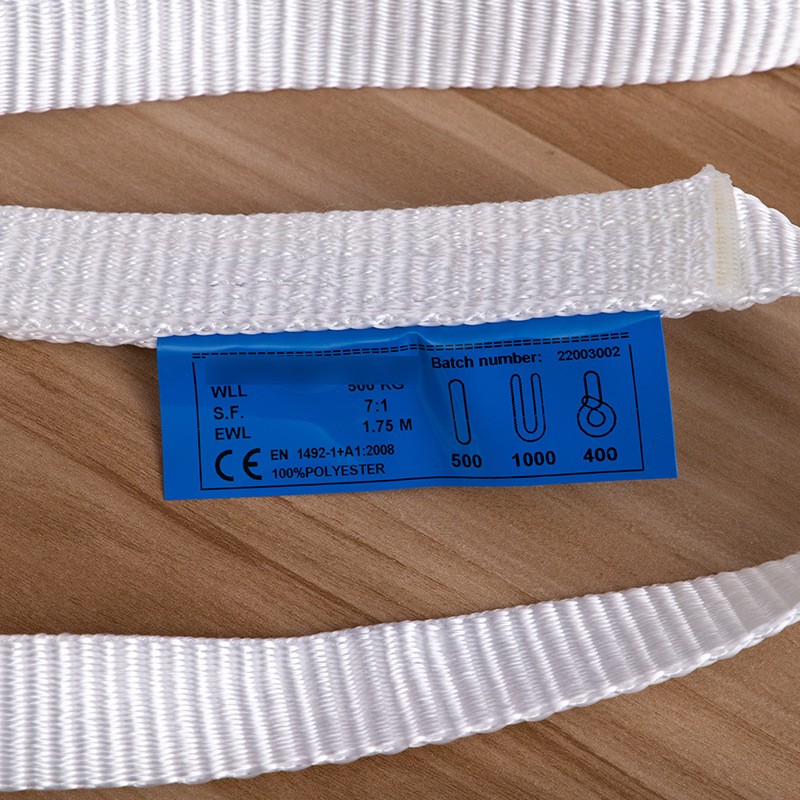
Where do we use these tools most effectively? Many heavy industries depend on them daily. Their flexibility makes them ideal for complex lifting scenarios. Here are the primary applications we see in the field.
Each application requires careful planning. You must assess the cargo before rigging it. An endless webbing sling adapts to almost any industrial environment. However, you must always verify the working environment conditions first.
Riggers use three primary hitch types. Each hitch changes the fundamental lifting capacity. You must understand these differences completely. Incorrect hitch selection leads to catastrophic dropped loads.
This is a straight vertical lift. You attach one end to the crane hook. You attach the other end directly to the load. It provides the base Working Load Limit (WLL). We use this for simple, balanced items. It does not grip the load tightly. The load can spin if left uncontrolled.
You form a choker hitch by passing one end through the other. It acts like a tight noose around the cargo. We use this for loose bundles or pipes. It grips the load securely. However, this hitch reduces the lifting capacity significantly. The choke point creates high stress on the synthetic fibers. You must consult your capacity chart before lifting.
You cradle the load using a basket hitch. Both ends attach to the overhead crane hook. This method doubles the lifting capacity. The weight distributes evenly across two vertical legs. We use this for heavy, well-balanced loads. You must balance the cargo perfectly. An unbalanced load will slide out easily.
The core material determines overall performance. Manufacturers primarily use polyester or nylon fibers. Each material has distinct advantages. You must match the material to your specific job site.
Polyester stretches very little under heavy loads. It usually stretches only around three percent. We prefer polyester for low headroom situations. It gives you precise control over the lift. Polyester also resists degradation from UV rays well. It withstands acidic environments moderately well. However, it degrades quickly near strong alkalis.
Nylon stretches much more than polyester. It can stretch up to ten percent. This stretch absorbs sudden shock loads effectively. We use nylon when loads might shift suddenly. However, nylon absorbs moisture quickly. We strictly avoid nylon in wet or freezing conditions. Wet nylon loses strength. Always check the manufacturer tag. The tag clearly states the core material.
You must choose the right gear for the job. Eye-and-eye options have distinct loops at each end. Continuous loops form one unbroken circle. Let us compare them directly.
Sling Configuration Comparison Chart
| Feature | Continuous Loop (Type 5) | Eye-and-Eye (Type 3) | Primary Benefit of Type 5 |
|---|---|---|---|
| Wear Points | Rotatable across the entire loop | Fixed at the two fabricated eyes | Significantly longer operational lifespan |
| Hitch Versatility | Excellent for all three hitch types | Good, but eyes can bulk up in chokers | Tighter grip on cylindrical objects |
| Manufacturing Setup | Single overlapping splice | Two separate reinforced eyes | Simpler inspection process for riggers |
| Weight and Storage | Very compact and easy to coil | Eyes add slight bulk to storage | Takes up less space in rigging boxes |
We usually recommend continuous loops for high-volume rigging. You can literally rotate the wear points daily. A standard webbing sling featuring distinct eyes wears out faster in repetitive tasks. The crane hook constantly rubs the exact same spot.
Industrial lifting requires strict adherence to safety standards. ASME B30.9 sets the primary rules in North America. OSHA enforces these strict guidelines actively. You must follow them to protect your crew.
Edge protection remains absolutely mandatory. Synthetic fibers cut surprisingly easily under tension. Sharp steel edges destroy them almost instantly. You must use protective sleeves or hard corner pads. A simple cardboard scrap does not provide adequate protection. Invest in engineered cut-resistant sleeves.
Do not twist the synthetic material during a lift. Twisting reduces the overall structural strength. Ensure the material lies completely flat against the load. Never exceed the rated Working Load Limit. Calculate the total weight accurately before attaching the crane. Account for the hitch type capacity reductions. Keep all personnel away from the lifting zone.
Even experienced riggers make critical errors. Complacency causes most rigging accidents. We see the same mistakes repeatedly in the field. Avoid these dangerous habits completely.
Lifting constitutes just one part of industrial logistics. Once you lift the item onto a truck, you must secure it. This process requires a completely different mindset. You must integrate cargo control products into your workflow.
Tie-downs, heavy ratchets, and transport chains secure the load during transit. Your lifting gear handles the vertical crane movement. Your securement gear handles horizontal transport forces. Do not mix their uses. Never use a lifting tool as a transport tie-down. The DOT has different regulations for transport securement.
A complete system ensures total safety. You lift a heavy generator onto a flatbed smoothly. You detach the overhead crane carefully. Then, you apply heavy-duty transport binders. Each tool performs its specific designed function. This systematic approach prevents tragic highway accidents.
Daily inspections save lives on the job site. You must inspect your gear before every single shift. Do not assume the previous shift checked it. Take personal responsibility for your lifting tools.
Look closely for deep cuts or edge snags. A cut exceeding a minor fraction of the width ruins the integrity. Check the surface for chemical burns. Acid leaves melted, charred, or brittle spots. Inspect the heavy stitching carefully. Broken stitches indicate severe overloading events. Look for embedded metal shavings. They act like tiny knives inside the fibers.
Missing tags mean immediate removal from service. You cannot guess the capacity safely. A legible tag remains a strict legal requirement. If the tag fades entirely, destroy the item immediately. Cut it in half. This prevents someone else from retrieving it from the trash.
Wash them using mild soap and water only. Do not use harsh industrial solvents. Solvents degrade the internal fiber strength. Let them air dry completely away from sunlight. Store them carefully on dedicated wall pegs. Do not leave them lying in oily floor puddles.
Every project presents unique lifting obstacles. You must evaluate the cargo carefully before rigging. Measure the overall dimensions accurately. Calculate the exact center of gravity. Determine the correct width required for safe surface pressure.
Select continuous loop configurations when you need maximum versatility. They adapt to multiple hitch styles flawlessly. They provide the longest lifespan for repetitive lifting tasks. Train your operators properly on hitch capacity reductions. Proper training prevents nearly all rigging accidents. Always prioritize safe, controlled movements over speed.
Choosing the right lifting equipment determines the success of your operation. We rely heavily on continuous loop designs for their unmatched versatility. They distribute wear evenly and extend the lifespan of your gear significantly. They protect delicate cargo while providing immense lifting strength.
To improve your rigging operations immediately, take clear action steps today. First, audit your current inventory for damaged or missing tags. Second, mandate formal training on proper hitch angles for your entire crew. Third, invest in engineered edge protection to safeguard your synthetic tools. Following these steps ensures a safer, more efficient work environment.
A: Yes. You can easily form a choker hitch. It grips cylindrical loads very tightly. However, you must always account for the reduced lifting capacity. A choker hitch significantly lowers the working load limit compared to a straight vertical lift.
A: You must perform a visual inspection before every single use. Formal, documented inspections should occur annually. You should increase this frequency to monthly or quarterly based on severe service conditions or harsh environments.
A: Sharp edges cause the vast majority of premature failures. Unprotected edges slice right through synthetic fibers under tension. UV degradation, chemical exposure, and improper hook pinching also weaken the fibers significantly over time.
A: Yes. You can wash them using mild soap and water. Never use harsh industrial chemicals or bleach. These chemicals destroy the synthetic fibers. Always let them air dry completely in a shaded area.

